

Every scrap yard manager reaches a critical turning point. Piles of loose sheet metal, aluminum offcuts, or copper wire accumulate faster than trucks can haul them away. At that moment, you open a browser and look for a metal baler for sale.
The market presents hundreds of catalog machines promising quick delivery. Many buyers assume a standard hydraulic baler will solve their scrap management challenges. They look at a spec sheet, match a general tonnage rating, and sign the purchase order.
Six months later, reality sets in. The standard hopper jams on specific scrap profiles. The bale dimensions leave dead airspace in shipping containers, inflating freight costs. At QUNHUI, we frequently hear from plant operators who regret buying standard off-the-shelf units that fail to integrate into their actual workflow.
Investing in scrap processing machinery is a multi-year financial commitment. Here is why choosing an OEM manufacturer with custom engineering capabilities protects your capital and yields far higher operational margins.
.webp?t=1793239676905 "metal baler for sale")
1. The Hidden Risks of Buying a "Standard" Metal Baler Off the Shelf
Standard scrap balers are built for an "average" customer who does not exist. Every recycling yard handles a unique mix of materials, operates within distinct spatial limits, and relies on specific loading methods. Choosing a rigid stock design introduces costly operational compromises.
- Floor Space and Layout Clashes: Off-the-shelf units come with fixed pump stations and control consoles. If your facility has low ceiling clearance or structural columns, a standard footprint forces awkward yard layouts and slows down traffic.
- Material Incompatibility: Baling thin aluminum stamping skeletons requires different cycle speeds and shearing forces than compressing structural steel beams or mixed ELV (End-of-Life Vehicle) parts. Standard units often jam, suffer structural fatigue, or produce loose, sponge-like bundles.
- Bottlenecks in Daily Workflow: A standard manual-cycle machine cannot keep up if you feed scrap with an orange-peel grapple or an overhead crane. The machine sits idle between manual inputs, wasting operator hours.
Industry guidelines from organizations like the Institute of Scrap Recycling Industries (ISRI) emphasize equipment matching to maximize material grades and operational safety. A catalog machine rarely checks every box.
2. The Power of OEM & Customization: Tailoring to Your Scrap Yard
When you consult an OEM manufacturer instead of a middleman distributor, the conversation shifts from "what is in stock" to "what your operation actually requires." Custom manufacturing aligns the mechanical, hydraulic, and electrical systems of your scrap press directly with your profit drivers.
Optimized Bale Size and Weight for Logistics
Freight costs dictate scrap profitability. If your bales are five inches too wide, you end up shipping empty air inside a 40-foot sea container or on a flatbed trailer. Over a year, this dead space costs tens of thousands of dollars.
A custom metal baler allows you to dictate finished bale dimensions. QUNHUI engineers equipment to produce high-density blocks that fit standard maritime containers or domestic truck beds edge-to-edge. Maximizing payload weights directly drops your per-ton shipping expense.
Tailored Feeding Systems and PLC Automation
Labor is one of your highest ongoing operational costs. A stock machine often requires dedicated operators to manually cycle rams, clear jams, and bundle scrap. OEM customization changes the equation through integrated automation.
Depending on your incoming scrap flow, your press can feature:
- Integrated hopper-tilt feeding mechanisms for forklift bin dumping.
- Conveyor feeding systems with automated weight-sensor shutoffs.
- Grab-crane-resistant feed chutes lined with impact-absorbing buffers.
- Siemens or Mitsubishi PLC packages that automate compression, shearing, and ejection in a continuous cycle.
Automated cycles mean your grapple operator drops scrap into the hopper and immediately moves to the next pile. The machine takes care of the rest.
Heavy-Duty Wear Liners and Powerplant Configuration
Processing abrasive scrap destroys standard carbon steel charging boxes quickly. When evaluating any industrial metal compactor, material durability determines machine lifespan.
OEM builders install replaceable wear plates manufactured from specialized alloys like Hardox 450 or Hardox 500. These liners protect the structural frame against abrasive tearing from jagged metals. Furthermore, if your yard lacks three-phase grid infrastructure, an OEM builder can configure high-torque diesel power units or specialized explosion-proof motors for hazardous factory environments.
3. The Math Behind ROI: Why Custom Metal Balers Cost Less Over Time
Skeptical buyers often look at the initial price gap. Yes, a custom-engineered hydraulic scrap metal baler carries a higher upfront investment than a generic mass-market unit. But comparing initial purchase price alone is a dangerous accounting mistake.
Total Cost of Ownership (TCO) tells the true financial story. The European recycling frameworks tracked by the Bureau of International Recycling (BIR) highlight that operational downtime and inefficient density account for far more lost margin than machinery depreciation.
Consider the core economic levers affected by custom engineering:
- Steel Mill Pricing Tiers: Melting facilities pay top dollar for dense, clean bundles that do not float on molten slag. Custom hydraulic systems exert the exact secondary and tertiary pressure curves needed to push bale density past industry standards, commanding higher payouts per ton.
- Reduced Power Consumption: Standard balers run fixed-displacement hydraulic pumps that churn power even during idle phases. Custom designs integrate variable-displacement piston pumps and variable frequency drives (VFD), cutting electricity consumption by up to 30%.
- Preventive Maintenance Savings: Custom machines include targeted filtration systems, oversized oil coolers, and central lubrication loops. These features protect hydraulic seals and proportional valves, preventing unexpected mid-shift breakdowns.
4. Key Engineering Specs to Demand from an OEM Manufacturer
When reviewing technical proposals for a metal baler for sale, avoid vague marketing terms. Look for precise mechanical and structural details that show the machine can handle demanding scrap conditions.
Hydraulic Cylinder Tonnage and Shearing Cutters
Check the rated pressure against the cylinder bore diameter. Reliable designs run at sustainable hydraulic pressures (typically 21 to 25 MPa) rather than maxing out hydraulic limits to claim high theoretical tonnage. If you process long, oversized metal profiles, insist on hardened serrated shear knives mounted along the chamber edges to slice protruding pieces cleanly during lid closure.
Ejection Mechanisms Tailored to Yard Layout
How the baler empties the finished block determines the next step in your logistics line. OEM builders provide three primary discharge designs:
- Turn-out (Side Dump): Ideal for smaller footprints where the bale pivots out of the box onto an adjacent ground pad.
- Side-push: Delivers the bale horizontally onto a roller bed or outbound accumulation conveyor.
- Forward-out (Front Exit): Pushes dense bales directly out the front gate, ideal for loading straight into transport skips or under mobile loader tines.
Thermal Management and Safety Compliance
Continuous heavy-duty baling generates immense hydraulic friction. A custom OEM layout incorporates sized air-blast or water-cooling radiators matched to your local climate. A machine operating in high ambient summer heat needs double the heat dissipation capacity of an indoor plant in a cold region. For worker protection, demand dual-channel interlocks, hydraulic hose burst protection valves, and safety perimeter cages designed according to OSHA safety standards.
5. How to Partner with the Right OEM Baler Manufacturer
Not every company offering a metal baler for sale actually designs what they sell. Many are trading companies reselling standardized machinery sourced from third-party factories. To secure a true custom build, you must vet the manufacturer's technical core.
Ask prospective builders the following questions:
- Do your engineers run Finite Element Analysis (FEA) on the press frame to verify structural integrity under off-center loading?
- What brands are your primary directional valves, pump assemblies, and PLCs? (Look for trusted industrial names like Rexroth, Parker, Vickers, and Schneider).
- Can you provide 3D CAD models of the complete baler and pump station to verify clearances within our facility blueprint before fabrication?
At QUNHUI, our design process starts by reviewing your raw material samples, daily intake tonnage, and target container weights. We draft custom layouts, manufacture our own pressure vessels, and execute comprehensive dynamic load tests before any machine leaves the factory floor. This level of technical oversight guarantees that your baling line performs reliably from day one.
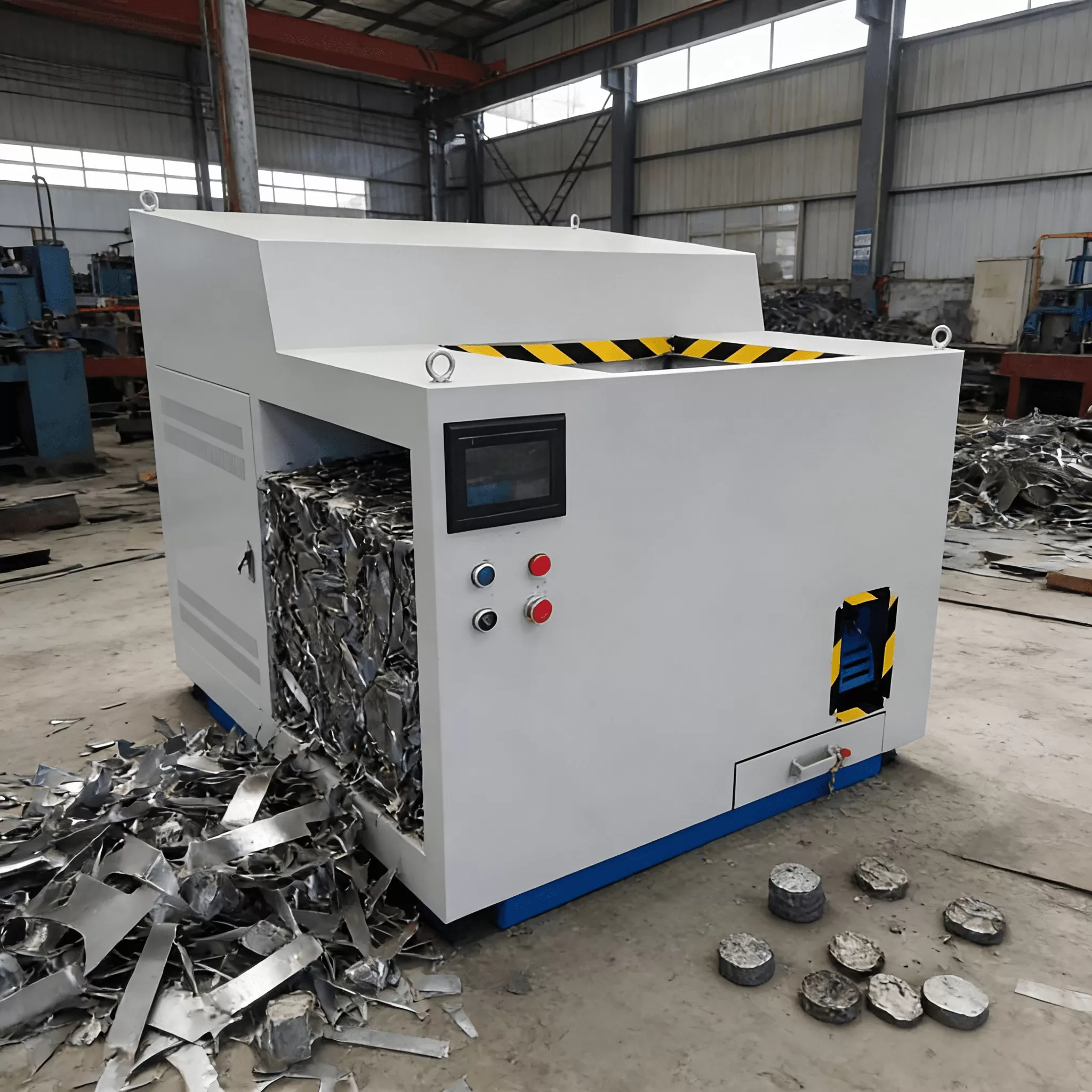
Invest in Equipment Built for Your Balance Sheet
Scrap recycling margins are won and lost in the details: seconds shaved off a hydraulic cycle, pounds added to a shipping container, and maintenance shutdowns avoided. Searching for a generic metal baler for sale might solve an immediate compaction problem, but it frequently leaves substantial profit on the table.
Choosing a custom OEM metal baler means you invest in a machine built around your materials, your yard space, and your operational targets. It transforms a standard piece of machinery into a reliable production asset that pays for itself year after year.
Ready to configure the ideal recycling solution for your
facility?
Contact the heavy machinery specialists at QUNHUI today. Tell us about your scrap profiles and output targets, and our engineering team
will provide a tailored layout and a factory-direct quote.
Frequently Asked Questions (FAQ)
Q1: How much does a custom metal baler cost compared to a standard
machine?
A1: The upfront purchase price of a custom
OEM metal baler is typically 15% to 30% higher than a mass-produced standard
machine of similar nominal tonnage. However, custom machines generally pay back
this difference within 6 to 12 months through optimized shipping density,
reduced labor requirements, and lower power consumption.
Q2: What is the typical production lead time for a custom-designed
scrap baler?
A2: While an off-the-shelf standard
baler might ship in 2 to 4 weeks, a purpose-built OEM machine usually requires 8
to 14 weeks for engineering, structural fabrication, hydraulic assembly, and
factory stress-testing. Lead times vary depending on the hydraulic tonnage and
automation level.
Q3: Can a single customized baler process both light non-ferrous and
heavy ferrous metals?
A3: Yes. OEM builders can
program multi-stage pressure recipes into the PLC. For example, the operator
selects an "Aluminum Mode" with faster strokes and lower hold times, or a
"Structural Steel Mode" that uses full multi-ram secondary compression to
achieve high bale densities.
Q4: Why is Hardox steel specified for the charging chamber
liners?
A4: Standard structural steel wears out
rapidly when exposed to high-pressure scraping from hard steel scrap, turnings,
and jagged automotive stampings. Hardox wear plates provide high yield strength
and extreme abrasion resistance, preventing the main frame from bowing or
eroding.
Q5: What hydraulic oil cooling system is best for continuous
operation?
A5: It depends on your operating
environment. Air-blast coolers work well in moderate climates where water supply
is scarce. If your scrap yard operates in high-temperature environments or runs
24/7 continuous multi-shift cycles, a water-cooling circuit with an external
cooling tower maintains stable fluid viscosity.