

High-speed manufacturing generates a relentless stream of metal offcuts. In automotive stamping, progressive die pressing, and precision machining, scrap metal piles up within minutes. If your scrap management cannot keep up with your production rate, your entire facility faces costly bottlenecks.
Plant managers often face a tough crossroad. Off-the-shelf standard scrap metal balers offer lower upfront pricing and immediate delivery. In contrast, custom hydraulic balers require longer lead times but integrate directly into continuous production lines. Choosing incorrectly either burns capital or strands your layout with awkward material handling bottlenecks.
At QUNHUI, we help manufacturing facilities bridge the gap between heavy hydraulic machinery and modern automated workflows. If your current scrap handling system slows down your core operations, reach out to our engineering team for an initial layout review.
This technical guide examines how standard and custom scrap metal balers interact with automated setups. We analyze physical layouts, control architectures, cycle rates, and operational costs so you can select the right equipment for your facility.
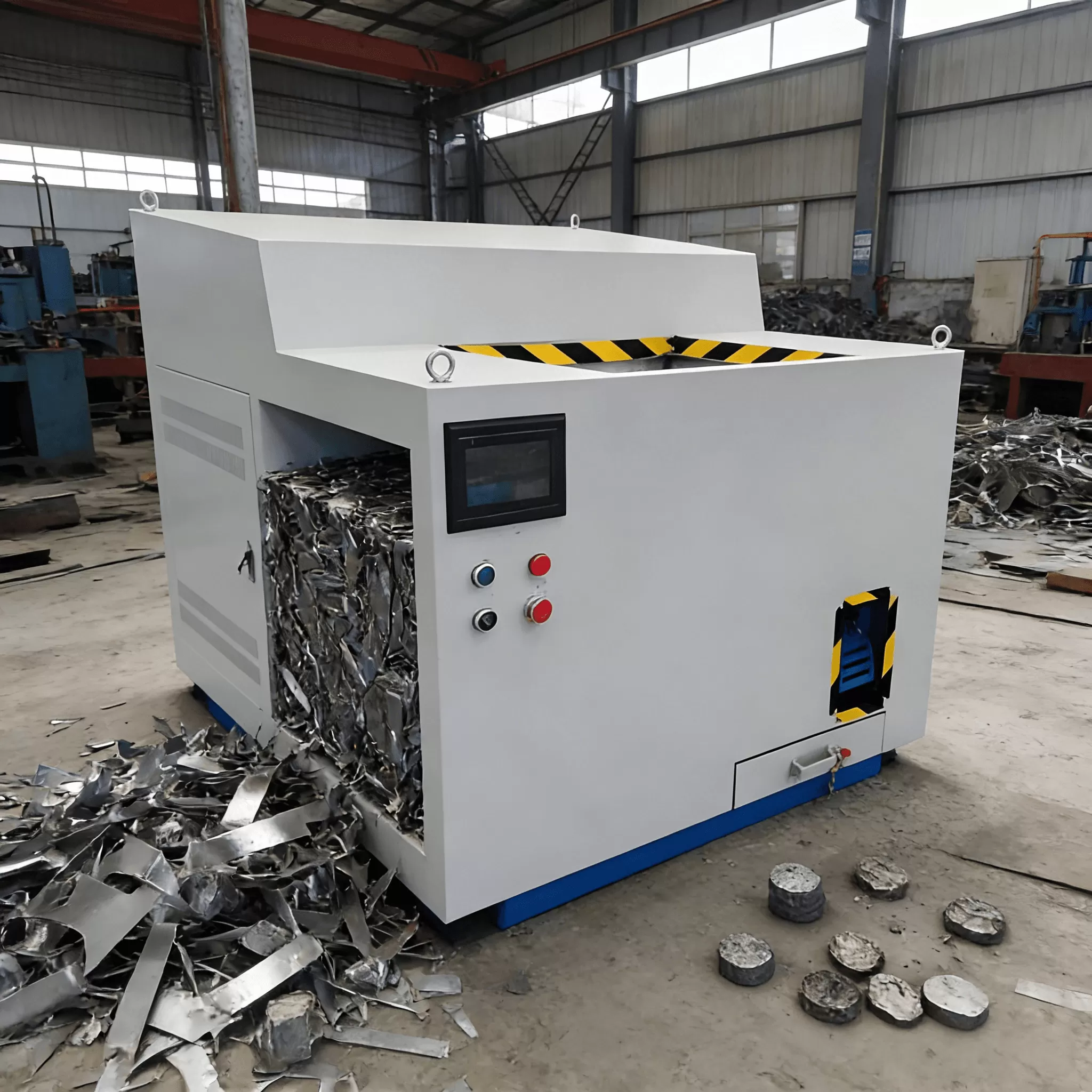
.webp?t=1792048853365 "scrap metal balers")
Understanding Standard Scrap Metal Balers: Benefits and Operational Limits
A standard baling machine is engineered around predictable industry averages. Manufacturers produce these units in standard frame sizes, equipped with fixed-displacement pumps and pre-set hopper dimensions. They process common grades of sheet metal, clippings, and turnings without requiring unique engineering work.
The Strengths of Standard Units
- Lower Capital Expenditure (CAPEX): Standard models eliminate non-recurring engineering (NRE) charges, making them budget-friendly.
- Rapid Deployment: Ready inventory or standardized assembly cycles mean equipment arrives on your factory floor within weeks rather than months.
- Proven Field Reliability: Mass-produced designs run on thoroughly tested hydraulic circuits, simplifying maintenance and spare parts sourcing.
Integration Limits in Automated Environments
Standard scrap metal balers perform well as standalone units, but they often present integration challenges inside tightly linked, lights-out facilities. Their fixed dimensions limit where you can position them relative to your scrap discharge points.
Because their hopper openings, feed heights, and ejector directions cannot be adjusted, standard machines often require secondary handling. You might need to install supplementary incline conveyors or use forklifts to shift bins. This adds transfer steps, increases human labor, and interrupts material flow.
Standard balers work best in facilities with ample square footage, decentralized production cells, and operations that support batch scrap processing.
Tailored Engineering: How Custom Scrap Metal Balers Reshape Automated Workflows
Automated manufacturing layouts leave very little room for compromise. Ceiling heights, structural columns, sub-floor scrap pits, and overhead crane paths dictate where machinery can sit. Custom scrap metal balers address these spatial constraints directly.
When you engineer a baler around your production layout, the machine adapts to your facility, not the other way around. Custom equipment from manufacturers like QUNHUI aligns directly with your primary stamping or cutting lines to maintain continuous scrap flow.
Key Customization Vectors
- Footprint Optimization: Custom frames can be oriented vertically, L-shaped, or built with low profiles to slide beneath stamping bed exits and mezzanines.
- Direct Infeed Integration: Engineers design hoppers to receive metal offcuts directly from underground scrap conveyors, vibratory shakers, or pneumatic cyclonic separators.
- Targeted Compression Hydraulics: Custom cylinder configurations, variable pump setups, and high-tensile wear liners handle abrasive alloys and springy stainless offcuts efficiently.
- Directional Bale Ejection: Ejector rams can push completed bales directly onto automated roller conveyors, cooling tracks, or robotic palletizing stations without manual intervention.
Electrical and Controls Synchronization
True automation depends on reliable software communication. Custom scrap metal recycling equipment incorporates advanced PLC integration that interfaces directly with your plant-wide SCADA or MES platforms.
A customized control panel monitors live data such as main ram pressure, oil temperature, stroke positions, and chamber fill levels. When scrap output spikes during peak production, the baler's automated scrap baling system throttles motor output and cycle frequency automatically to prevent line stalls.
The Layout and Automation Match Matrix
To determine whether your facility needs an off-the-shelf unit or a custom installation, review this direct comparison of core operational criteria:
| Operational Factor | Standard Scrap Metal Balers | Custom Scrap Metal Balers |
|---|---|---|
| Conveyor & Infeed Integration | Requires external chutes, hoppers, or transitions to match existing conveyors. | Engineered directly to align with press chutes, shakers, or magnetic belts. |
| Floor Space Utilization | Rigid dimensions; can create dead zones in tight layouts. | Built around structural pillars, pits, or low overhead ceilings. |
| Cycle Time Synchronization | Fixed cycle speeds; risk of scrap backing up during peak press runs. | Variable hydraulic speeds match maximum press line discharge rates. |
| Control System Interface | Basic relay or standalone PLC; limited handshake signals. | Full industrial Ethernet, Profinet, or Modbus tie-in with central factory MES. |
| Material Specialization | Best for general mild steel, light aluminum, and soft copper scrap. | Customizable shear blades, Hardox liners, and pressure for tough alloys. |
| Implementation Lead Time | Fast (typically 2 to 6 weeks). | Longer (typically 12 to 24 weeks due to design, testing, and fabrication). |
Total Cost of Ownership (TCO) and ROI: Beyond the Purchase Price
Looking only at initial purchase price can be misleading when assessing high-volume scrap machinery. Standard machines carry lower initial invoices, but their operational costs often climb over time if they mismatch your workflow.
Consider the secondary labor costs of a standard unit. If operators must continually fork scrap into the hopper, break down oversized offcuts, or haul loose bales manually, recurring operating expenses increase. Furthermore, mismatched cycle times can force line pauses, costing hundreds of dollars per minute in lost output.
A custom hydraulic baler demands higher initial capital expenditure, but it drives down continuous operational expenses (OPEX). Direct-drop infeed systems remove the need for dedicated forklift operators. Automated multi-stroke compression delivers denser, uniform bales, which lowers shipping costs and earns premium rates from scrap processors.
In high-throughput facilities, a custom automated scrap baling system often achieves full payback within 14 to 22 months through reduced labor, lower power consumption per ton, and uninterrupted production uptime.
Checklist: 5 Crucial Questions Before Committing to a Baler
Work through these diagnostic questions with your production, safety, and continuous improvement teams before selecting your equipment:
- 1. What is your scrap generation profile? Calculate your average scrap volume alongside peak output spikes. Verify offcut dimensions, tensile strengths, and bulk density.
- 2. How does scrap move from the tool to the baler? Determine whether scrap moves via gravity chutes, underfloor belt conveyors, vibratory trays, or dump hoppers.
- 3. What are your physical workspace limits? Map floor loading capacities, ceiling and overhead crane clearances, and traffic paths for personnel and service equipment.
- 4. What communication protocols does your line run? Establish whether the baler must communicate with your safety interlocks, remote monitoring dashboards, or press PLCs.
- 5. What is your strategic timeline and budget model? Decide whether immediate deployment outweighs long-term labor savings, or if engineering a tailored system delivers a stronger three-year ROI.
Frequently Asked Questions
Q1: Can we convert a standard scrap metal baler into an automated unit later on?
A1: You can retrofit auxiliary conveyors, photoelectric sensors, and updated PLC cards onto standard units. However, physical frame constraints, hydraulic valve flow limits, and hopper sizes remain fixed. Heavy retrofits often cost more than buying an engineered system from the start.
Q2: How much factory floor space does an automated scrap baling system typically require?
A2: Space requirements vary widely. Compact vertical standard balers may only take up 4 to 6 square meters, whereas heavy-duty, high-speed horizontal scrap metal balers with continuous infeed conveyors and staging tracks can occupy 30 to 80 square meters.
Q3: How do automated balers handle different scrap alloys on the same line?
A3: Custom machines can store multiple operating recipes within the PLC. Operators select the appropriate profile via the HMI screen when changing stamping dies. The machine adjusts compression force, stroke counts, and hold times to suit aluminum, brass, or high-strength steel offcuts.
Q4: What maintenance routines are critical for automated scrap metal balers?
A4: Oil quality management is vital. Routinely sample hydraulic oil, replace high-pressure filters, and monitor heat exchanger efficiency. You should also inspect wear liners, check shear blade clearances weekly, and confirm all safety interlocks trip properly.
Q5: Can customized balers integrate with automated guided vehicles (AGVs)?
A5: Yes. Custom systems can feature dedicated pick-up tables, automated scales, and barcode or RFID tagging modules. Once an ejector ram pushes out a bale, the system signals an AGV to collect it and move it to the warehouse without operator assistance.
Choose the Right Machine for Your Facility
No single baling setup fits every scrap handling requirement. If you run batch jobs, have surplus floor space, and manage moderate scrap volumes, standard scrap metal balers provide a quick, dependable solution. However, if you manage fast, automated stamping or machining cells, custom-engineered equipment delivers the seamless material flow you need to keep lines running.
QUNHUI designs and manufactures heavy-duty scrap metal recycling equipment engineered to match demanding industrial specifications. We build robust standard machines and configure complex automated baling systems tailored to your facility's exact layout.
Ready to clear your production floor bottlenecks? Contact our engineering team today to review your layout and request a competitive quote on our high-performance scrap metal balers.