

Precision machine tools demand uncompromising defense against hostile operating environments. Fine grinding dust, aggressive chemical emulsions, and red-hot metal swarf continuously threaten linear rails, precision ballscrews, and magnetic encoders. When linear components fail, machines lose positioning accuracy, leading to catastrophic tool crashes and expensive warranty claims.
Standard, off-the-shelf bellows rarely survive the severe cycle rates and spatial constraints of bespoke CNC systems. Machine builders need engineered components designed around specific kinematic envelopes. At QUNHUI, we manufacture high-performance machine protection systems tailored to complex dynamic profiles. If you are developing a new machining platform or overhauling an existing linear axis, submit your technical drawings to our engineering team for a fast feasibility analysis and direct quote.
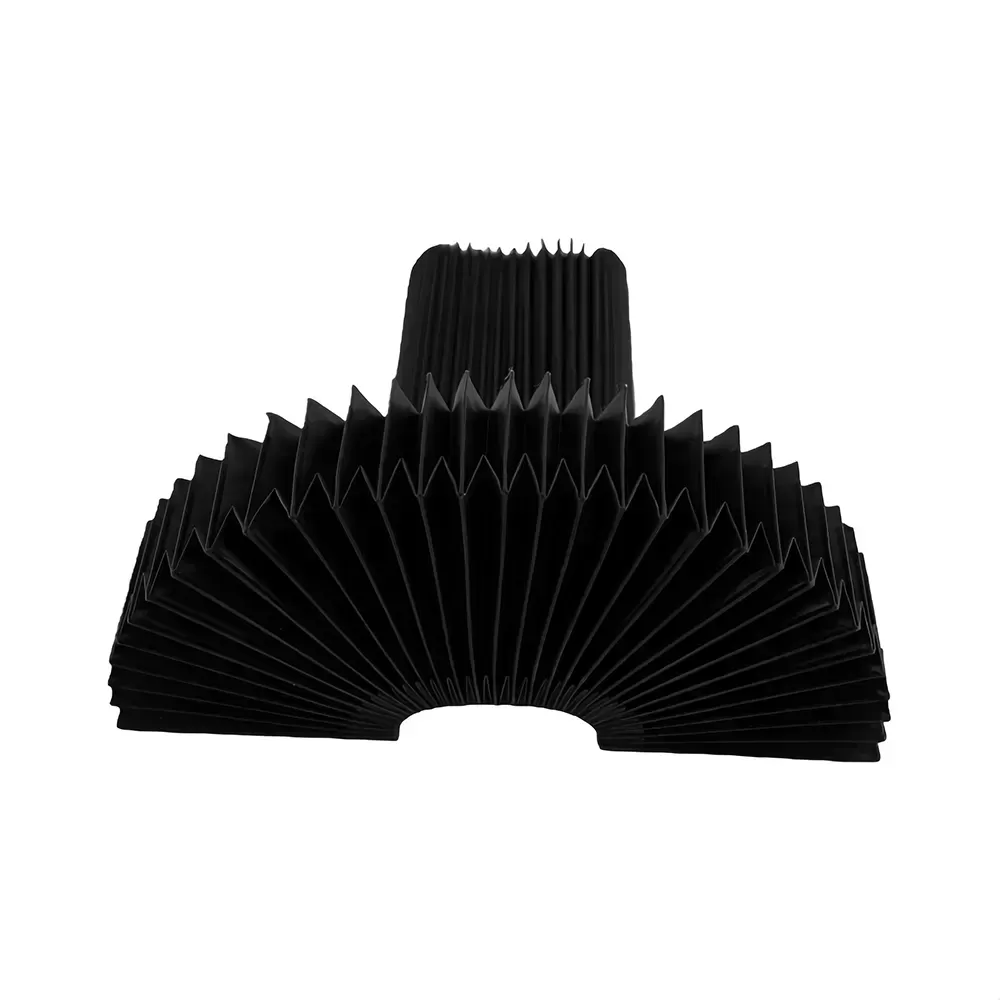
1. The Critical Role of Flexible Accordion Dust Covers in CNC
Reliability
Linear guideways function with tolerances measured in single microns. A single hardened steel chip wedged between a runner block and a rail track can destroy recirculating ball bearings within minutes. According to SME (Society of Manufacturing Engineers) technical resources, mechanical contamination remains among the leading root causes of premature ballscrew and linear guide assembly degradation.
A well-engineered flexible accordion dust cover serves as a continuous, dynamic barrier. It protects structural kinematics without restricting axis movement. While traditional sheet metal telescopic way covers handle heavy chip volumes, they add massive reciprocating weight, generate acoustic noise, and consume significant bed length when compressed.
In contrast, a modern CNC bellows cover provides a superior extension-to-compression ratio. By utilizing engineered technical textiles and rigid internal PVC or polyurethane stiffeners, accordion-style barriers isolate precision components from contaminants while minimizing mechanical inertia on dynamic linear motor drives.
2. Anatomy of an Accordion Bellows: How the Mechanics Work
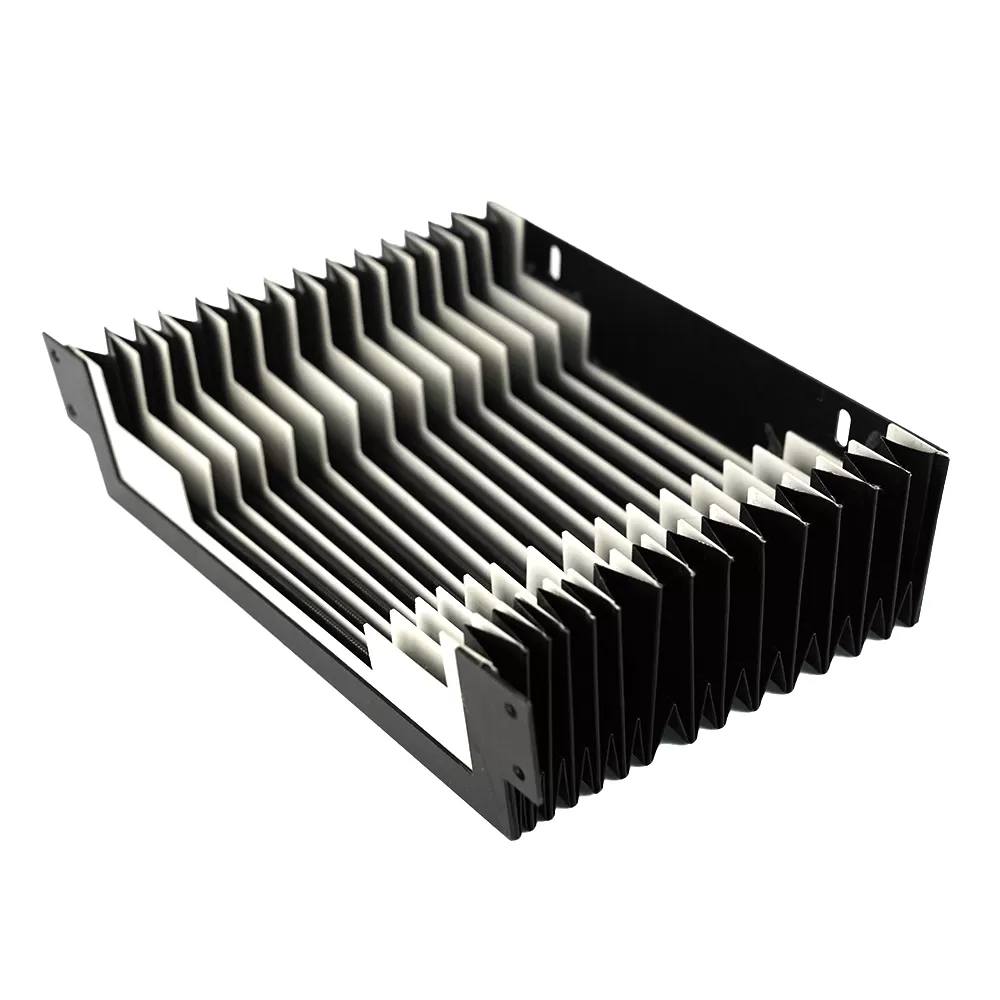
Understanding bellows construction helps mechanical design engineers identify structural weak points early in the CAD modeling phase. A standard flexible accordion dust cover consists of three primary elements:
- The Outer Shell (Technical Textile): A coated, high-tensile fabric selected specifically for mechanical, thermal, and chemical exposure resistance. Common coatings include polyurethane (PU), polyvinyl chloride (PVC), and fluoroelastomers.
- Internal Skeletal Stiffeners: Rigid plates made from PVC, polypropylene, or stamped aluminum. These structural skeletons define the outer pleat profiles, prevent the fabric from collapsing inward against moving guide surfaces, and retain the geometry under vacuum or pressure swings.
- End Plates and Mounting Flanges: Precision metal or composite flanges that bolt directly to the stationary casting and the moving axis carriage. They create an airtight or liquid-resistant structural joint.
These components are permanently joined using one of two primary processes: thermal welding (continuous high-frequency induction) or industrial stitching backed with vulcanized sealing tapes. Thermal welding fuses the textile directly to the internal stiffener, forming a continuous, fluid-tight joint that withstands continuous liquid coolant flooding without adhesive delamination.
3. Key Engineering Parameters for Custom Bellows Design
Specifying a custom accordion bellows requires precise kinematic calculations. Never treat way covers as secondary decorative trim. You must factor their compressed volume and dynamic limits into structural machine beds from day one.
Stroke Ratio and Spatial Constraints
Every bellows consumes physical stroke length. The design must accommodate three distinct dimensions:
- Extended Length ($L_{max}$): The maximum dynamic stretch of the axis plus safety overtravel margins.
- Compressed Length ($L_{min}$): The solid stack height of all pleats, internal stiffeners, and guide shoes packed together when the axis pulls into its home or reverse limit position.
- Stroke Length ($S$): Calculated as:
S = L_{max} - L_{min}
The compression ratio determines how efficiently the cover uses space. Generally, a narrower fold depth yields a larger compressed stack height for the same total extension. If your machine bed envelope is compact, our team at QUNHUI can adjust the pleat pitch and stiffener thickness to hit the required absolute minimum compressed length without sacrificing textile durability.
Velocity, Acceleration, and Dynamic Inertia
Modern machine centers driven by linear motors frequently reach velocities over 90 m/min and accelerations surpassing 2G. When an axis reverses direction violently, standard pleats experience intense inertia forces. The folds compress irregularly, causing what engineers call "bellows slap" or erratic flutter.
To operate reliably at high dynamic speeds, accordion dust covers need internal pantograph scissors or tension-equalizing guide bands. These mechanical linkages ensure that every individual pleat opens and closes uniformly across the full travel stroke, preventing localized material fatigue.
Mounting Orientation: Managing Deflection and Gravity
The direction of machine movement radically alters the stress profile on the assembly:
- Horizontal Installation: Covers tend to sag over long strokes. Without bottom-edge support gliders or guide rods, the interior skeleton will drag across the guide rail, accelerating wear.
- Vertical Installation: Pleats risk buckling under their own weight. High-speed vertical axes require balanced weight distribution, internal suspension cords, or counter-pleat tensioners.
- Cross-Rail / Slanted Installation: Chips and heavy coolant can settle into the folds. The fold geometry must present angled deflection surfaces so contaminants naturally slide off toward chip conveyers.
4. Material Selection Guide: Matching the Cover to Machine Environment
Machine tool environments vary drastically depending on the cutting operation. Dry machining of graphite or cast iron generates fine abrasives. Titanium milling throws red-hot, razor-sharp ribbons under high-pressure coolant jets. Textile fabrics must comply with stringent physical benchmarks, such as ASTM D751 standard test methods for coated fabrics, to resist bursting, tearing, and chemical permeation.
| Material Combination | Primary Advantages | Thermal Resistance | Best Applications |
|---|---|---|---|
| Polyester / Nylon with Polyurethane (PU) | Exceptional flexibility, oil resistance, and superior tensile endurance across millions of cycles. | -30°C to +90°C | General linear guide dust protection, woodworking CNCs, pick-and-place automation. |
| Aramid (Kevlar) Base with Silicone / Neoprene | High puncture resistance, non-flammable, withstands flying weld spatter and hot chips. | -50°C to +260°C | Laser cutting tables, plasma torches, high-temperature welding cells. |
| PVC-Coated Polyamide Fabric | Cost-effective, excellent chemical stability against synthetic cutting fluids and coolants. | -20°C to +80°C | Standard wet milling centers, surface grinders, coordinate measuring machines (CMM). |
| Armored Bellows (PU Fabric + Stainless Steel Lamellas) | Combines fabric flex with the impenetrable defense of interlocking, spring-tensioned steel plates. | Up to +400°C (at the metal shield surface) | Heavy-duty horizontal boring mills, turning lathes with high chip volumes. |
For specialized installations, machine builders must cross-reference safety measures outlined in standards such as ISO 23125 for machine tool safety, ensuring that external protective barriers stop chips from escaping and safeguard maintenance personnel from crushing zones.
5. Guiding and Mounting Options for CNC Machine Tool Bellows
Securing the cover securely to the machine tool frame is as critical as the textile choice itself. Improper mounting can induce torsional twists, leading to early tearing at the corner pleats.
Internal Guide Mechanisms
To eliminate direct friction against hardened ways, engineers integrate internal guides into the stiffeners:
- PTFE or POM Bushing Gliders: Low-friction synthetic shoes that glide smoothly on the ground shoulder of the linear rail.
- Bearing-Mounted Guide Rollers: Ideal for rapid traverse speeds exceeding 60 m/min. Rollers eliminate sliding friction, reducing motor heat load and vibration.
- Internal Stabilizer Bars: Hardened guide rods running through precisely punched clearance holes in the PVC skeletons, keeping the bellows aligned over extended spans.
Mounting Interfaces
The standard connection method involves laser-cut aluminum or steel end plates matching the bolt pattern of the machine saddle. In high-maintenance settings, designers increasingly integrate heavy-duty hook-and-loop industrial velcro or quick-release cam-lock clips. These systems permit operators to unclip the dust cover, inspect the linear truck assembly, and snap the cover back in position without dismantling mechanical hardware.
6. Common Design Mistakes CNC Builders Make (And How to Avoid Them)
Over decades of manufacturing custom accordion bellows, QUNHUI engineers have seen small structural oversights trigger catastrophic failures. Here are the most frequent pitfalls you must avoid:
Trap 1: Forgetting Axis Air Displacement
A flexible accordion dust cover acts like a giant dynamic lung. When the axis pulls back at high speed, the internal volume collapses instantly. Without adequate air relief, the cover creates strong positive pressure, ballooning outwards or tearing free from its mounting bolts.
Conversely, rapid extension produces a vacuum that sucks the bellows inward against spinning ballscrews. Always incorporate internal breather filters, wire-mesh exhaust vents, or engineered micro-porous venting zones on non-splash surfaces to equalize barometric differentials continuously.
Trap 2: Insufficient Fold Depth and Corner Fatigue
Selecting a shallow fold depth saves machine bed space, but it forces the textile to bend at acute angles. Sharp flexing concentrates mechanical stress precisely at the welded seams. Over millions of cycles, the coating splits, fluid seeps in, and the internal PVC cards rot. Maintain an adequate fold radius based on the textile manufacturer's flex endurance specifications.
Trap 3: Designing Liquid Pockets That Retain Coolant
When designing covers for flood-coolant environments, avoid dead horizontal surfaces. Coolant pools on top of static pleats, depositing micro-fine sludge and swarf fines. As the puddle evaporates, residual salts crust up, stiffening the fabric until it tears. Design pleats with a peaked roof (gable shape) or install a continuous, slanted angle that channels fluids away toward recovery gutters.
Frequently Asked Questions (FAQ)
Q1: How do I accurately calculate the compressed length ($L_{min}$)
for a custom flexible accordion dust cover?
A1: The
compressed stack length depends on three elements: the fabric thickness, the
internal stiffener thickness, and the mounting flange dimensions. The core
calculation is: L_{min} = (Number of folds × [Fabric Thickness × 2 +
Stiffener Thickness]) + Flange Thicknesses. Always add a 10% safety cushion
to the calculation to prevent the bellows from mechanically bottoming out during
axis overtravel.
Q2: When should I choose an armored steel lamella bellows instead of
a standard textile bellows?
A2: Use armored bellows
when linear rails face heavy chip loads, sharp stainless or titanium shavings,
or hot swarf that exceeds 100°C. The overlapping stainless-steel tiles deflect
abrasive impacts and thermal bursts, while the flexible textile body beneath
provides a complete seal against liquid coolants and fine particulate dust.
Q3: How do internal air vents prevent bellows from rupturing during
high-speed machining?
A3: High-speed stroke
movement causes rapid volumetric expansion and compression. Without ventilation,
trapped air creates positive pressure during compression, popping the seams, or
negative vacuum during extension, pulling the fabric into rotating machine
components. Air vents or filtered breathing ports equalize internal and external
atmospheric pressure seamlessly during fast directional shifts.
Q4: Can a flexible accordion dust cover resist synthetic,
water-soluble CNC coolants?
A4: Yes, but material
selection is critical. Standard adhesives dissolve when exposed to aggressive,
alkaline synthetic coolants. For wet cutting environments, specify continuous
high-frequency thermally welded polyurethane or PVC-coated polyester. Thermal
fusion creates an impenetrable seam without glue, preventing fluid penetration
and internal card breakdown.
Q5: What clearance should I design between the inner profile of the
bellows and the linear rail?
A5: Maintain a minimum
radial clearance of 5 mm to 10 mm between the inner edge of the stiffener card
and any fixed or moving mechanical component. If the machine operates with high
vibration or long horizontal unsupported spans, increase this clearance to 15 mm
or install internal low-friction guide shoes to eliminate direct contact.
7. Engineering Reliable Protection for Modern CNC Systems
A reliable flexible accordion dust cover protects your machine's precision guideways and ballscrews. Specifying the correct internal geometry, choosing resilient base fabrics, and factoring kinematic acceleration curves into your initial machine frame models directly improves Mean Time Between Failures (MTBF) and protects your brand's reputation for manufacturing precision tools.
Do not compromise dynamic performance with generic catalog parts. QUNHUI partners directly with CNC machine builders, automation developers, and robotics integrators worldwide to engineer fully customized, production-ready machine tool way cover solutions. Contact our technical sales engineers today to discuss your motion profiles, download custom CAD mounting templates, or request a detailed quotation for your upcoming machine build.