

High-speed milling centers, multi-axis lathes, and precision tooling deliver excellent shop floor margins. Yet, many manufacturing facilities lose those margins the moment raw material converts into metal waste.
Modern machine shops invest millions in pallet changers, robotic arms, and lights-out machining cells. Despite these advances, chip management frequently relies on manual labor, overflowing wheeled bins, and slippery shop floors.
Searching for an industrial scrap baler for sale is not just an equipment procurement task. For a precision machine facility, it represents the critical final step in building an end-to-end automated production loop.
At QUNHUI, we engineer automated chip management and custom compaction systems that bridge the gap between chip conveyor discharge and scrap logistics. Contact our engineering team today to evaluate your swarf output and receive a tailored technical concept.
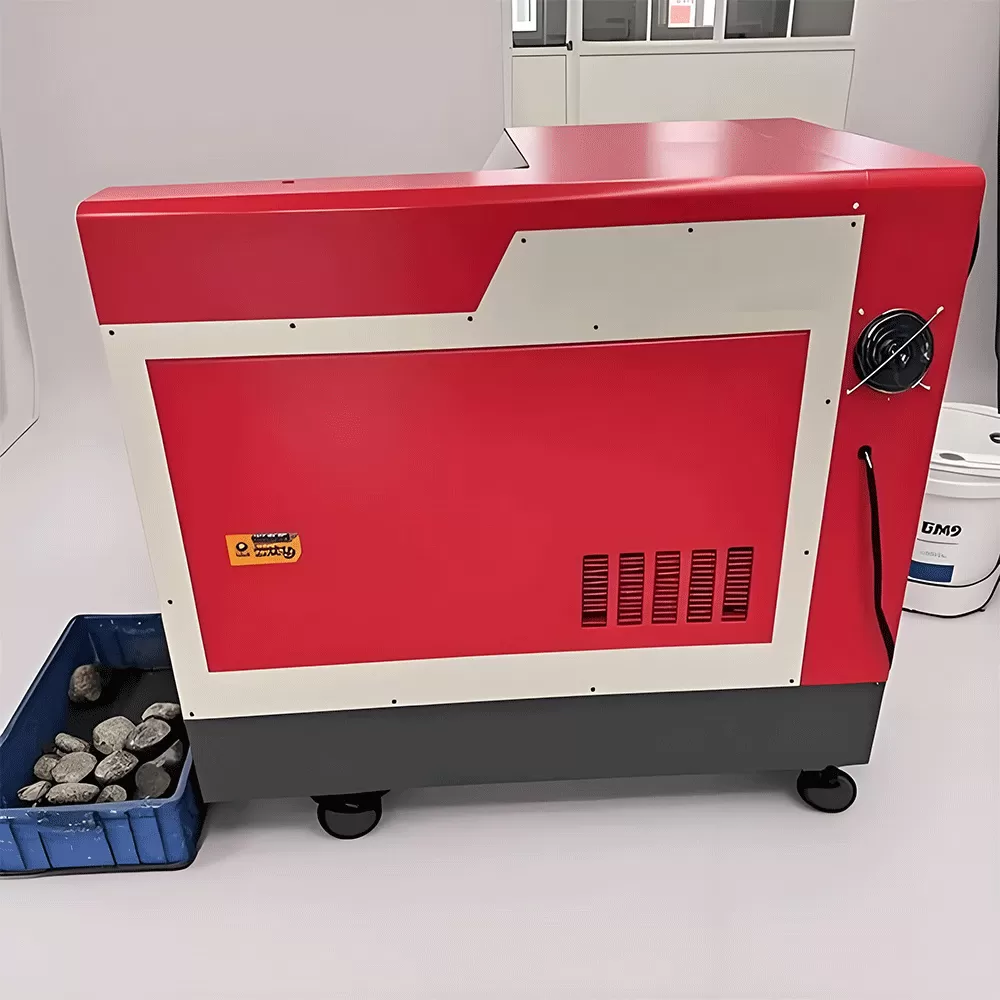
The Hidden Operational Drain of Traditional CNC Swarf Handling
Loose metal turnings, stringy bird nests, and wet swarf consume valuable operational resources. When operators stop spindle cycles to shovel chips from machine sumps, productivity drops immediately.
Workplace hazards grow alongside unmanaged scrap piles. Sharp metal fragments cause lacerations, while oil residue dripped across forklift pathways creates slip risks that violate safety standards established by agencies like OSHA.
Floor space presents another urgent challenge. Uncompressed machining scrap has an extremely low bulk density, often consisting of 85% to 90% empty air. Metal turnings fill collection bins rapidly, turning production space into improvised scrap yards.
The financial losses extend directly to material shipping and smelting. Hauling loose chips means paying transport companies to move air and residual coolant. Recyclers heavily discount loose swarf due to moisture contamination and excessive burn-off losses during furnace charging.
Why Off-the-Shelf Balers Fall Short in Modern CNC Environments
Standard packaging balers or generic agricultural presses cannot handle continuous machining output. CNC scrap brings specific engineering challenges that require a customized compaction approach.
A standard hydraulic metal baler for sale on an equipment listing site often lacks the abrasion resistance, hydraulic force, or cycle speed needed for high-duty cycles. Machine shops handle diverse alloys, each demanding specific compaction mechanics:
- 6000 and 7000 Series Aluminum: Springy turnings require sustained final pressing forces to overcome material memory and prevent bale expansion.
- Alloy Steels and Cast Iron: Fine chips generate massive abrasive wear, demanding hardened, replaceable wear liners in the compaction chamber.
- Titanium and Exotic Superalloys: High-value turnings demand strict cross-contamination controls and targeted oil separation to maintain raw material purity.
Conveyor discharge heights also vary across machine builder models. A stationary, generic press creates bottlenecks if its hopper cannot interface with your continuous swarf conveyor network.
Furthermore, standard balers ignore valuable cutting fluids. A tailored metal chip compactor integrates dedicated fluid recovery reservoirs, catching petroleum-based oils and water-soluble emulsions right at the compaction zone.
The Engineering Behind Custom CNC Swarf Management
Achieving a true lights-out operation requires handling scrap with the same level of automation applied to raw bar stock and finished parts. An effective chip-to-bale sequence creates a continuous, clean workflow through the following stages:
1. Chip Evacuation and Continuous Feed
Individual machine tool conveyors drop turnings directly into localized horizontal drag-chain or pneumatic collection lines. The scrap moves overhead or sub-floor, eliminating manual tote bins from operating aisles.
2. Shredding and Volume Reduction
Long, stringy turnings pass through an integrated shredder. Dual-shaft rotary cutters break long nests into uniform, flowable chips, preparing the waste stream for optimal chamber feeding.
3. High-Pressure Compaction
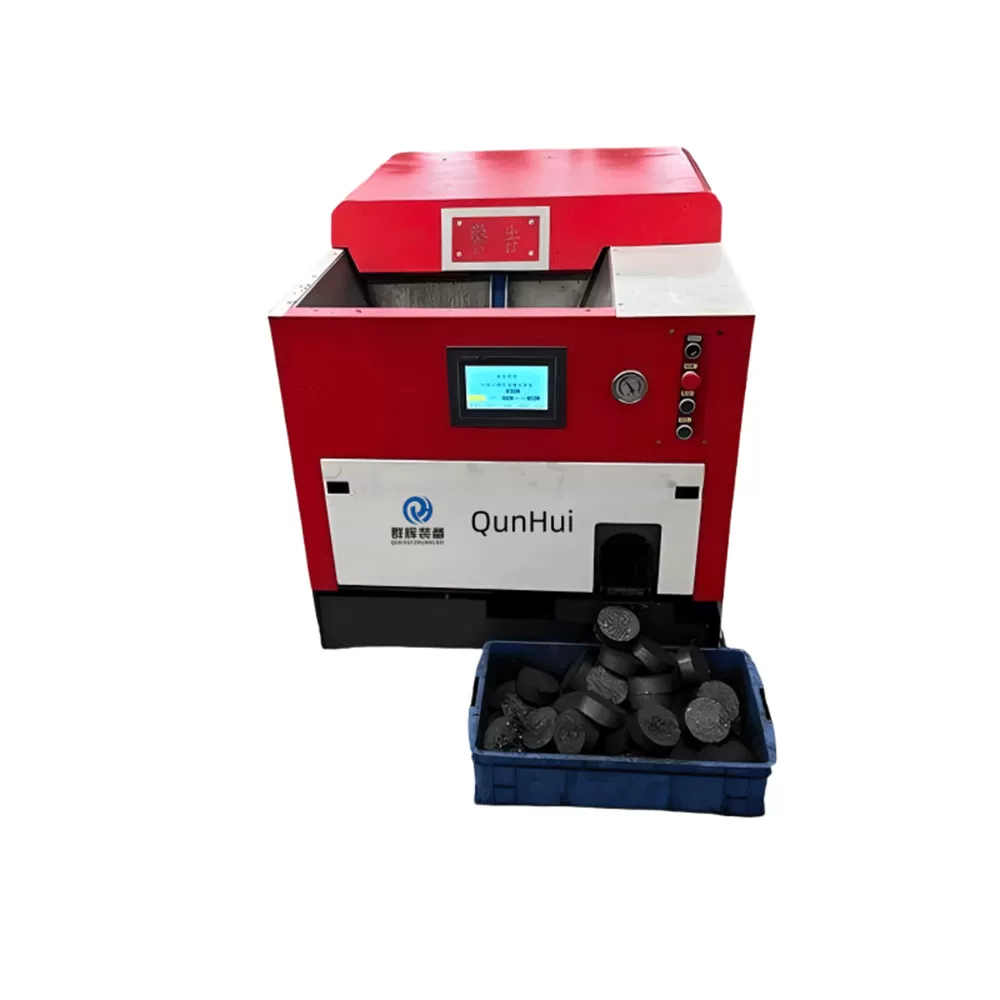
The flowable chips drop into the compression chamber of the custom baler. High-tonnage hydraulic cylinders compress the material under forces exceeding 250 tons, driving out interstitial space and surface fluids.
4. Active Coolant Recovery
Integrated fluid filtration channels capture cutting oils forced out during the compression stroke. The recovered coolant drains directly into settling reservoirs, passing through primary filtration before returning to central supply sumps.
5. Automatic Bale Discharge and Stacking
Dense, solid metal pucks or square bales eject automatically onto an offload conveyor. The consolidated blocks stack directly into heavy-duty shipping containers or automated storage systems without operator intervention.
QUNHUI custom-configures every processing stage, matching pump displacements, motor kilowatt ratings, and chamber dimensions to your actual hourly chip production rates.
Quantifying ROI: Turning Machining Waste into a Revenue Center
A custom compaction press delivers measurable cost reductions across your balance sheet. Calculating the direct ROI of scrap metal management reveals multiple clear financial benefits:
Scrap Value Premiums
Secondary smelters and metal recyclers price dense briquettes and tight bales significantly higher than wet, loose swarf. Compacting scrap pushes bulk density toward 80% to 90% of solid metal, drastically minimizing oxidation losses during remelting. Studies from ISRI show clean, compacted scrap consistently secures higher mill-grade scrap values.
Coolant and Cutting Fluid Savings
Loose turnings carry out significant volumes of cutting fluid, often up to 10% to 20% of scrap weight. Mechanical compaction reclaims up to 98% of this bound coolant. Shops spend thousands less per month on neat cutting oils and expensive synthetic concentrates.
Drastic Reductions in Material Handling and Logistics
Compressing scrap at ratios of 10:1 or 20:1 reduces bin swaps proportionally. Forklift traffic drops, cutting labor requirements and plant floor collisions. Hauling trucks run at full weight capacity instead of timing out on volume, reducing monthly freight bills.
Consider the performance profile of an active tier-one automotive parts facility:
- Swarf Volume Handled: 45 tons of aluminum turnings per month.
- Coolant Recovered: Roughly 2,400 liters of synthetic cutting fluid recovered monthly.
- Scrap Premium Realized: A 15% to 22% payout increase from secondary refiners for dense, dry pucks.
- Direct Labor Recovered: 18 operator hours saved each week on chip handling and floor cleaning.
In most medium-to-large production setups, payback schedules range from 9 to 18 months, converting an operational nuisance into an internal profit center.
Checklist for Selecting a Hydraulic Metal Baler for Sale
Evaluating commercial machinery requires looking past baseline tonnage ratings. To keep your CNC production cells running without downtime, ensure any equipment under consideration meets these criteria:
1. Hydraulic Power and Ram Velocity
Review the continuous duty rating of the hydraulic power unit (HPU). Check cycle times under load. Ensure the hydraulic circuit integrates regenerative valves to cycle rapidly without overheating pump motors during peak machining shifts.
2. Wear-Resistant Liner Plates
Tool steel chips, abrasive alloys, and cast iron degrade mild steel quickly. Demand compaction chambers lined with replaceable Hardox wear plates. Look for shear knives machined from high-carbon, high-chromium tool steels to slice through stray turnings cleanly.
3. PLC Integration and Industry 4.0 Compatibility
Your baler must communicate with your broader plant architecture. Verify that the machine control panel utilizes enterprise-standard PLCs (like Siemens or Allen-Bradley). The control software should push diagnostic data, bin-fill levels, and cycle counts directly to your Manufacturing Execution System (MES).
4. Fluid Containment and Pumping Redundancy
Confirm the compactor features a fully enclosed perimeter drain tray. Heavy industrial operations also require automated pump systems that flush chips from fluid collection channels, preventing sludge build-up and dry pump runs.
5. Factory Engineering and Customization Support
Do not settle for a standard import press with no local application engineering. Choose a manufacturing partner capable of customizing hopper geometry, conveyor interlocks, and footprint orientations to match your available plant floor space.
For more insights on integrating auxiliary shop machinery, review processing guidelines published by trade resources like Modern Machine Shop.
Frequently Asked Questions (FAQ)
Q1: Can a scrap baler handle different metal alloys in the same production shift?
A1: Yes, provided the baler features an open-access compression chamber and simple recipe management on the PLC touch screen. When switching between incompatible metals (such as aluminum and high-nickel alloys), operators can run an automated chamber-clear cycle to avoid cross-contaminating scrap grades.
Q2: How dry are the metal bales produced by an industrial compaction press?
A2: High-pressure hydraulic briquetting and baling presses extract liquid through mechanical pressure. They routinely achieve residual moisture contents below 2% to 3%. This moisture level allows direct charging into secondary melting furnaces without requiring external thermal drying.
Q3: What maintenance routines are required for a hydraulic scrap baler?
A3: Standard maintenance involves weekly inspections of hydraulic oil levels, filtration changes every 1,500 to 2,000 run hours, lubrication of cylinder clevis pins, and inspection of chamber wear liners. High-tier machines feature automated central lubrication units to minimize manual service tasks.
Q4: How does baling metal compare to running loose scrap through a centrifuge?
A4: Centrifuges extract cutting oil but leave the chips loose, bulky, and difficult to transport. A specialized scrap baler or briquetter recovers high volumes of oil while condensing the scrap into high-density blocks, solving fluid recovery and scrap logistics simultaneously.
Q5: What safety interlocks should be present on an automated baler?
A5: Systems require Category 4 safety interlocks on all access panels, zero-speed switches on shredder shafts, hydraulic pressure relief failsafes, dual-channel emergency stop circuits, and optical area sensors guarding the ejection zone.
Take Control of Your Machine Shop's Scrap Stream
Unmanaged scrap creates safety risks, consumes valuable plant space, and chips away at operational profits. Manual swarf handling is obsolete in an era defined by automated CNC machining lines.
A precision-engineered baler resolves storage bottlenecks, protects cutting fluid investments, and improves scrap resale margins. It provides the mechanical efficiency your facility needs to maintain total material control.
Stop treating metal swarf as a messy production byproduct. Turn it into a measurable competitive advantage with QUNHUI custom scrap processing solutions.
Looking for a rugged, automated scrap baler for sale built to match your shop's exact output? Contact the applications team at QUNHUI today. Send us your alloy specs, hourly scrap tonnage, and shop footprint to receive a complimentary engineering assessment and ROI projection.