
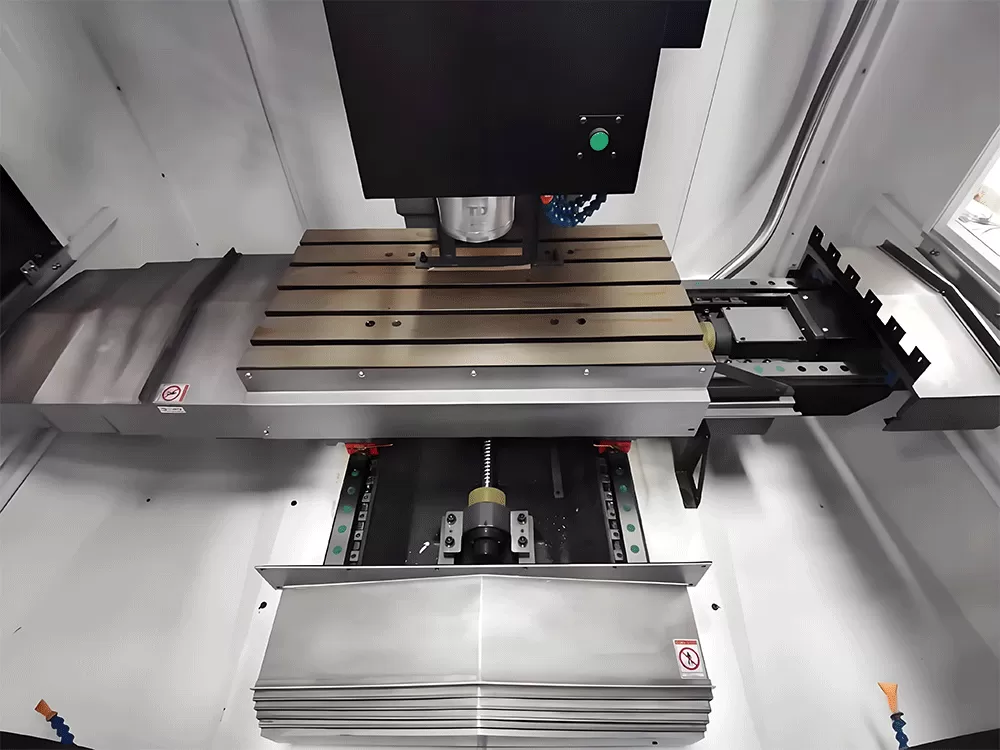
Precision machining operations rely on the unimpeded, repeatable movement of linear guide rails, ball screws, and encoder scales. In heavy manufacturing facilities, these linear components are constantly exposed to hostile elements, including hot metallic chips, abrasive particulates, and chemically aggressive cutting fluids. Without adequate shielding, the structural integrity of a machine tool degrades rapidly, leading to tracking errors, surface finish imperfections, and expensive unplanned downtime. A robust machine way cover acts as the primary mechanical barrier preserving these sensitive linear motion assemblies.
Developing an effective protection strategy requires a deep understanding of mechanical design, material science, and tribology. Standard, off-the-shelf shielding solutions often fail when subjected to the high-speed dynamics and chemical environments of modern CNC machining centers. Through deliberate engineering, QUNHUI designs custom protection systems that balance low drag forces, reliable coolant sealing, and long-term structural durability under continuous operating cycles.
The Functional Mechanics of Guide Rail Protection
The primary role of a machine way cover is to isolate the guide rails and drive mechanisms from external contamination. However, achieving this isolation is technically challenging due to the dynamic nature of machine tool axes. The protective barrier must expand and contract in perfect synchronization with the axis travel, maintaining a tight seal at all positions without introducing excessive mechanical resistance.
Contaminant characteristics vary significantly across different machining applications, requiring targeted barrier designs:
Hot Metallic Chips: During heavy milling or turning of materials like stainless steel or titanium, chips can reach temperatures exceeding 300 degrees Celsius. If these hot shavings land directly on guide rails or polyurethane seals, they cause localized thermal damage and physical scoring.
Abrasive Dust: Machining cast iron, graphite, or composite materials produces fine, highly abrasive dust. These micro-particles act as grinding agents if they mix with the lubricating grease on linear guides, accelerating wear on ball carriages.
Coolant Ingress: Modern high-pressure flood cooling and synthetic metalworking fluids can chemically break down polyurethane wipers and penetrate standard seals, washing away internal carriage lubrication.
To address these challenges, the design of a machine way cover must incorporate durable wiper systems, robust panel structures, and low-friction guiding components. Proper management of these factors ensures that the cover does not deflect under high chip loads or bind during rapid movements.
Classifying Machine Way Cover Configurations
Industrial machinery utilizes several distinct styles of protective covers, each suited to specific motion profiles, space constraints, and contaminant types. Selecting the appropriate style depends on the orientation of the axis, the velocity of travel, and the nature of the waste material generated during production.
Telescopic Steel Covers
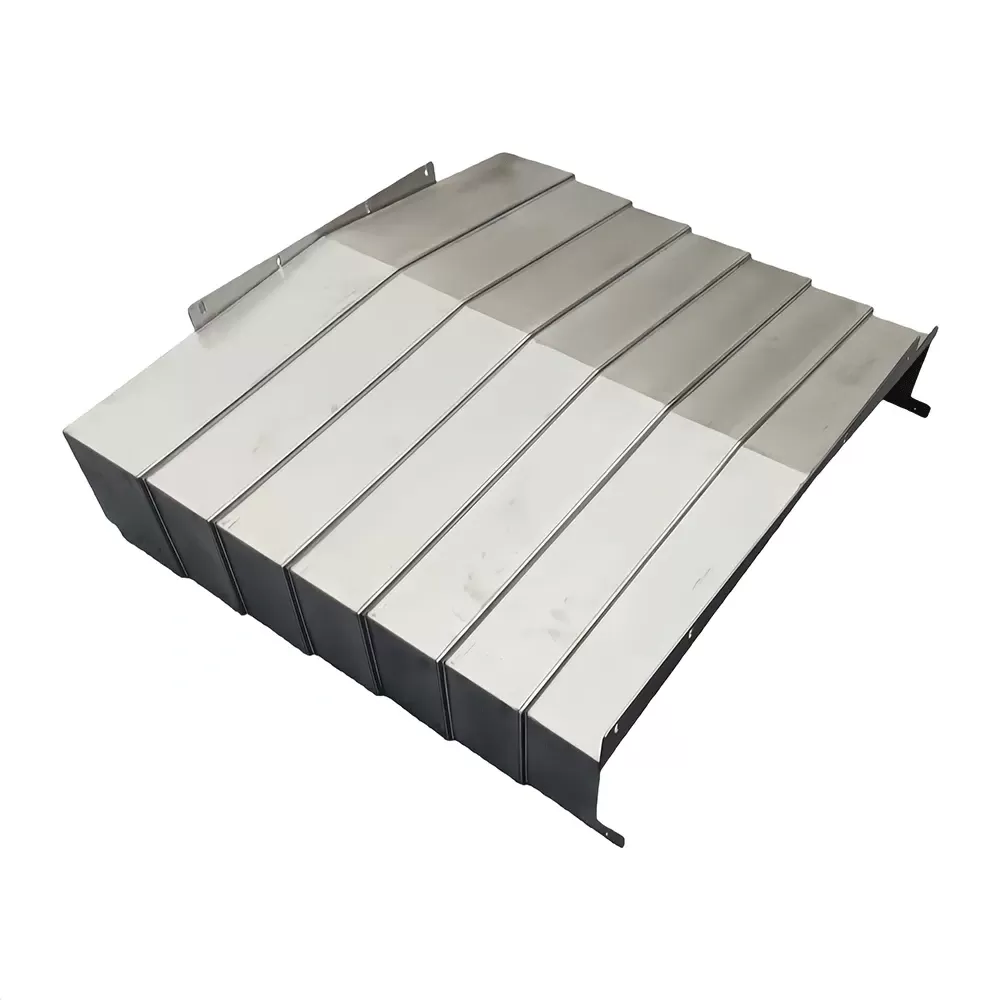
For heavy-duty milling, boring, and turning centers, telescopic steel covers represent the industry standard. Constructed from individual, interlocking sheet metal boxes, these covers slide over one another to provide maximum physical protection against heavy chip volumes and dropped workpieces. Brass or low-friction polymer guide shoes align the individual boxes, ensuring parallel travel. High-durability wipers mounted on the leading edge of each box scrape chips and coolant off the preceding section during compression.
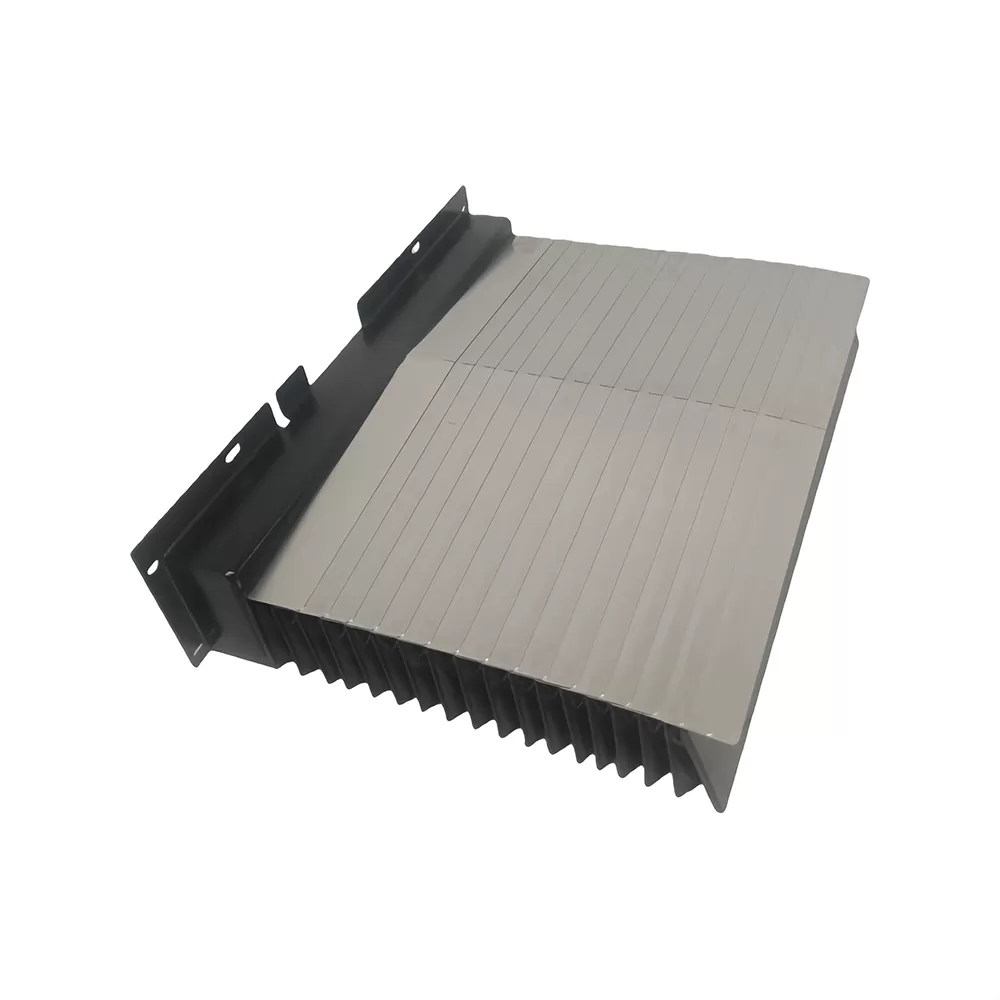
Flexible Fabric and Elastomer Bellows
In applications where high-speed, light duty, or non-metallic materials are processed—such as in laser cutters, wood routers, or EDM machines—flexible bellows are often the preferred option. These covers utilize a combination of specialized fabrics, such as polyurethane-coated nylon or fiberglass, supported by internal PVC stiffeners. Because they lack heavy steel panels, bellows exhibit low mass and can operate at high travel speeds and acceleration rates. However, they lack the impact resistance required for high-volume metal-cutting environments unless fitted with stainless steel cladding lamellas.
Apron and Roll-Up Covers
When space behind the machine travel envelope is highly restricted, traditional telescoping covers may be too bulky due to their compressed length limitations. Apron covers, composed of linked aluminum profiles or heavy-duty fabric strips, roll up onto a spring-loaded spring drum or drape over the machine bed. While highly space-efficient, they generally do not offer the same level of hermetic sealing against fine dust and high-pressure fluids as telescopic steel covers.
Engineering Failure Modes in Harsh Machining Environments
To design more reliable protective systems, engineers must analyze why standard covers fail under industrial operating conditions. Analyzing these failure points allows QUNHUI to implement preventive design features directly into the manufacturing process.
One common issue stems from wiper wear and degradation. The wiper blade is the only component in direct contact with the sliding surfaces of the cover. Over time, the abrasive action of fine chips wears down the wiper lip, while exposure to sulfur- or chlorine-based coolants causes the elastomer to swell, harden, or crack. Once the wiper loses its flexibility, fluid and small particles bypass the seal, accumulating inside the cover boxes and eventually reaching the precision linear guides.
A second major failure mode is mechanical deformation caused by high-acceleration impacts. In modern high-speed machining centers, axes frequently accelerate at rates exceeding 1G, with rapid traverse speeds reaching 60 to 80 meters per minute. In standard telescopic covers, the individual steel boxes pull each other sequentially via internal metal tabs. At high speeds, these sudden, consecutive impacts generate severe shock loads, causing the steel panels to warp, weld seams to crack, and guide shoes to shear off.
Gravity-induced sagging in vertical and cross-slide axes also presents a major hurdle. In large horizontal boring mills, vertical telescopic covers must span several meters. Without proper structural support, the weight of the steel boxes causes them to sag forward or tilt. This misalignment increases sliding friction, accelerates wear on the brass guides, and causes the wipers to lift off the steel surfaces, rendering the sealing system ineffective.
Custom Manufacturing Standards at QUNHUI
Addressing these demanding operational requirements demands precision manufacturing and careful material selection. QUNHUI builds custom protective systems designed to handle the exact dynamic loads and chemical exposures of each specific machine tool configuration.
Our manufacturing process focuses on several critical areas:
High-Tensile Steel Selection: We utilize high-yield, cold-rolled steel or stainless steel sheets, typically ranging from 1.5 mm to 3.0 mm in thickness. This provides the necessary rigidity to resist physical impacts and step-on loads without adding unnecessary mass to the motion system.
Advanced Wiper Chemistry: To combat chemical degradation, we utilize custom-formulated polyurethane and synthetic rubber wiper lips. These materials undergo extensive testing to ensure they maintain their elasticity and shore hardness when continuously submerged in synthetic, semi-synthetic, and water-soluble metalworking fluids.
Synchronized Scissor Mechanisms: To eliminate high-speed impact forces in rapid-traverse machines, QUNHUI integrates heavy-duty pantograph scissor linkages. These mechanisms distribute the acceleration forces evenly across all telescopic panels, ensuring they expand and retract simultaneously rather than sequentially. This design reduces noise, eliminates impact stress, and significantly extends the service life of the entire assembly.
Precision Machined Guides: Rather than relying on simple folded steel edges, we use precision-milled brass or specialized polymer guide glides. These inserts minimize sliding friction, prevent stick-slip vibration, and maintain precise parallel alignment between the overlapping steel boxes.
Selection Metrics for Specifying Protective Covers
When selecting or retrofitting a machine way cover, design engineers must evaluate several physical and operational metrics to ensure reliable integration. Choosing a cover solely based on dimensions often leads to premature failure or restricted machine travel.
Installation Orientation
Daily Cleaning: Remove large build-ups of heavy metal chips from the top surface of the cover panels. When using compressed air for cleaning, avoid directing the airflow directly at the wiper seals, as this can force fine abrasive particles and moisture underneath the wiper lip and onto the guide rails.
Wiper Lip Inspection: Periodically check the flexible wiper elements for signs of physical tearing, chemical hardening, or permanent deformation. Worn wipers must be replaced immediately to prevent contaminants from entering the interior compartments.
Internal Lubrication: Ensure that the internal guide glides, brass rollers, and scissor linkages are properly lubricated according to the manufacturer's recommendations. This minimizes internal friction and prevents binding during high-speed travel.
Alignment Audits: Inspect the cover panels for signs of uneven wear, scoring, or physical denting. Misaligned or dented panels can cause uneven wiper pressure, creating gaps where coolant and chips can bypass the sealing system.
| Design Parameter | Primary Engineering Considerations | Impact on Cover Specification |
|---|---|---|
| Maximum Travel ($S$) | The total linear stroke required by the machine axis. | Determines the necessary extended length ($L_{max}$) of the cover system. |
| Compressed Space ($L_{min}$) | The physical envelope available for the cover when the axis is fully retracted. | Determines the maximum number of telescoping sections; more sections reduce compressed length but increase complexity. |
| Axis Velocity & Acceleration | The maximum speed ($v$) and acceleration rate ($a$) of the machine tool spindle or table. | Dictates whether the cover requires damping bumpers, roller guides, or synchronized pantograph linkages. |
| Contaminant Type & Profile | The size, temperature, and abrasiveness of the chips, plus the chemical nature of the coolant. | Determines sheet steel thickness, wiper lip material formulation, and the need for protective deflectors. |
| Whether the cover is mounted horizontally, vertically, or in a cross-slide (inclined) configuration. | Influences the placement of internal support rollers, guide brasses, and gravity-compensation linkages. |
By carefully calculating these variables, engineers can specify a cover that maximizes protection while minimizing the physical footprint inside the machine enclosure. This balanced approach prevents interference with the workpiece envelope and ensures the machine operates at its full designed stroke capacity.
Maintenance Protocols to Minimize Machine Wear
Even the most robustly engineered machine way cover requires structured maintenance to ensure long-term protection. Regular inspections prevent minor component wear from escalating into major structural damage that could threaten the underlying guide rails.
A standard preventative maintenance program should focus on several routine procedures:
Frequently Asked Questions (FAQ)
Q1: What are the main signs that a machine way cover needs immediate service or replacement?
A1: Clear indicators include visible denting or deformation of the steel panels, torn or chemically hardened wiper lips, unusual squealing or grinding noises during axis travel, and the presence of cutting fluid or metallic particles on the linear guide rails behind the cover.
Q2: How does axis travel acceleration affect telescopic cover design?
A2: High acceleration rates generate massive inertial impact loads when standard telescoping boxes extend or contract. To mitigate this stress, covers designed for high-acceleration machines incorporate polyurethane impact bumpers, synchronized scissor linkages, or lightweight materials to distribute forces evenly and prevent panel deformation.
Q3: Can a damaged machine way cover be refurbished, or must it be entirely replaced?
A3: Many covers can be successfully refurbished if the damage is limited to worn wipers, damaged guide shoes, or minor surface scratches. However, if the main structural steel panels are severely bent, twisted, or structurally compromised, complete replacement is usually necessary to guarantee proper tracking and reliable sealing.
Q4: Why is wiper material selection so critical for CNC machines using synthetic coolants?
A4: Synthetic coolants contain chemical additives that can cause standard polyurethane and rubber compounds to swell, soften, or crack. Selecting a chemically compatible wiper elastomer ensures that the seal maintains its structural integrity and constant wiping pressure against the steel panels throughout its operating life.
Q5: What is the typical service life of a high-quality telescopic way cover?
A5: The service life depends heavily on the operating environment, travel speed, and maintenance frequency. Under normal operating conditions with clean-up and proper lubrication, a high-quality cover can operate reliably for millions of cycles before requiring wiper replacement or general refurbishment.
Request a Professional Engineering Consultation
Protecting precision linear motion systems requires custom engineering tailored to your specific machining environment. Standard solutions often fail to handle the unique combinations of high speeds, abrasive materials, and aggressive chemical coolants present in modern manufacturing plants.
At QUNHUI, our engineering team designs and manufactures high-durability machine way cover systems to meet the exact specifications of original equipment manufacturers and custom retrofit applications. If you are experiencing premature cover wear, linear guide contamination, or axis binding, contact our engineering department today. Submit a technical inquiry detailing your travel dimensions, operating speeds, and contaminant profiles, and our team will provide a comprehensive, application-specific solution designed to minimize your downtime and protect your capital equipment investment.