
_172545.webp)
In high-precision manufacturing, the structural integrity of a machine tool's guideways directly dictates the accuracy of the finished component. Linear guides, ball screws, and encoder scales must operate in environments saturated with abrasive particulates, hot metallic chips, and chemically aggressive cutting fluids. Without adequate physical barriers, these contaminants cause rapid abrasive wear, geometric misalignment, and premature component failure. High-integrity protective systems, commonly referred to as cnc way covers, serve as the primary line of defense to preserve machining tolerances and prevent unplanned system downtime.
Industrial machinery operates under varied dynamic conditions, requiring tailored protective enclosures rather than generic off-the-shelf components. Standard machine tools utilize multiple axis configurations, each presenting unique space constraints, acceleration rates, and contamination levels. Engineering custom protective systems demands a comprehensive understanding of metallurgy, kinematics, and chemical resistance to ensure long-term durability in demanding production environments.
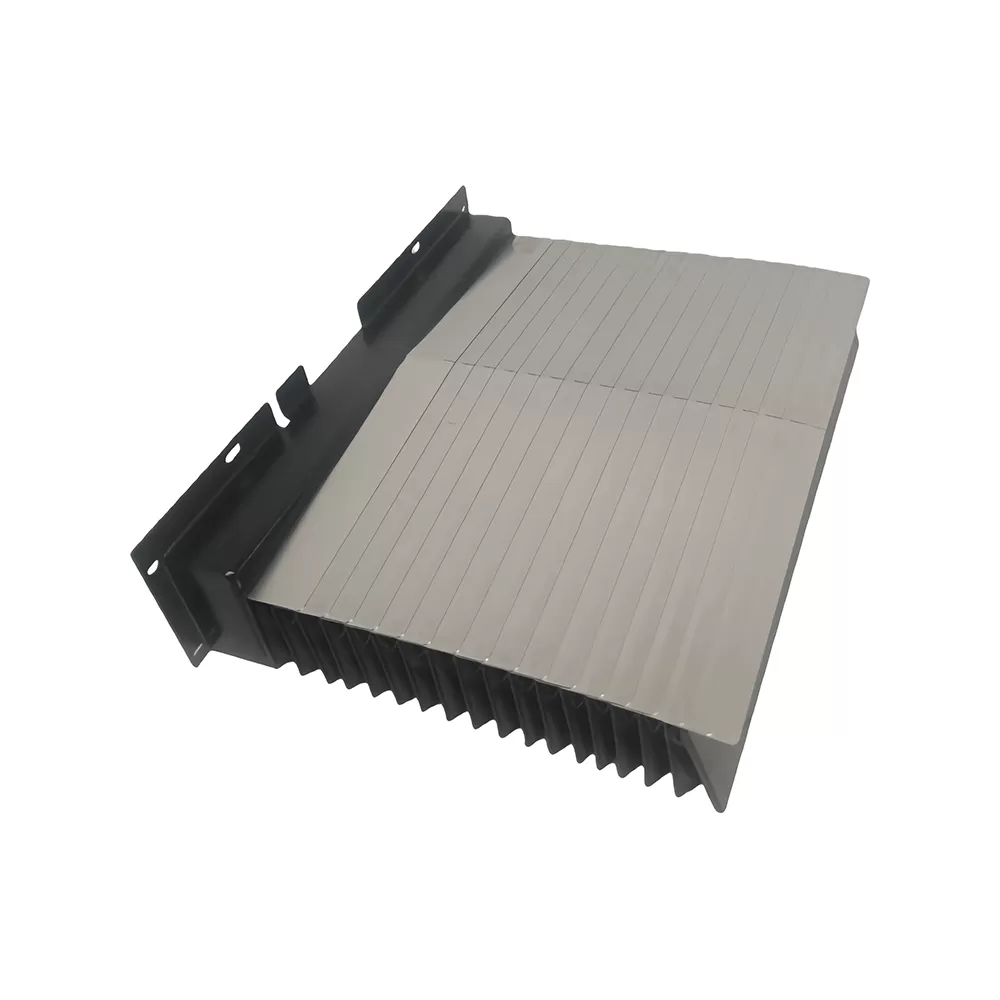
Structural Mechanics and Material Selection for Telescopic Steel Enclosures
Telescopic steel covers represent the standard for protecting horizontal, vertical, and inclined machine axes. These systems consist of individual sheet metal segments that nest within one another, sliding outward and inward in synchronization with the machine tool's motion. The mechanical performance of these protective barriers depends heavily on the materials chosen during the design stage.
QUNHUI utilizes high-tensile, cold-rolled stainless steel or carbon steel sheets, typically ranging in thickness from 1.5 mm to 3.0 mm. The choice of thickness is a balance between structural rigidity—to withstand heavy chip loads and operator weight—and the kinetic mass of the overall assembly. Thicker sheets resist deformation from falling workpieces but require more energy to accelerate, which can place additional load on the axis drive motors.
The structural integrity of the individual boxes is maintained through precise folding and welding techniques. Each box segment must remain completely flat and parallel to the guiding rails. Any twisting or bowing introduces uneven resistance, leading to rapid wear of the internal guides and potential binding during high-speed movements. Surface treatments, such as nitriding or hard chrome plating, are frequently applied to improve wear resistance and prevent corrosion from sulfur- or chlorine-based extreme-pressure additives found in modern coolants.
Kinematic Challenges and Dampening Mechanisms in High-Speed Axis Operations
Modern machining centers operate at high rapid-traverse speeds, often exceeding 60 meters per minute, with acceleration rates surpassing 1G. At these velocities, the impact forces generated when telescopic boxes extend or collapse can be destructive. If the boxes collide without adequate deceleration, the mechanical shock propagates through the machine bed, causing micro-vibrations that degrade surface finish quality and shorten the life of the linear bearings.
To mitigate these forces, protective systems incorporate specialized dampening elements. For high-speed axes, QUNHUI integrates pantograph systems, also known as scissor links. These mechanical linkages coordinate the movement of all telescopic segments, ensuring they extend and compress uniformly. By distributing the kinetic forces across all boxes simultaneously, scissor links eliminate sequential impacts and reduce structural stress on the drive system.
In applications where space limitations prevent the installation of pantographs, polyurethane bumpers or shock-absorbing spring dampers are positioned between the metal segments. These components absorb residual kinetic energy at the end of each travel stroke, minimizing acoustic noise and structural vibration. The selection of these dampening materials must account for constant cycling, requiring high fatigue resistance and thermal stability under continuous operation.
Wiper Technology and Sealing Dynamics
The sealing efficiency of telescopic cnc way covers is determined by the design and material of the wiper system attached to the leading edge of each box segment. The wiper must maintain continuous, uniform contact with the adjacent metal sheet to prevent fine dust, micro-chips, and liquid coolant from migrating into the interior cavity.
Different manufacturing processes yield distinct chip characteristics, requiring specific wiper configurations:
Polyurethane Wipers: Excellent mechanical properties and abrasion resistance, ideal for dry machining or light coolant applications. These synthetic elastomers are molded with pre-tensioned lips to clean the steel surfaces continuously.
Nitrile Rubber (NBR) Wipers: Provide reliable chemical resistance against petroleum-based cutting oils and synthetic coolants, preventing swelling and hardening over prolonged exposure.
Brass-Clad Wipers: Feature a rigid brass or stainless steel scraping edge positioned in front of the elastomer lip. This configuration is necessary for heavy milling operations where hot, sharp metallic chips can melt directly into synthetic wiper lips.
Environmental Factors and Chemical Resistance in the Machining Zone
The atmosphere inside a CNC enclosure is highly corrosive. Water-miscible coolants, synthetic cutting fluids, and rust inhibitors contain chemical agents that can degrade non-metallic components over time. Elastomeric seals, glues, and guide rollers within the protective covers must withstand constant chemical exposure without losing their mechanical properties.
Standard rubbers swell when exposed to certain mineral oils, causing the wipers to warp and lose contact with the metal sheets. Once the seal is compromised, coolant enters the inner track, washing away the grease from linear guide blocks and ball screws. This leads to metallic friction, heat generation, and eventually, catastrophic axis failure. QUNHUI addresses this issue by using chemically cross-linked polymers and fluoroelastomers that remain stable in both highly acidic and alkaline environments.
Furthermore, the physical accumulation of fine sludge, such as cast iron dust or composite fibers, creates an abrasive paste when mixed with coolant. This mixture acts as a grinding compound on the surface of the protection system. The geometry of the covers must be designed to promote natural runoff, utilizing inclined surfaces and gutter profiles to direct fluid and debris away from the moving joints and toward the machine's filtration system.
Design Methodology for High-Velocity CNC Way Covers
Developing a reliable protective system requires detailed analysis of the machine's physical layout and operational parameters. Engineers must calculate the compressed length (L-min) and extended length (L-max) of the cover to ensure it fits within the physical boundaries of the machine casting without limiting the maximum travel stroke of the axis.
The design process involves several critical calculations:
Stroke Ratio: The ratio between the collapsed length and the fully extended length. Minimizing the collapsed length allows for maximum axis travel, which is particularly challenging in compact multi-axis machining centers.
Mass Distribution: Determining the weight of each individual telescopic segment to calculate the motor torque required to overcome friction and inertia during acceleration.
Support Guide Configuration: Selecting the internal support guides—such as brass shoes or synthetic rollers—that slide along the machine guideways. These components must guide the covers accurately without scratching the precision-ground surfaces of the linear rails.
When high-speed performance is the priority, lightweight hybrid designs can be utilized. These systems may combine steel faceplates with composite or technical plastic side panels, lowering the moving mass while maintaining impact protection where the chip load is heaviest.
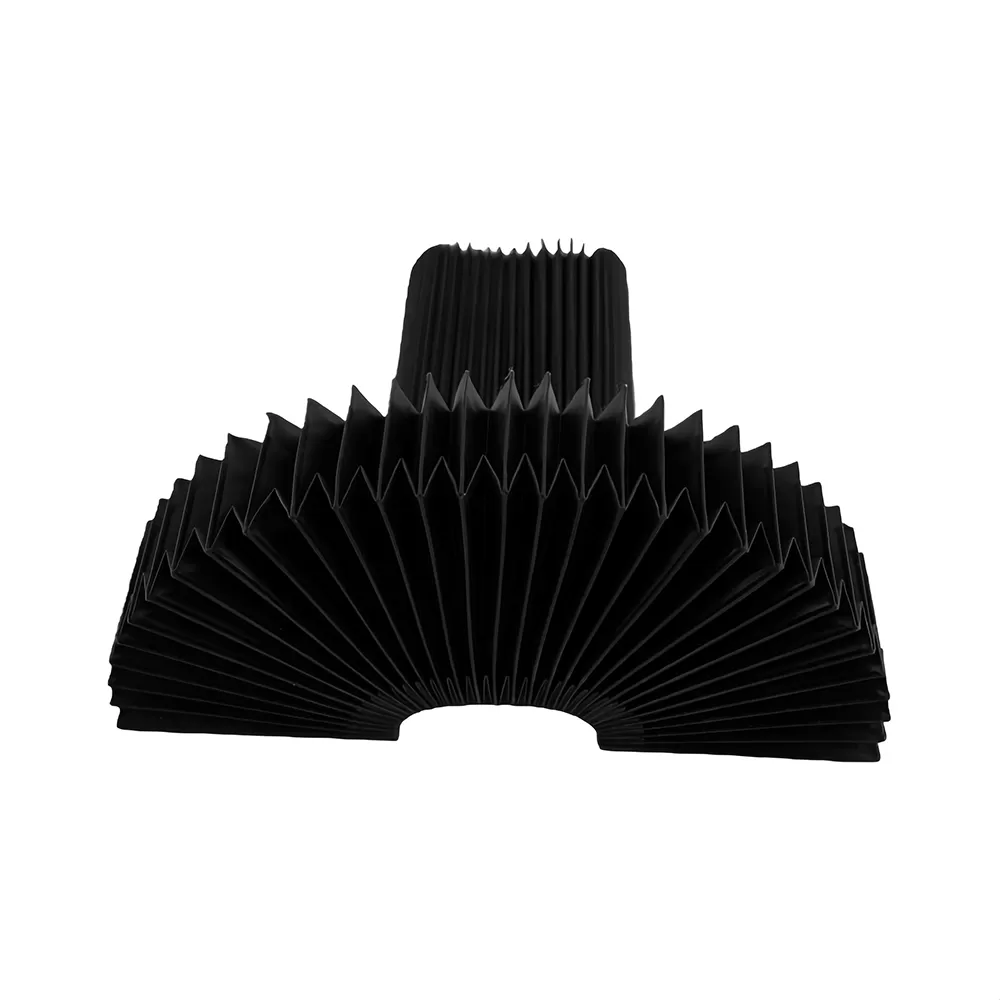
Maintenance Protocols to Extend the Service Life of Protective Barriers
Protective enclosures are wear items that require systematic maintenance to prevent failure. Neglecting basic upkeep leads to wiper degradation, box deformation, and eventual ingress of contaminants into the precision mechanics of the machine tool.
A preventative maintenance program should include the following procedures:
Daily Visual Inspection: Check the surfaces of the metal segments for deep scratches, dents, or accumulation of hardened debris. Ensure there are no visible gaps between the wiper lips and the metal plates.
Regular Cleaning: Remove heavy chip build-up from the covers, especially before shutting down the machine. Dried coolant and fine chips can form a crust that damages the wipers upon restarting.
Wiper Replacement: Treat wiper blades as consumables. Inspect the elastomer lips for wear, hardening, or tearing every six months, and replace them to maintain a reliable seal.
Internal Guide Lubrication: Apply appropriate lubricants to the internal brass shoes, rollers, and synthetic slide guides to minimize friction and prevent stick-slip motion.
Implementing these simple steps significantly reduces the wear rate of both the protective covers and the underlying linear guideways, protecting the capital investment of the machine tool.
Frequently Asked Questions
Q1: What are the primary indicators that telescopic cnc way covers require refurbishment or replacement?
A1: Clear indicators include visible scoring on the metal panels, denting that causes the panels to bind during movement, coolant leaking through the joints, or excessive noise during axis travel. If the machine's positioning accuracy begins to drift due to friction from warped covers, immediate inspection and refurbishment are necessary.
Q2: How do scissor linkages improve the performance of a guideway protection system?
A2: Scissor linkages, or pantographs, mechanically coordinate the movement of the nested steel segments. Instead of each box being pulled sequentially by the preceding one, the pantograph ensures all segments extend and retract at a proportional speed. This eliminates high-velocity impacts between segments, reducing structural vibration and wear on high-speed machine axes.
Q3: Can telescopic steel covers be repaired, or must they always be completely replaced?
A3: Many systems can be successfully rebuilt. If the structural frames are not severely deformed, refurbishing involves straightening the metal panels, replacing worn wiper blades, installing new support rollers or brass shoes, and aligning the assembly. However, if the panels have sustained severe impact damage that compromises their geometric flatness, complete replacement is usually necessary to protect the machine guideways.
Q4: Why is wiper material selection so critical when machining abrasive materials like cast iron or composites?
A4: Abrasive materials produce fine, highly destructive dust rather than coiled chips. This dust can mix with coolant to form an abrasive slurry. Standard elastomer wipers can degrade quickly under these conditions. For these applications, specialized wipers with hard polyurethane lips or brass scraping edges are required to wipe the surfaces clean and prevent fine particles from migrating underneath the covers.
Q5: How does QUNHUI customize protective covers for space-constrained vertical machining centers?
A5: For applications with tight spatial limits, we analyze the structural layout of the column and spindle head. We design custom geometries, such as tapered boxes or vertical drop-down configurations, and select high-strength, thin-gauge alloys to reduce the collapsed stack height (L-min) without compromising the structural integrity or travel limit of the vertical axis.
Custom Engineering Inquiries and Technical Support
Selecting and designing the correct protection system requires precise calculations and an understanding of the specific operating environment. QUNHUI designs and manufactures custom telescopic steel enclosures, bellows, and guideway protection systems tailored to your machinery's specifications.
If you are experiencing premature cover wear, coolant ingress, or are designing a new machine tool platform, our engineering team can assist. Contact QUNHUI today to discuss your technical specifications, submit your CAD layouts, and receive a detailed engineering proposal and quotation for your custom application.