
.webp)
In high-production machining environments, the removal of metal waste is a continuous operational challenge. When configuring a machining center, choosing an appropriate cnc mill chip conveyor is often secondary to selecting the spindle speed or control system. However, the management of metal swarf, turnings, and fine particulates directly impacts the continuous operation of the machine tool. Without an engineered method to extract waste, material builds up inside the enclosure, leading to thermal distortion, scraped surfaces, and premature tool wear.
QUNHUI designs and manufactures waste removal systems tailored to meet these demanding shop floor requirements. Understanding the mechanical differences between conveyor styles allows manufacturing managers to match their equipment to the specific materials they cut, reducing manual intervention and maintaining steady cycle times.
.webp?t=1783504298863 "刮板式排屑机 (2)")
The Mechanics of Waste Generation in Milling Operations
Different milling operations produce vastly different waste profiles. High-speed aluminum milling generates high-volume, lightweight stringy chips that can easily nest and clog internal components. Cast iron machining produces fine, abrasive powders that settle in the coolant tank, acting like grinding paste if not properly filtered. Steel alloy machining creates long, heavy turnings that put high mechanical strain on conveyor belts.
This variation in waste geometry dictates the type of conveyor mechanism needed. For example, a system designed for large brass turnings will perform poorly when tasked with handling cast iron sludge. When selecting a cnc mill chip conveyor, the physical behavior of the metal waste must be analyzed alongside the coolant flow rate to prevent downstream filtration issues.
Analyzing Material Geometry and Volume
The rate of material removal determines the physical size and pitch of the conveyor belt. High-feed milling cutters remove material at rates that can quickly overwhelm a standard-duty conveyor. If the conveyor cannot clear the volume, the material packs tightly inside the machine hopper, causing the drive motor to stall or the belt pins to shear.
The Influence of Coolant Velocity and Drag-Out
Coolant acts as the transport medium that carries chips from the cutting zone to the conveyor receiving hopper. High-pressure coolant systems push particles into every corner of the machine enclosure. The conveyor must not only lift the solid waste out of the machine but also allow the cutting fluid to drain back into the reservoir. Insufficient drainage leads to high coolant drag-out rates, meaning expensive cutting fluid is carried out with the scrap metal, increasing operational costs.
Classifying CNC Mill Chip Conveyor Designs
To address different material types, manufacturers utilize several primary conveyor designs. Matching the conveyor mechanism to the scrap characteristics is the first step in ensuring reliable machine operation.
Hinged Steel Belt Conveyors
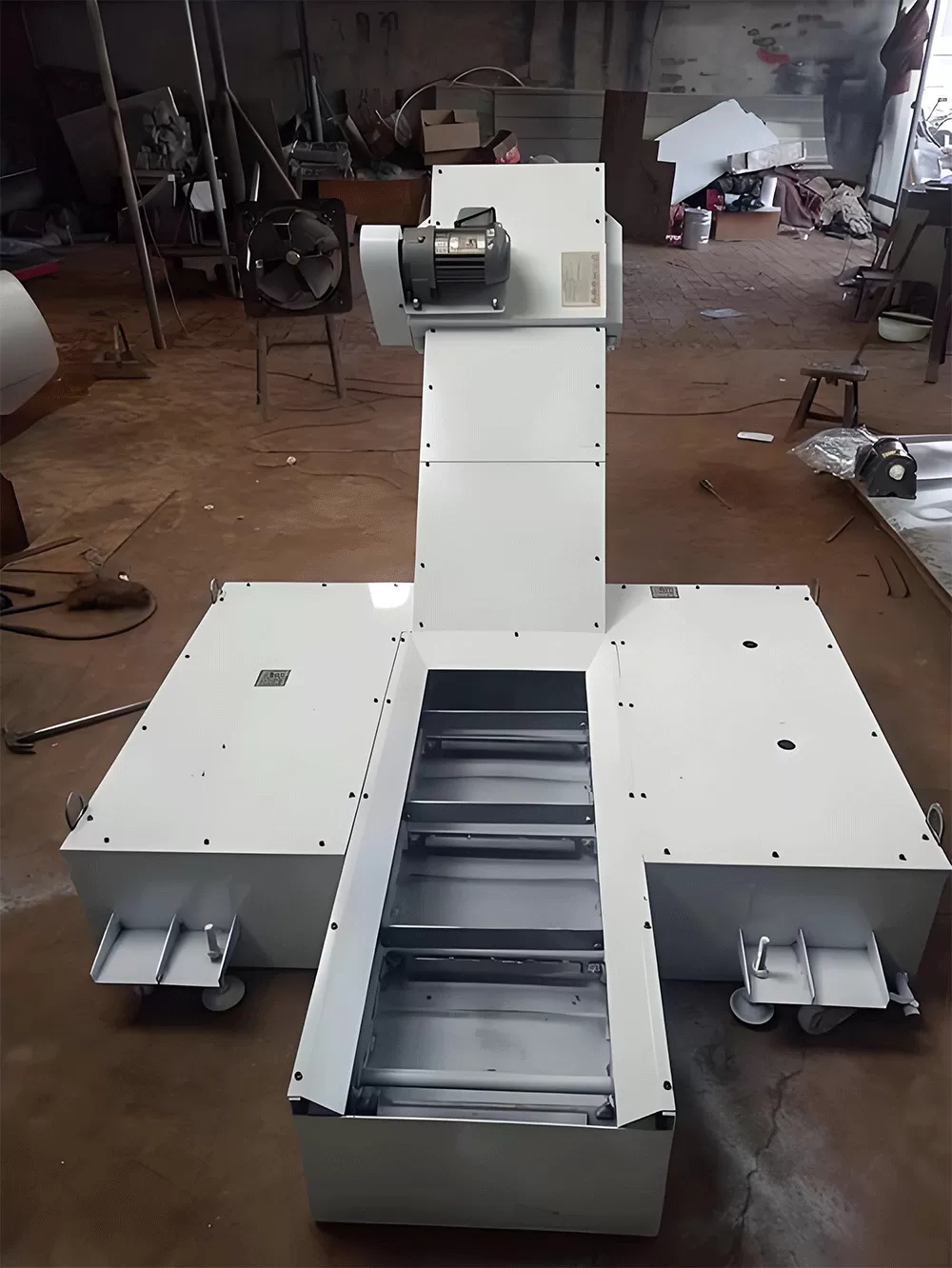
The hinged steel belt is the most common design used in general machining. It consists of steel plates linked together by steel rods. This design is highly effective for handling medium-to-large steel turnings, brass chips, and long, curly aluminum swarf. The robust construction allows it to handle heavy loads and sharp materials without tearing.
However, hinged belts have limitations when processing fine particles. Small chips can slip through the gaps between the hinged plates, accumulating in the bottom of the conveyor frame or inside the coolant tank. This requires manual cleaning of the tank at regular intervals, defeating the purpose of automation.
Scraper and Drag-Chain Conveyors
For fine materials and cast iron chips, a scraper conveyor is a more appropriate choice. This system utilizes a pair of drive chains connected by crossbars, or scraper flights, that drag along the hardened floor of the conveyor housing. The scraper blades push the settled fines up an incline toward the discharge chute.
By constantly cleaning the bottom floor of the conveyor unit, scraper systems prevent the accumulation of heavy sludge. They are often integrated with secondary filtration systems to capture microscopic particles suspended in the coolant before it is pumped back to the spindle.
Magnetic Slide Conveyors
When processing ferrous materials like carbon steels and cast iron, magnetic conveyors offer a low-maintenance alternative. These systems feature stationary stainless steel top plates with moving permanent magnets underneath. The magnetic force attracts the iron particles to the surface of the slide, and the motion of the internal magnet chain drags the chips to the discharge point.
Because there are no moving parts exposed to the abrasive metal chips, wear on the conveyor elements is reduced. This design eliminates the common problem of chips jamming between belts and sprockets, extending the service life of the system in high-abrasion environments.
Engineering the CNC Mill Chip Conveyor for Long-Term Durability
The durability of a cnc mill chip conveyor depends on the quality of its structural components and the protective measures integrated into its drive system. QUNHUI focuses on structural reinforcements that resist the abrasive and chemical wear common in metalworking plants.
Hardened Wear Tracks: The areas where the conveyor chain makes constant contact with the frame are lined with wear-resistant materials such as manganese steel to prevent premature groove wear.
Overload Protection Devices: Mechanical slip clutches or electronic current-sensing relays are installed to immediately cut power to the motor if a solid workpiece or tool holder falls onto the belt, preventing structural damage.
Heavy-Duty Drive Motors: Sealed gearmotors with IP-rated enclosures protect the electrical components from coolant mist and moisture.
Precision Sprockets and Chains: Induction-hardened sprockets ensure smooth chain engagement, minimizing belt vibration and reducing wear on the linkage pins.
Applying these engineering principles prevents common field failures. A robust frame design resists warping under heavy loads, ensuring the conveyor maintains its alignment relative to the machine tool discharge port over years of continuous operation.
Maintenance Protocols to Prevent Conveyor Jamming
Regular maintenance is required to keep waste extraction systems operating without unscheduled interruptions. Neglecting the conveyor can lead to chain stretching, sprocket misalignment, and eventual motor burnouts.
A systematic maintenance routine should focus on tension adjustment. Over time, conveyor chains stretch under load. If the chain is too loose, it can skip teeth on the drive sprocket, leading to uneven movement or jamming. Conversely, an overly tight chain puts excessive load on the bearings and drive shaft, accelerating component wear.
Periodic cleaning of the coolant tank and the conveyor transition zones is also necessary. Fine particles that bypass the primary conveyor belt can settle in the tank, forming a dense layer of silt that reduces coolant volume and impedes the flow of fluid back to the pumps. Cleaning these areas out during scheduled machine maintenance cycles prevents the pump intake filters from clogging.
Why QUNHUI is the Preferred Partner for Chip Management
As an experienced manufacturer of machine tool accessories, QUNHUI understands that no single conveyor configuration fits every workshop. We analyze your specific machining parameters, including material types, cycle times, coolant volume, and machine space constraints, to deliver a custom-engineered solution.
Our engineering team works closely with machine builders and end-users to design conveyor systems that integrate seamlessly with existing CNC controllers. This ensures that the conveyor can be controlled via standard M-codes, running only when the machine spindle is active to conserve energy and reduce wear on moving parts.
Frequently Asked Questions
Q1: Which type of conveyor is best for machining both aluminum and steel on the same mill?
A1: A hinged steel belt conveyor is generally the most versatile option for mixed-material operations. It can handle the larger, stringy chips produced during aluminum milling as well as the heavy steel turnings. For shops producing a high volume of aluminum fines along with steel, a modified hinged belt with brush attachments or integrated scraper elements can help keep the belt clean.
Q2: How does a conveyor system affect the lifespan of my cutting coolant?
A2: By removing metal chips from the coolant tank quickly, the conveyor prevents chemical reactions between the metal waste and the cutting fluid. Left in the tank, fine metal particles can promote bacterial growth and accelerate the degradation of the coolant emulsion, leading to foul odors and reduced lubrication properties.
Q3: What causes a chip conveyor to jam, and how can it be prevented?
A3: Jamming is most often caused by oversized scrap pieces, such as dropped parts or bar ends, wedging between the conveyor belt and the frame. Implementing a mechanical torque limiter or a smart electronic overload sensor on the drive motor will immediately stop the system before structural damage occurs. Installing a heavy-duty screen over the hopper can also prevent large items from entering the conveyor.
Q4: Can a scraper conveyor handle long, stringy turnings?
A4: Scraper conveyors are not recommended for long, stringy turnings. These long chips tend to wrap around the scraper flights and the drive chains, leading to severe bird-nesting that can quickly jam the conveyor drive mechanism. Scraper systems are strictly designed for small, broken chips and fines.
Q5: What maintenance is required for a magnetic chip conveyor?
A5: Because the moving parts of a magnetic conveyor are sealed inside the housing away from the abrasive chips, maintenance is minimal. The main tasks include checking the gearmotor lubrication, verifying chain tension within the sealed housing, and inspecting the outer stainless steel slide plate for physical wear or deep scratches that could catch fine particles.
Connect with Our Engineering Team
Selecting the correct waste management setup is crucial for maintaining shop floor productivity and protecting your machine tool investments. QUNHUI offers customized engineering consultations to help you match the right conveyor design to your specific production demands. Contact us today with your machine model, material specifications, and workspace drawings to receive a detailed quotation and engineering proposal tailored to your operation.