
-(2).webp)
In automated machining environments, the efficiency of material removal is directly tied to the reliability of chip management systems. For production managers and plant engineers, the choice of chip conveyor manufacturers determines not only the uptime of machining centers but also the long-term cost structure of chip handling and coolant filtration. A poorly matched conveyor leads to unplanned stoppages, increased tool wear from recut chips, and elevated maintenance overheads. This article examines the engineering criteria, application-specific demands, and performance benchmarks that separate capable chip conveyor manufacturers from the rest, with a focus on solutions for high-throughput CNC turning, milling, and grinding cells.
Core Engineering Considerations When Evaluating Chip Conveyor
Manufacturers
The selection process begins with a clear understanding of the chip characteristics generated by the machining process. Cast iron produces short, brittle chips that behave differently from the long, stringy swarf common in aluminum or stainless steel turning operations. Reputable chip conveyor manufacturers design their systems around these specific material behaviors. The conveyor type—whether hinged steel belt, scraper, magnetic, or drag chain—must align with chip morphology, coolant type, and the physical layout of the machine tool.
Beyond chip type, the conveyor's duty cycle and peak load capacity are equally critical. High-volume production cells running 24/7 require conveyors with heavier gauge chains, hardened wear strips, and motors sized for continuous operation. Many chip conveyor manufacturers offer modular designs that allow for field upgrades, such as adding an integrated wringer or filtration unit. This modularity becomes valuable when production volumes scale or when new alloys are introduced into the workflow.
Hinged Steel Belt Conveyors for Heavy-Duty Chip Removal
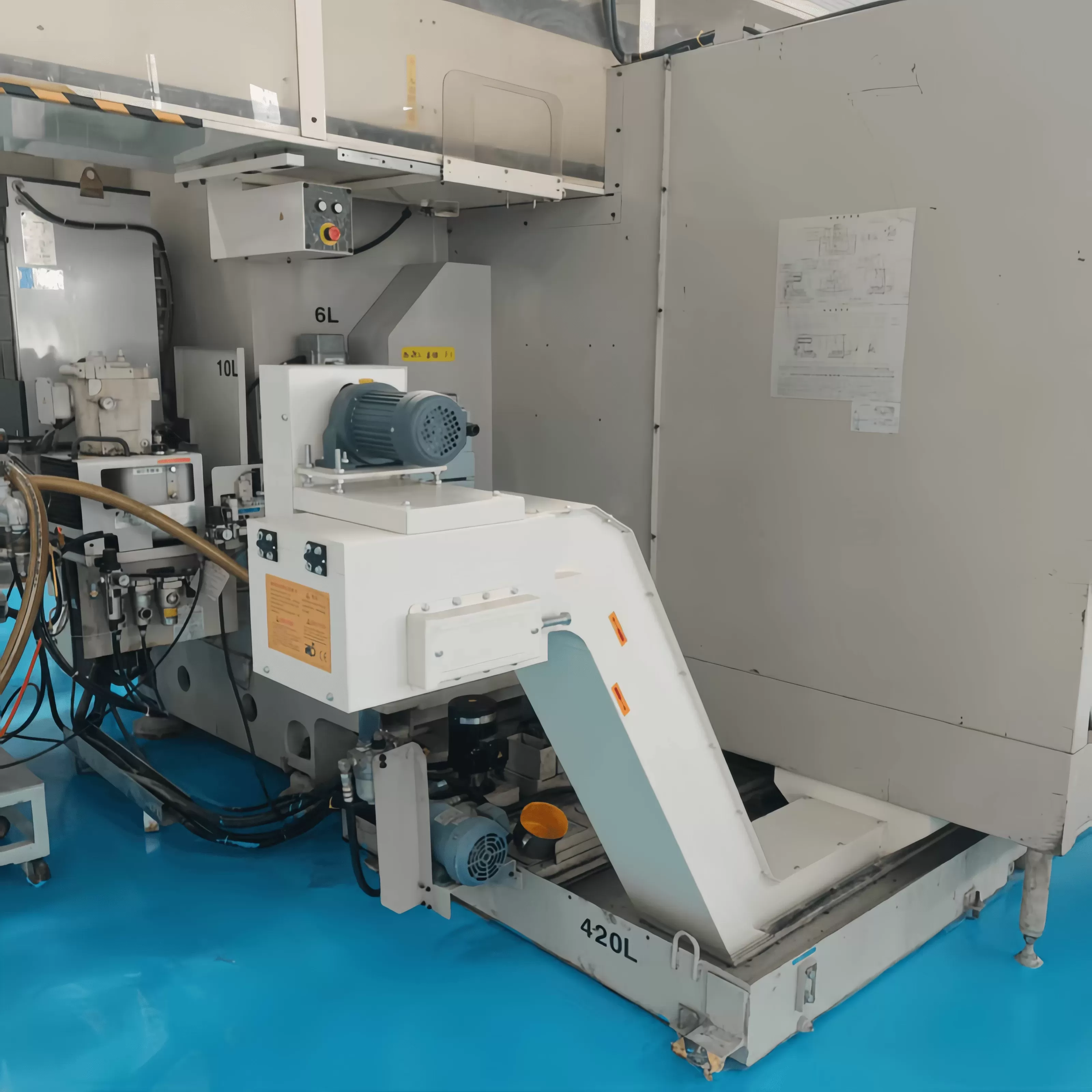
Hinged steel belt conveyors remain the workhorse for most CNC turning centers and machining centers handling steel, stainless steel, and high-temperature alloys. The interlocking belt sections provide a continuous carrying surface that can handle heavy loads without deformation. When assessing chip conveyor manufacturers for this category, examine the belt pitch, hinge pin diameter, and side wing height. These dimensions dictate the conveyor's ability to handle surge loads—when a machining operation produces a sudden avalanche of chips—without jamming or spilling.
For plants processing high-strength alloys like Inconel or titanium, the belt material itself becomes a point of differentiation. Standard carbon steel belts may not withstand the abrasive nature of these materials. Leading chip conveyor manufacturers offer options with hardened or coated belts, as well as replaceable wear plates at the discharge end. This attention to material science directly impacts the conveyor's service life and the total cost of ownership over a five-year horizon.
Magnetic and Scraper Conveyors for Fine Chip Applications
Grinding operations and high-speed milling of ferrous materials generate fine, powdery chips that can bypass conventional belt conveyors. Magnetic conveyors offer a solution by using permanent magnets embedded in a moving plate to capture ferrous particles from the coolant flow. Some chip conveyor manufacturers specialize in this niche, offering variable-speed magnetic conveyors that adjust to the chip load. The key performance metric here is the recovery rate—the percentage of ferrous chips removed from the coolant stream before the coolant returns to the machine.
Scraper-type conveyors, on the other hand, are designed for non-ferrous materials or applications where magnetic separation is not feasible. These systems use a series of scrapers attached to a chain that drags chips along a trough. The spacing and material of the scrapers determine the conveyor's effectiveness with different chip types. Experienced chip conveyor manufacturers provide application engineers who can recommend the optimal scraper pitch and chain speed based on the specific chip flow rate and particle size distribution.
Application-Specific Demands Across Machining Cells
The performance requirements for a chip conveyor vary significantly between a high-speed aluminum milling center and a heavy-duty steel turning lathe. In the former, the conveyor must handle a high volume of light, stringy chips without coolant carryover. In the latter, the conveyor must manage intermittent heavy loads and potentially large, coiled chips that can wrap around the conveyor structure. This is where the expertise of chip conveyor manufacturers becomes apparent—they must offer customized solutions rather than one-size-fits-all products.
For machining centers with through-spindle coolant, the conveyor system often integrates a filtration stage to remove chips from the coolant before recirculation. This integration requires coordination between the conveyor design and the filtration system's capacity. Some chip conveyor manufacturers offer complete chip and coolant management systems, including settling tanks, cyclone separators, and paper-bed filters. This integrated approach simplifies procurement and ensures compatibility between components, reducing the risk of system-wide failures.
In automated production lines where multiple machines feed into a central chip collection system, the conveyor's role expands to include material handling and sorting. High-capacity drag conveyors or screw conveyors transport chips from multiple collection points to a central storage hopper or baling press. For these installations, chip conveyor manufacturers must provide solutions that accommodate varying chip flows from different machines while maintaining a consistent output rate to the downstream equipment.
Key Performance Indicators for Chip Conveyor Reliability
Reliability in a chip conveyor is measured not only by the mean time between failures (MTBF) but also by the conveyor's ability to maintain consistent performance under varying load conditions. A common failure mode is the accumulation of fine chips at the tail shaft, leading to premature bearing wear and chain misalignment. The best chip conveyor manufacturers address this through sealed bearings, automatic tensioning systems, and self-cleaning tail sections that prevent chip packing.
Another critical reliability factor is the conveyor's response to jams or overloads. Systems equipped with torque-sensing drives and automatic reversal features can clear minor jams without human intervention, significantly reducing downtime. When evaluating chip conveyor manufacturers, inquire about the control logic and sensor integration capabilities of their drives. Modern conveyors integrate with machine controllers via fieldbus protocols, allowing the conveyor to synchronize its speed with the machine's chip production rate.
Maintenance accessibility also plays a role in long-term reliability. Conveyors that require extensive disassembly for routine tasks—such as chain lubrication or wear strip replacement—lead to longer maintenance windows and reduced overall equipment effectiveness (OEE). Manufacturers like QUNHUI have addressed this by designing conveyors with quick-release access panels and modular chain sections that can be replaced without removing the entire conveyor assembly. Such design considerations directly affect the maintenance labor hours over the conveyor's lifespan.
Selecting Chip Conveyor Manufacturers for Custom Machining Environments
Customization is often the deciding factor when production requirements fall outside standard conveyor specifications. For example, machining cells with limited floor space may require conveyors with vertical lifting sections or compact footprint designs. Similarly, applications with high-pressure coolant systems need conveyors with sealed housings and coolant diversion features to prevent leakage. The ability of chip conveyor manufacturers to accommodate these custom requirements separates broad-based suppliers from specialists.
During the selection process, request detailed dimensional drawings and installation manuals from potential suppliers. These documents reveal the supplier's engineering rigor and their experience with similar machine tool interfaces. A supplier that provides clear, detailed documentation for installation and commissioning demonstrates confidence in their product's performance and a commitment to customer support. For global operations, consider chip conveyor manufacturers with international service networks to ensure timely spare parts availability and technical support across different regions.
For operations handling multiple material types, the conveyor system must be adaptable to different chip characteristics without requiring extensive reconfiguration. This often involves selecting conveyors with adjustable drive speeds and easily replaceable wear components. Some chip conveyor manufacturers offer quick-change wear strips and segmented belts that can be swapped out for different material runs. This flexibility reduces changeover time and minimizes the need for dedicated conveyors for each material type.
When assessing the total cost of ownership, look beyond the initial purchase price. Consider energy consumption, spare parts costs, and the frequency of planned maintenance. Energy-efficient drive systems with regenerative braking or variable frequency drives can significantly reduce operating costs over the conveyor's life. Additionally, conveyors with standard, off-the-shelf components rather than proprietary parts tend to have lower long-term maintenance costs. QUNHUI has positioned itself in this space by offering conveyors with widely available replacement parts and comprehensive maintenance documentation, reducing the dependency on specialized service technicians.
.webp?t=1786173005497 "1 排屑机")
Frequently Asked Questions About Chip Conveyor Systems
What types of chip conveyors are most suitable for high-speed machining of aluminum?
High-speed aluminum machining generates long, continuous chips that can entangle and cause jams in conventional conveyors. Hinged steel belt conveyors with closely spaced flights and a steep incline angle are generally preferred, as they can lift these stringy chips without allowing them to wrap around the tail shaft. Some chip conveyor manufacturers also offer chip crushers or wringers integrated with the conveyor to reduce chip volume and recover coolant, which is particularly beneficial when processing aluminum at high cutting speeds.
How do chip conveyor manufacturers address coolant contamination issues?
Coolant contamination arises from fine particles that pass through the conveyor's primary filtration stage. Chip conveyor manufacturers address this by incorporating secondary filtration systems such as magnetic separators, hydrocyclones, or paper-bed filters. These systems are often integrated directly into the conveyor's discharge chute or collection tank. The choice of filtration method depends on the chip size distribution and the coolant's required cleanliness level. For high-precision machining, manufacturers may recommend a multi-stage filtration approach that removes both coarse chips and fine particulates.
Can chip conveyors be retrofitted on existing machine tools?
Retrofitting a chip conveyor on an existing machine is feasible for most CNC machining centers and lathes, provided there is adequate floor space and clearance for the conveyor's discharge height. Many chip conveyor manufacturers offer retrofit kits with universal mounting brackets and adaptable discharge chutes. The retrofit process typically requires an assessment of the machine's existing coolant tank and chip evacuation port to ensure compatibility. For older machines with non-standard coolant ports, custom adapters may be required, which specialized manufacturers can fabricate.
What maintenance schedule is recommended for heavy-duty chip conveyors?
Heavy-duty chip conveyors operating 24/7 should undergo a weekly inspection of chain tension, hinge pin wear, and motor drive alignment. Monthly maintenance should include lubrication of all moving bearings and a thorough cleaning of the tail shaft area to remove accumulated fines. Annually, the conveyor should be fully inspected, with replacement of wear strips and any worn chain sections. Manufacturers like QUNHUI provide detailed maintenance checklists with their equipment, and many offer predictive maintenance sensors that monitor vibration and torque to signal impending failures.
How do chip conveyor manufacturers ensure compatibility with different coolant types?
Compatibility with different coolant types—whether oil-based, synthetic, or semi-synthetic—depends on the conveyor's seal materials and bearing lubricants. Chip conveyor manufacturers often offer multiple seal and gasket options to suit the chemical properties of the coolant used. For synthetic coolants with higher chemical reactivity, the conveyor's structural materials may also need to be chosen for corrosion resistance. When specifying a conveyor, provide the coolant type and concentration to the manufacturer to ensure all wetted components are compatible.
What are the advantages of variable-speed drives in chip conveyors?
Variable-speed drives allow the conveyor to match its throughput to the machine's chip production rate, reducing energy consumption during light cutting operations and preventing chip pile-ups during heavy cuts. This capability is particularly valuable in machining centers with variable production cycles or in automated lines where different machines produce chips at different rates. Variable-speed drives also enable the conveyor to operate at lower speeds for fine chip handling, reducing the risk of coolant splashing and chip carryover.
How do chip conveyor manufacturers handle chips from difficult-to-machine materials like titanium?
Titanium and other high-temperature alloys produce chips that are abrasive and prone to work-hardening. Chip conveyor manufacturers address this by using hardened steel belts with specialized surface coatings, as well as larger-diameter drive shafts and heavier-duty chains. Some manufacturers also offer chip-breaking attachments that reduce chip length before they enter the conveyor, preventing entanglement and reducing abrasion on the conveyor components. For titanium machining, consider conveyors with increased chain pitch and wider belt sections to handle the higher individual chip weight.
Evaluating Long-Term Partnership with Chip Conveyor Manufacturers
Beyond the technical specifications, the relationship with the conveyor supplier influences the long-term performance and supportability of the equipment. Suppliers that offer comprehensive documentation, including 3D CAD models and detailed parts lists, facilitate easier integration and future modifications. Additionally, manufacturers that maintain an inventory of critical spare parts ensure faster turnaround times for repairs.
For facilities with multiple machining cells, standardizing on a single brand of chip conveyor can simplify spare parts management and maintenance training. This standardization also leverages volume purchasing for consumable items like wear strips and belts. When evaluating chip conveyor manufacturers, consider their ability to provide consistent quality across multiple production lines and their willingness to support custom modifications for specific cell configurations.
In environments where new alloys or cutting processes are regularly introduced, the conveyor supplier's application engineering support becomes invaluable. Manufacturers with in-house testing facilities can simulate chip flows and conveyor performance under controlled conditions, providing data-driven recommendations for system adjustments. This collaborative approach reduces the risk associated with process changes and ensures the conveyor system evolves with the production requirements.
For inquiries about custom chip conveyor solutions tailored to specific machining operations, contact QUNHUI's engineering team with your application parameters. Provide details on machine types, materials processed, production volume, and available floor space to receive a preliminary system proposal and performance projection. Send your inquiry to the sales engineering department for a detailed response within two business days.