
In the domain of precision metal cutting and automated production lines, the management of power, signal, and fluid transmission lines remains a persistent engineering challenge. The kabelschlepp drag chain —often referred to as a cable carrier, energy chain, or cable drag chain—provides a structured solution that protects cables and hoses during continuous reciprocating motion. For machine tool builders and system integrators, selecting the correct drag chain directly influences mean time between failures (MTBF), spindle positioning accuracy, and overall equipment effectiveness (OEE). This examination addresses the mechanical principles, application-specific configurations, and lifecycle considerations that define modern kabelschlepp drag chain deployments.
Fundamentals of Kabelschlepp Drag Chain Design
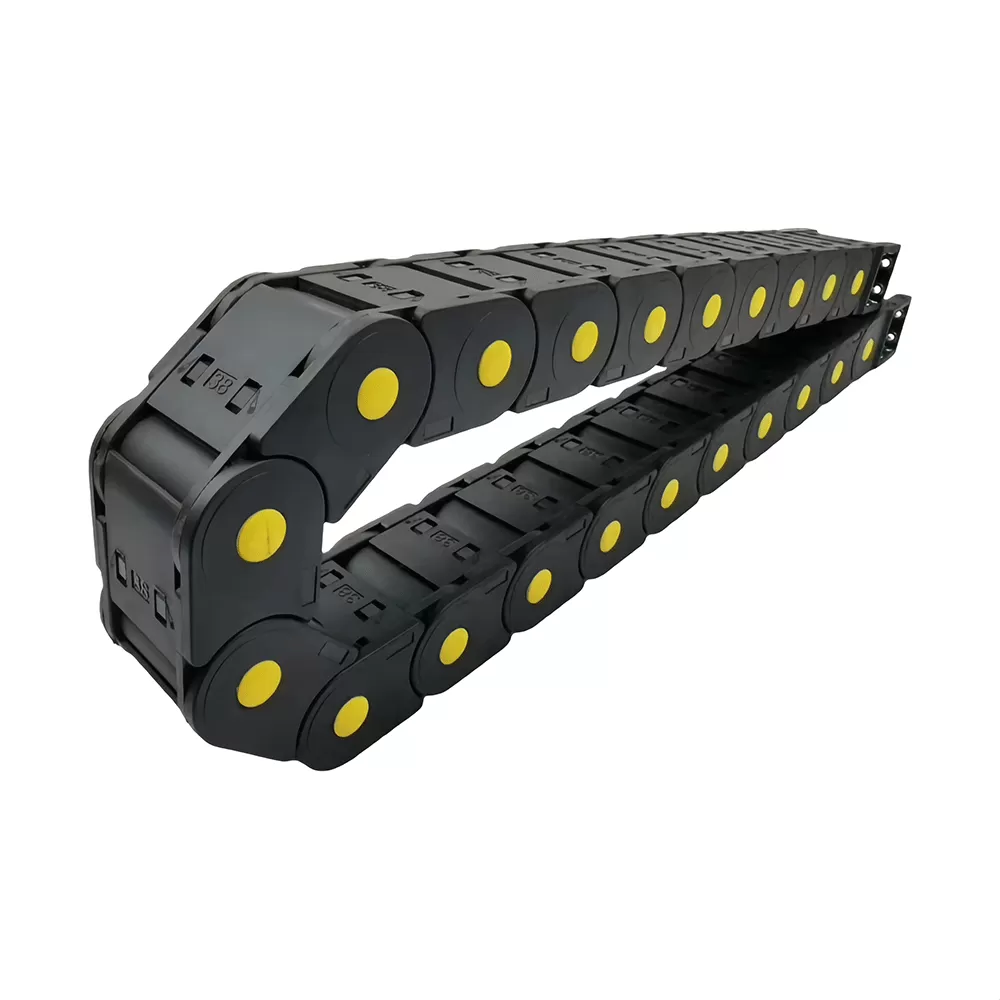
A kabelschlepp drag chain operates on a straightforward kinematic principle: articulated links form a closed channel that guides flexible cables and hoses along a defined path, typically with a fixed end and a moving end attached to a carriage or gantry. The chain bends in one plane, creating a radius that determines the minimum bending radius of the contained media. This radius must exceed the manufacturer-specified dynamic bending radius of every cable inside; otherwise, conductor fatigue and insulation fractures occur within weeks of operation.
Chain pitch, link height, and side-bar material define the load-bearing capacity. Standard steel chains handle heavy hydraulic hoses and thick motor power cables, while lightweight aluminum or engineered polymer variants suit high-speed pick-and-place applications where inertia must be minimized. For CNC machining centers with rapid traverse rates exceeding 40 m/min, the chain's acceleration limits and noise characteristics become primary selection criteria. A properly sized kabelschlepp drag chain maintains a straight upper run without sagging, preventing entrapment of chips or coolant that could abrade the outer jacket of critical servo-feedback cables.
Application Scenarios in CNC Machine Tools
Vertical machining centers, horizontal boring mills, and gantry-style five-axis systems each impose distinct demands on cable management. In a typical vertical mill, the Z-axis headstock requires a compact kabelschlepp drag chain that accommodates spindle motor cables, encoder feedback lines, coolant supply hoses, and through-spindle coolant tubes—all within a limited vertical travel envelope. The chain must flex repeatedly at cycle times measured in seconds, often exceeding 1 million bending cycles per year. Engineers at QUNHUI frequently specify reinforced polymer chains with integrated wear strips for such axes, reducing friction against the guide trough and extending service intervals.
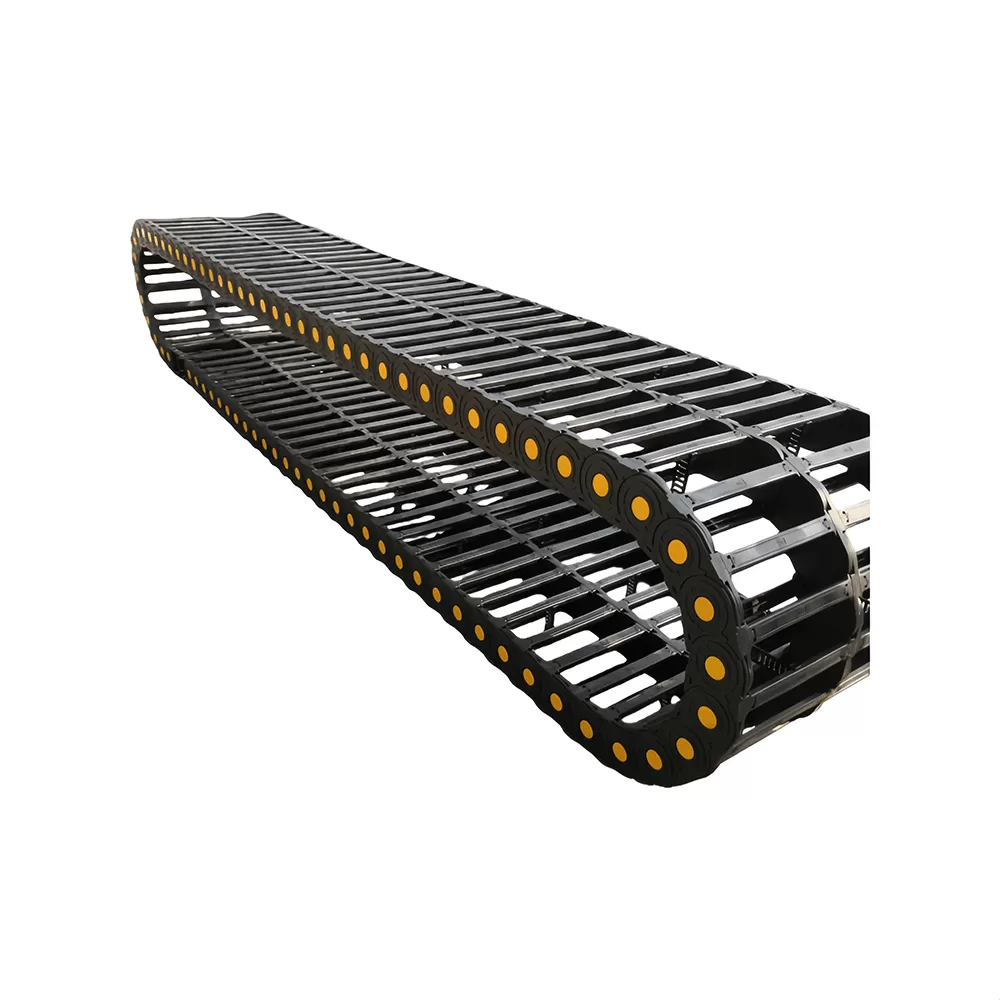
For horizontal machining centers with pallet changers, the drag chain follows a linear or telescopic path, and the internal separation system becomes critical. Dividers and shelves within the chain prevent cables from tangling or rubbing against each other. Without proper separation, signal cables carrying 5 V DC encoder pulses suffer from electromagnetic interference (EMI) induced by adjacent 400 V AC motor lines. A correctly configured kabelschlepp drag chain incorporates dedicated compartments for power, control, and data lines, maintaining the required separation distances prescribed by EMC directives.
High-Dynamic Applications: Laser Cutting and Waterjet Systems
Beyond conventional chip-making machinery, laser cutting tables and abrasive waterjet systems impose extreme environmental conditions. Flying optics on a laser cutter traverse at accelerations of 0.8 g, and the drag chain must convey fiber-optic cables, assist-gas hoses, and cooling lines without introducing backlash or varying friction over the stroke length. In these scenarios, the chain's flex radius directly impacts the bend radius of the fiber-optic cable, and a mismatch can raise attenuation to unacceptable levels. Suppliers like QUNHUI offer application-specific chain cross-sections with radius inserts that maintain a consistent bend geometry, ensuring optical signal integrity across the entire travel.
Material Selection and Engineering Considerations
The choice between steel, glass-reinforced nylon, and hybrid composites is not merely a cost decision. Steel chains provide inherent rigidity and dimensional stability in high-temperature environments, such as near forging presses or continuous casting lines. However, their mass increases the driven load, requiring larger servo motors and consuming additional energy. Polymer chains, particularly those with added carbon fiber or aramid reinforcement, offer a favorable strength-to-weight ratio and dampen vibration transmitted from the moving cables to the machine structure. A kabelschlepp drag chain operating in a wet-cutting environment, where flood coolant and hot chips accumulate, benefits from polymer side-bars that resist corrosion and do not conduct stray currents that could cause electrolytic corrosion on aluminum machine frames.
Wear resistance deserves particular attention. The chain's pivot points—pins and bushings—experience cyclic sliding friction, and the cumulative wear determines the chain's ultimate lifespan. Advanced designs incorporate hardened steel pins with polymer bushings that contain internal lubricants. For extremely high cycle counts, some manufacturers offer chain systems with replaceable wear pads, allowing the user to restore the original friction coefficient without dismantling the entire cable bundle. This modular approach aligns with predictive maintenance strategies and reduces unplanned downtime.
Industry Pain Points and Technical Solutions
One recurring challenge in automated production lines involves cable failure at the transition point where the chain enters the moving carriage. The repeated bending action, combined with torsional stresses from multi-axis movements, causes premature conductor breakage. A systematic solution includes specifying a kabelschlepp drag chain with a larger bending radius than the minimum required, thereby reducing the strain per bending cycle. Additionally, using continuous-flex cables with stranded conductors and special insulation materials (such as TPE or PUR) significantly extends cable life. For gantry robots that combine X and Y movements, a two-dimensional drag chain arrangement with a floating intermediate bracket solves the decoupling problem, allowing each axis to move independently without pulling cables from the opposite direction.
Contamination from cutting fluids and metallic fines poses another persistent issue. Chips accumulate in the chain trough, increasing friction and wearing through cable jackets. Integrated scraper bars and brush seals at the chain's entry point remove debris before it enters the link structure. In heavy-duty applications, a covered kabelschlepp drag chain with a bellows or telescopic cover provides additional protection. Machine builders increasingly specify chains with self-cleaning trough geometries—sloped bottoms and drainage holes—that allow coolant to flow out, preventing fluid pooling that could degrade polymer materials over time.
Noise generation from the chain's impact against the guide trough at high speeds is more than an occupational nuisance; it indicates mechanical stress that accelerates wear. Rubber bumpers or dampening elements placed at the end positions absorb kinetic energy and reduce peak acceleration forces. For ultra-quiet environments, such as precision optics manufacturing, chains with integrated dampening profiles and reduced pitch angles are available. These configurations lower the sound pressure level by 6–10 dBA compared to standard steel chains, while maintaining the same travel speed and load capacity.
Maintenance and Service Life Optimization
Condition monitoring of kabelschlepp drag chain systems has evolved from visual inspection to sensor-based diagnostics. Strain gauges mounted on the chain's fixed end measure tensile forces during acceleration and deceleration phases. Deviations from baseline values indicate increased friction, misalignment, or impending link failure. Vibration sensors detect resonance frequencies that occur when the chain's natural frequency coincides with the machine's cyclic rate, a condition that multiplies wear exponentially. By integrating these sensors into the machine's control system, maintenance teams receive early warnings, allowing them to schedule chain replacement during planned maintenance windows rather than responding to catastrophic failures.
Lubrication practices for the chain's pivot points require careful consideration. While some manufacturers recommend dry-running chains with self-lubricating polymers, others specify periodic application of solid-film lubricants to steel components. Over-lubrication attracts chips and dust, forming an abrasive paste that accelerates wear. A balanced approach uses minimal lubrication at the pin-bushing interface, combined with regular cleaning of the guide trough. For chains operating in cleanroom environments, such as semiconductor equipment manufacturing, dry-running chains with sealed bearings eliminate the risk of particulate contamination.
Documentation of the cable bundle's layout—recording the position of each cable, its bending radius, and connection points—simplifies future upgrades and troubleshooting. When replacing a kabelschlepp drag chain, the ability to replicate the original cable arrangement reduces installation errors and preserves the system's EMC performance. Many automation engineers now use digital twin simulations to model the chain's motion and cable stress distribution, validating design choices before physical assembly. This digital approach reduces the iteration cycle and ensures that the chosen chain meets both static and dynamic requirements.
Frequently Asked Questions
What is the primary function of a kabelschlepp drag chain in CNC
machinery?
A kabelschlepp drag chain organizes and protects flexible
cables, hoses, and tubes that supply power, signals, and fluids to moving
machine parts. It prevents tangling, reduces mechanical stress on cables, and
maintains a safe, clean workspace by containing all media lines within a guided
channel.
How does bending radius affect the selection of a kabelschlepp drag
chain?
The bending radius must be equal to or greater than the
dynamic bending radius specified by each cable and hose inside the chain. A
larger radius reduces the strain per bend, increasing cable service life.
Inadequate radius selection is a leading cause of conductor fractures and
insulation breakdown.
What materials are commonly used for kabelschlepp drag chain
links?
Steel (often galvanized or stainless) provides high strength
and heat resistance. Polymer materials—such as nylon 6, POM, and
glass-reinforced composites—offer lightweight, corrosion-free alternatives.
Hybrid designs combine steel pins with polymer side-bars for optimized
performance.
How can users minimize noise from a kabelschlepp drag
chain?
Installing rubber bumpers at stroke ends, selecting chains
with reduced pitch, and using dampening profiles in the guide trough effectively
lower impact noise. Polymer chains generally produce less noise than steel
chains at comparable speeds.
What maintenance steps extend the lifespan of a kabelschlepp drag
chain?
Regular inspection for wear on pins and bushings, cleaning of
the trough to remove chips and debris, and periodic verification of cable
tension are essential. Monitoring friction forces and vibration patterns enables
predictive maintenance, preventing sudden failures.
Can a kabelschlepp drag chain be used in a vertical
orientation?
Yes, vertical applications require chains with special
side-guide rollers or tension systems to prevent the upper run from sagging. The
chain must withstand gravitational forces while maintaining smooth flexing
motion without binding.
What is the typical service life of a kabelschlepp drag chain in a
high-cycle application?
Service life varies widely—from 5,000 to
over 10,000 hours—depending on load, speed, acceleration, and environmental
conditions. Chains operating near their rated limits require more frequent
inspections and earlier replacement than those used below capacity.
Engineering Support and System Integration
Selecting the appropriate kabelschlepp drag chain involves evaluating cable bundle diameter, total weight, travel length, acceleration profiles, and ambient conditions. The engineering team at QUNHUI offers on-site assessment and custom configuration services, ensuring that each chain's link geometry, internal divider layout, and mounting brackets match the host machine's interface. Integration support extends to cable routing, strain relief placement, and EMC mitigation, transforming a standard drag chain into a seamless component of the automation system.
For projects requiring high reliability in harsh environments—foundries, automotive press shops, or offshore drilling equipment—the chain's material and sealing options are tailored to resist moisture, chemicals, and extreme temperature variations. Each proposal includes a detailed wear prognosis and maintenance schedule, based on the specific duty cycle and environmental factors. This data-driven approach reduces total cost of ownership and aligns with industry standards such as ISO 14123 for machinery safety and IEC 60204 for electrical equipment.
To discuss your cable management requirements or request a technical consultation, contact our application engineers at QUNHUI via email: qunnhui3286@gmail.com or call +86-400-882-8988. We provide 3D CAD models, bending radius calculations, and full assembly documentation to support your machine design process.