
.webp)
In high-volume metalworking and manufacturing, automated chip removal is often overlooked until a system failure interrupts production. For machining processes involving cast iron, brass, bronze, and aluminum castings, standard chip management systems frequently encounter operational limits. Fine particulate matter, when mixed with cutting fluids, settles at the bottom of the coolant tank, forming an abrasive sludge. This residue can clog coolant pumps, damage high-precision workpieces, and accelerate tooling wear.
To maintain continuous operations, manufacturing facilities require swarf management equipment designed to handle microscopic and small-sized metal waste. The scraper chip conveyor has become a standard choice for these demanding applications. By utilizing structured drag chains and scraper flights, these systems continuously pull settled particles along the tank floor, ensuring clean coolant and uninterrupted machinery operation. Integrating reliable material handling solutions, such as those manufactured by QUNHUI, allows plants to minimize maintenance cycles and protect valuable machinery assets.
.webp?t=1782383076111 "刮板式排屑机-(7)")
The Mechanical Principles of Scraper-Type Chip Management
To understand the efficiency of a scraper chip conveyor, it is useful to analyze its internal mechanics. Unlike hinge-belt systems that transport larger, curled turnings on top of a moving belt, a scraper system operates by dragging material along the bottom of a stationary trough. This mechanical action is particularly effective for materials that settle quickly in liquid reservoirs.
Chain and Flight Assembly
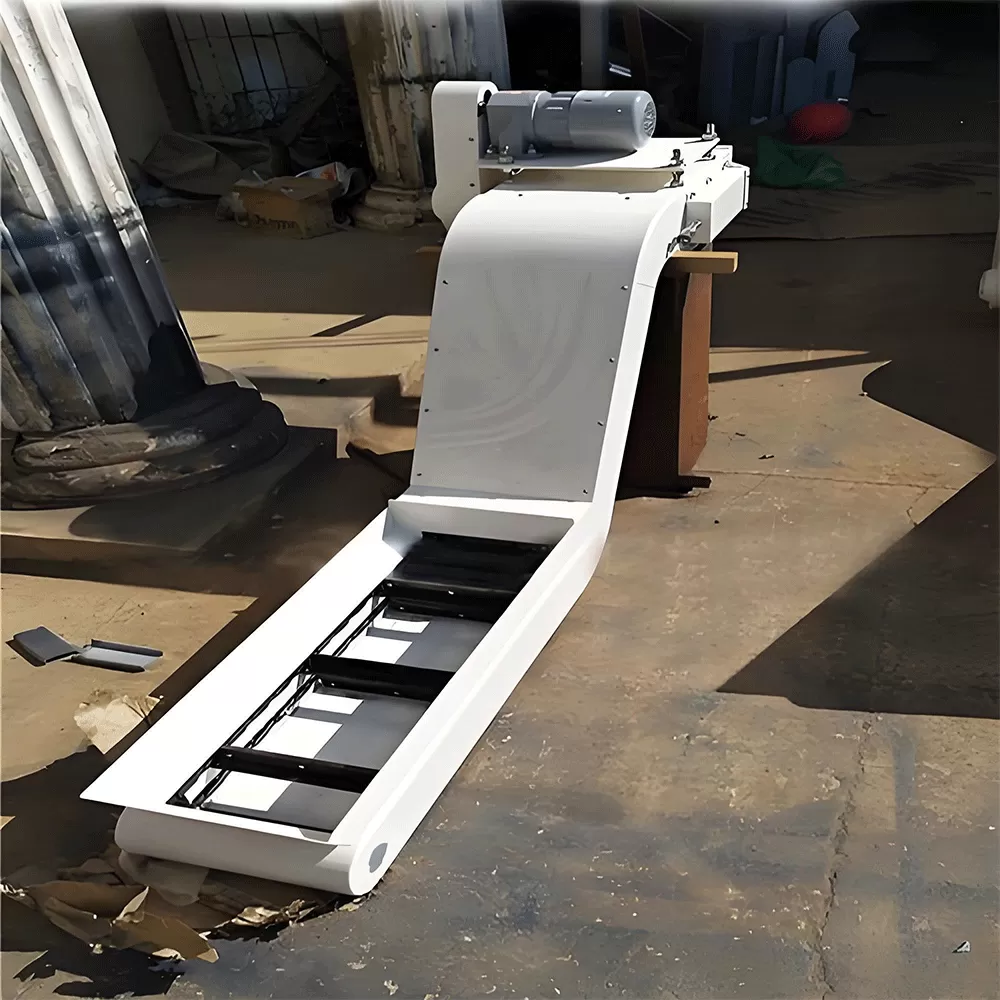
High-strength roller chains run along both sides of the conveyor frame, guided by wear-resistant tracks. Connecting these chains are customized scraper flights, or bars, spaced at precise intervals. As the chain rotates, these flights sweep the bottom floor of the conveyor, pushing fine particles up the incline toward the discharge chute. The shape and spacing of the flights can be adjusted based on the density and volume of the swarf being processed.
Trough Construction and Wear Resistance
Because fine particles of materials like cast iron and hardened steel are highly abrasive, the bottom plate of the trough is subject to continuous friction. To address this, the frame is typically lined with wear-resistant hardened steel plates, such as manganese steel or specialized alloys. This construction prevents the conveyor frame from wearing thin over years of continuous operation.
Drive and Safety Systems
A motor-driven gearbox provides the necessary torque to move the chain assembly through heavy sludge. Because foreign objects can occasionally fall into the machine tool enclosure, these conveyors are equipped with mechanical torque limiters or electronic overload sensors. These protective features stop the motor immediately if a jam occurs, preventing structural damage to the chains and drive shaft.
Matching Material Characteristics with Conveyor Selection
Selecting the correct swarf management system requires a detailed analysis of the raw materials processed on the production floor. Different metals produce distinct chip geometries, which dictate the necessary mechanical properties of the conveyor system.
Cast Iron: Machining cast iron generates a mixture of graphite powder and small, brittle chips. When mixed with water-soluble coolant, this forms a thick, pasty mud. A standard belt conveyor allows this mud to wash through the hinges, contaminating the clean coolant chamber. A scraper design ensures this paste is consistently scraped from the tank bottom.
Brass and Bronze: These copper alloys produce short, needle-like chips that are highly abrasive. They tend to settle rapidly due to their high density. Scraper systems with segmented flights collect and lift these dense materials efficiently.
Sintered Metals: Powder metallurgy parts produce extremely fine dust during machining. Standard filtration struggle with these micro-particles, making continuous bottom-sweeping scrapers necessary to prevent heavy sedimentation.
By aligning the mechanical conveyor type with the physical properties of the waste material, manufacturers can significantly reduce manual tank cleaning cycles and extend the service life of their coolant pumps.
Preventing Coolant Degradation and Tool Wear
The relationship between coolant longevity and chip evacuation is direct. When fine swarf remains suspended in the coolant tank, it creates several operational challenges that impact both workpiece quality and operational costs.
Suspended particles act as an abrasive agent when recirculated through the coolant lines. When sprayed onto the cutting zone, these micro-particles can degrade surface finishes and accelerate the wear of expensive carbide tooling. This is particularly problematic in high-pressure coolant systems, where even minor particulate contamination can cause internal wear in high-pressure pumps.
Additionally, accumulated metal fines provide an environment for anaerobic bacteria to grow in water-based coolants. This leads to rancidity, unpleasant odors, and skin irritation for machine operators. Consequently, facilities must perform frequent coolant replacements and manage hazardous waste disposal. Implementing an integrated scraper chip conveyor with secondary filtration—such as magnetic rollers or paper band filters—removes these micro-contaminants before they recirculate, extending coolant life and preserving workpiece quality.
Engineering Variations for Advanced Automation Lines
Modern industrial automation requires systems that run unattended for multiple shifts. To achieve this level of reliability, conveyor designs must be adapted to the specific layout and demands of the automated cell.
Incline Angles and Dewatering
The angle of the discharge incline must be carefully calculated. While a steeper angle (e.g., 60 degrees) saves valuable floor space, it can cause very fine or wet sludge to slide backward. A shallower angle (30 to 45 degrees) allows for more reliable dewatering of the chips before discharge, keeping expensive coolant inside the machine tank rather than carrying it out into the waste bin.
Integrated Pre-Filtration
For machines utilizing high-pressure coolant, the scraper conveyor can be equipped with a pre-filtration chamber. As the scraper removes the heavy solids, the coolant passes through stainless steel slotted screens or rotary drum filters to catch particles down to 50 microns. This multi-stage separation ensures clean fluid returns to the high-pressure filtration unit.
Custom Discharge Heights
To accommodate large automated chip hoppers or centralized overhead conveyor lines, the discharge head height and snout length must be engineered to prevent spilling and ensure clean transfer. This customization is vital for maintaining a clean and safe factory floor environment.
At QUNHUI, we analyze these spatial and operational parameters during the design phase to deliver customized machinery that fits seamlessly into your factory layout and automation workflows.
Comparative Analysis: Scraper vs. Hinge Belt Conveyors
While both systems serve the goal of swarf removal, their mechanical strengths are distinct. Understanding these differences prevents costly specification errors during equipment procurement.
| Feature / Parameter | Hinge Belt Conveyor | Scraper Chip Conveyor |
|---|---|---|
| Primary Target Materials | Long, bushy, curly steel turnings; large brass/aluminum chips. | Fine, short, broken chips; cast iron powder; grinding sludge. |
| Operational Method | Carries chips on top of a moving articulated belt. | Drags chips along the bottom of a stationary trough. |
| Coolant Cleanliness | Allows fine chips to pass through belt hinges into the tank. | Cleans settled fines from the tank floor, keeping coolant cleaner. |
| Abrasive Wear Resistance | Fine particles can lodge in hinges, increasing wear. | Fewer moving joint parts exposed to abrasion; uses replaceable wear strips. |
| Maximum Particle Size | Unrestricted (handles large parts and long nests). | Limited to small chips (typically under 10mm) to prevent jamming. |
For facilities running diverse product lines that produce both long turnings and fine swarf, hybrid systems are available. These integrate a hinge belt on top for large chips with a scraper system underneath to collect fines that fall through the belt loops.
Maximizing Equipment Life through Preventative Maintenance
While robustly engineered, scrapers are subject to continuous friction and abrasive environments. Implementing a structured maintenance routine is vital to ensuring a long operational life and avoiding unplanned downtime.
Regular inspection of the conveyor chain tension is a primary maintenance requirement. Over time, conveyor chains naturally stretch. Checking the tensioning bolts at the tail end ensures the chain runs straight and does not skip teeth on the drive sprockets, which could cause a mechanical jam or uneven wear on the scraper flights.
Equally important is the inspection of the wear strips. The track along which the scraper chain travels is lined with replaceable wear strips. Checking these strips yearly prevents the chain from wearing directly into the structural frame of the conveyor, avoiding expensive structural repairs. Drive sprockets should also be monitored for wear patterns, such as "hooking" of the teeth, which can damage the chain links and cause jerky operation.
By dedicating minimal maintenance hours to these areas, industrial plants can avoid unexpected breakdowns and prolong the life of their filtration machinery.
Custom Swarf Management Solutions by QUNHUI
With extensive manufacturing experience, QUNHUI designs and builds durable scraper chip conveyor systems tailored to the exact requirements of machine tool builders and end-users. Our systems are engineered to handle demanding materials, from abrasive cast iron dust to sticky aluminum fines, ensuring reliable chip evacuation in diverse manufacturing environments.
We focus on robust construction, utilizing high-grade wear plates, precision-machined drag chains, and reliable drive units. Each system is designed to integrate with your existing CNC machine footprint, coolant tank requirements, and automation workflows. By selecting QUNHUI, you partner with an experienced manufacturer focused on reducing operational downtime and improving fluid management.
Frequently Asked Questions
Q1: What materials are best suited for a scraper chip conveyor?
A1: These systems are ideal for fine, short, or broken chips, such as those generated from machining cast iron, brass, bronze, aluminum castings, and powder metals, as well as fine grinding sludge.
Q2: Can a scraper conveyor handle long, stringy steel chips?
A2: Generally, no. Long, curly, or stringy steel chips can wrap around the scraper flights or get caught in the drive sprockets, leading to jams. A hinge belt conveyor is better suited for long, stringy swarf.
Q3: How does the system separate fine metal particles from the coolant?
A3: The scraper sweeps the bottom of the tank where heavy fine particles naturally settle. For finer filtration, the conveyor can be integrated with auxiliary equipment such as magnetic separators, cyclone filters, or paper band filters.
Q4: How often do the scraper flights and chains need to be replaced?
A4: This depends on the material abrasiveness and daily runtime. Under normal operating conditions with regular maintenance and proper chain tensioning, high-quality chains and wear strips can last several years before needing replacement.
Q5: What safety mechanisms protect the conveyor from overloading or jamming?
A5: Our systems feature mechanical friction clutches on the drive shaft or electronic current overload sensors in the control panel to cut power immediately if a foreign object jams the scraper assembly.
Contact Our Engineering Team for Custom Designs
Every manufacturing facility has unique spatial layouts and machining requirements. For custom-engineered swarf management solutions that integrate with your CNC machine tools and automation cells, contact our engineering department. Submit your project specifications to QUNHUI today to receive a detailed technical evaluation and an inquiry response tailored to your operational needs.