
.webp)
In high-capacity metal cutting operations, the management of waste material directly impacts machine uptime and surface finish quality. CNC milling, turning, and grinding centers produce diverse scrap profiles depending on the workpiece material and cutting parameters. While long, continuous stringy chips are effectively managed by traditional hinged belt systems, fine metal particulates, powdery chips, and heavy machining sludge require a different mechanical handling approach. The scraper chip conveyor serves as a dedicated solution for these demanding debris types, ensuring continuous operation and clean coolant recovery.
Industrial operations processing cast iron, brass, bronze, and aluminum castings encounter unique chip evacuation challenges. These materials tend to generate small, fragmented scrap that can bypass standard conveyor joints, accumulating in the coolant reservoir. Over time, this accumulation leads to clogged pumps, premature tool wear, and degraded machining tolerances. Implementing a well-engineered scraper chip conveyor addresses these issues at the source, extracting fine particulates before they settle in the filtration tank.
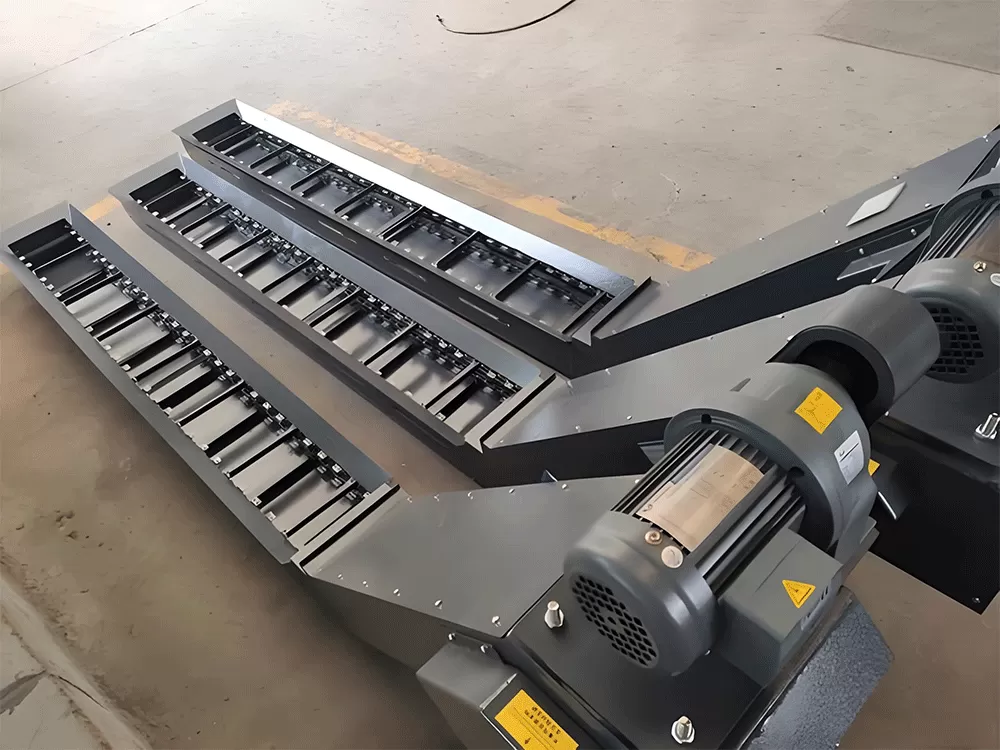
The Mechanical Working Principle of Scraper Conveyor Systems
A scraper chip conveyor operates on a drag-discharge mechanism. Unlike conveyor belts that carry material on top of a moving surface, this system utilizes a series of scraper flights, also known as drag cleats, attached to parallel strands of high-tensile roller chain. These flights move along the hardened bottom plate of the conveyor trough, scraping the settled chips and sludge forward and upward toward the discharge chute.
Chain and Flight Dynamics
The movement of the scraper chain is synchronized by a drive shaft located at the discharge end of the conveyor frame. As the motor rotates the shaft, the chain pulls the scraper flights through the receiving area, which is submerged under the CNC machine's chip discharge port. The geometry of the flights is designed to match the contour of the inner trough. This close tolerance prevents fine particles from passing underneath the flights, ensuring a clean sweep with every pass.
In terms of physical configuration, the conveyor typically features three distinct zones:
The Horizontal Loading Zone: Positioned directly beneath the machining area to collect falling chips and coolant.
The Incline Zone: A sloped section, usually set at an angle of 30, 45, or 60 degrees, where the chips are dragged upward out of the liquid level.
The Discharge Zone: The elevated exit point where chips fall into a collection bin, and any adhering coolant drains back down the incline.
Fluid-Solid Separation Mechanics
As the scraper flights pull the material up the incline zone, gravity acts on the entrained coolant, causing it to flow backward down the trough. This passive dewatering process is vital for recycling expensive cutting fluids. To improve fluid recovery, the incline angle must be balanced against the friction coefficient of the wet metal chips to prevent the material from slipping backward into the tank.
Material Compatibility and Application Analysis
Selecting the correct conveyor type requires a thorough understanding of the chip geometry generated by the manufacturing process. A scraper chip conveyor is not a universal solution for every scrap profile, but it excels in specific material categories where other designs fail.
Cast Iron and Carbon Steel Fines
Dry or wet machining of cast iron produces highly abrasive, powdery chips. When mixed with water-soluble coolant, these chips form a dense, heavy paste. Standard hinged belt conveyors are prone to failure in these conditions, as the fine powder penetrates the hinge links, causing severe abrasive wear and binding. A scraper chip conveyor sweeps the bottom plate clean, preventing the paste from forming a hardened layer on the floor of the tank.
Brass, Bronze, and Non-Ferrous Shavings
Non-ferrous materials like brass and bronze generate short, brittle chips during turning and milling operations. These materials do not form continuous coils but rather small, sharp needles. The scraping action is highly effective at collecting these dense, sinking particles. By dragging them along the smooth bottom plate, the system avoids the wedging action that typically jams rotating drum filters or hinged aprons.
Aluminum Dust and Light Floating Chips
Aluminum machining presents a dual challenge: some chips sink while lighter shavings float on the surface of the coolant. Standard scraper designs focus on bottom dragging. To handle floating aluminum debris, custom variations must incorporate surface skimming elements or integrated coolant flush nozzles to force the floating particles into the path of the scraper flights. QUNHUI engineers custom flight configurations to handle these mixed-density materials, ensuring comprehensive chip extraction.
Key Engineering Components and Structural Design
The reliability of a scraper chip conveyor depends on the durability of its internal components and the quality of the materials used in its construction. Because the system is continuously subjected to friction and abrasion, heavy-duty manufacturing standards are mandatory.
Wear-Resistant Trough Materials
The bottom plate of the conveyor trough bears the constant friction of both the scraper flights and the abrasive metal chips. To extend the service life of the system, this plate is fabricated from high-hardness steel alloys. Commonly, manganese steel or hardened plates with a Brinell hardness rating (HB) of 400 or higher are specified. This material selection prevents groove wear and maintains the flat surface necessary for effective scraping.
Roller Chain Selection and Pitch
The drive chain is the main tensile element of the conveyor. Standard roller chains with pitches ranging from 31.75 mm to 50.8 mm are selected based on the conveyor length and expected load capacity. These chains undergo induction hardening on the pins and bushings to resist the aggressive environment of metal fines mixed with chemical coolants. Dual-strand configurations are standard, ensuring balanced tension and preventing the scraper flights from twisting or skewing during operation.
The scraper flights themselves are welded or bolted to the chain attachments at calculated intervals. Bolted flights offer the advantage of individual replacement in the event of mechanical damage, reducing maintenance downtime.
Drive System and Safety Mechanisms
The power transmission system comprises an electric motor, a gear reducer, and a safety overload device. Because blockages can occur if large tramp metal or hand tools accidentally fall into the conveyor, the drive system must include protection mechanisms. QUNHUI integrates mechanical torque limiters or electronic current-monitoring relays. When a resistance threshold is exceeded, the safety mechanism instantly disengages the drive or shuts down the motor, preventing structural deformation of the chain and flights.
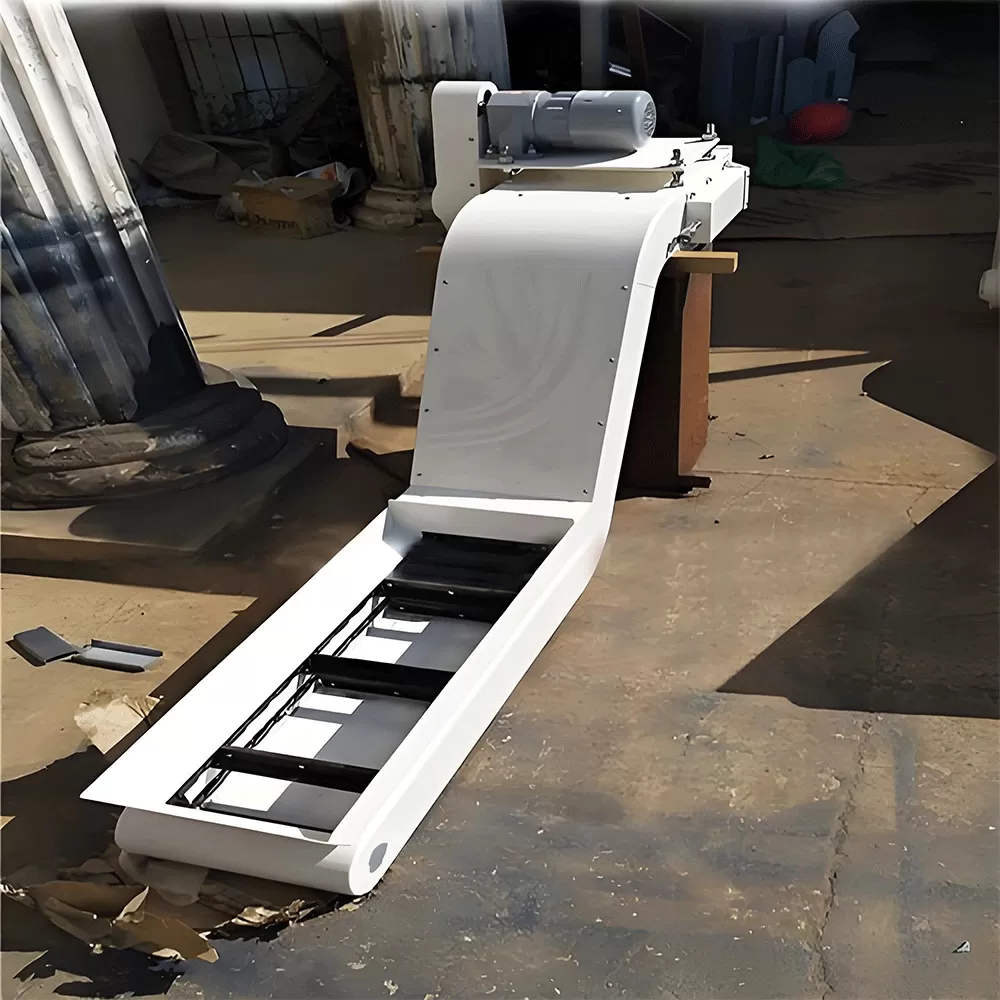
Managing Operational Challenges and Maintenance
Continuous operation of any chip removal system requires structured maintenance and attention to common failure modes. For drag-type systems, managing chain tension and monitoring wear patterns are the primary operational tasks.
Addressing Chain Elongation and Tensioning
Over months of continuous duty, roller chains undergo natural wear at the pin-and-bushing joints, leading to physical elongation. If the chain becomes too loose, it can jump the drive sprockets or sag in the return section, causing the flights to catch on internal frame supports. To prevent this, conveyor designs incorporate adjustable take-up units at the tail end. These screw-type or spring-loaded tensioners allow operators to adjust the chain tension easily, keeping the scraper flights aligned with the trough floor.
Preventing Fine Sludge Accumulation
While the scraper flights remove the vast majority of solid waste, extremely fine particles (under 50 microns) can remain suspended in the coolant fluid. If left unmanaged, these ultra-fines will settle in the corners of the main coolant reservoir, bypass the conveyor, and eventually enter the high-pressure pump lines. To counter this, advanced system integrations often combine the scraper chip conveyor with a secondary filtration step, such as a magnetic separator for ferrous materials or a paper band filter for non-ferrous applications.
System Integration for CNC Machining Centers
Every CNC machine tool has specific footprint limitations, coolant tank capacities, and discharge heights. Consequently, a standardized, off-the-shelf conveyor rarely delivers the best results. Customization of the physical dimensions and electrical interfaces is necessary for smooth factory integration.
The elevation angle must be carefully engineered based on the layout of the production floor. A steep incline saves valuable floor space but increases the risk of chip slippage, whereas a shallow incline improves dewatering but extends the overall footprint of the machine setup. The discharge height must also provide sufficient clearance for standard chip hoppers or central factory waste systems.
From an electrical integration standpoint, the conveyor control panel should interface directly with the CNC machine's PLC. This integration allows the conveyor to start and stop automatically in synchronization with the spindle run-time, reducing energy consumption and mechanical wear during idle periods. Additionally, error signals from the conveyor's torque limiter should instantly trigger a machine feed-hold command to prevent further chip generation during a blockage event.
Frequently Asked Questions
Q1: Can a scraper chip conveyor handle long, stringy steel
chips?
A1: Generally, no. Long, continuous steel chips tend to nest
and wrap around the scraper flights or the chain sprockets. This wrapping action
can lead to severe mechanical jams and chain derailment. For long, stringy
chips, a hinged belt conveyor is the recommended choice. Scraper systems are
specifically designed for short, broken chips, fines, and sludge.
Q2: How often should the chain tension be inspected on a drag-type
conveyor?
A2: Under normal double-shift production schedules, chain
tension should be inspected monthly. During the first few weeks of operation, a
new chain will undergo initial break-in elongation, requiring more frequent
adjustments. Regular inspections help identify wear before it causes operational
issues.
Q3: What are the primary wear parts that require regular
replacement?
A3: The primary wear items are the scraper flights, the
drive sprockets, the wear strips on the bottom of the trough, and the roller
chain itself. Specifying hardened materials during the initial design phase
extends the replacement interval of these components.
Q4: Is a scraper conveyor suitable for dry machining
applications?
A4: Yes, scraper conveyors work effectively in dry
machining environments, particularly for cast iron or brass. Because there is no
liquid to carry the dust away, the physical scraping action is highly reliable
for moving dry, powdery metal waste out of the machine enclosure.
Q5: How does coolant volume affect the performance of the
conveyor?
A5: High coolant flow rates can help wash fine chips down
into the conveyor loading zone. However, if the coolant velocity is too high, it
can keep light particles suspended, preventing them from settling onto the
bottom plate where the scraper flights can capture them. Settling plates or
baffles may be required in high-flow systems.
Q6: Can this conveyor system handle hot chips directly from
heavy-duty cutting?
A6: Yes. Because the trough, chain, and flights
are constructed entirely of steel, they are highly resistant to thermal damage
from hot chips. Unlike synthetic belt conveyors, metal scrapers will not melt or
degrade when handling high-temperature waste straight from the cutting zone.
Custom Engineering Support from QUNHUI
Selecting the appropriate waste management system is a balance of metallurgy, mechanical design, and spatial configuration. QUNHUI designs custom conveyor solutions tailored to the specific demands of your manufacturing processes, taking into account workpiece materials, coolant volumes, and machine tool configurations.
To request a detailed engineering consultation, receive dimensional drawings, or discuss a customized scrap handling solution for your CNC production line, please submit your detailed operational requirements to our application team. We will review your specifications and provide a professional proposal optimized for your manufacturing setup.