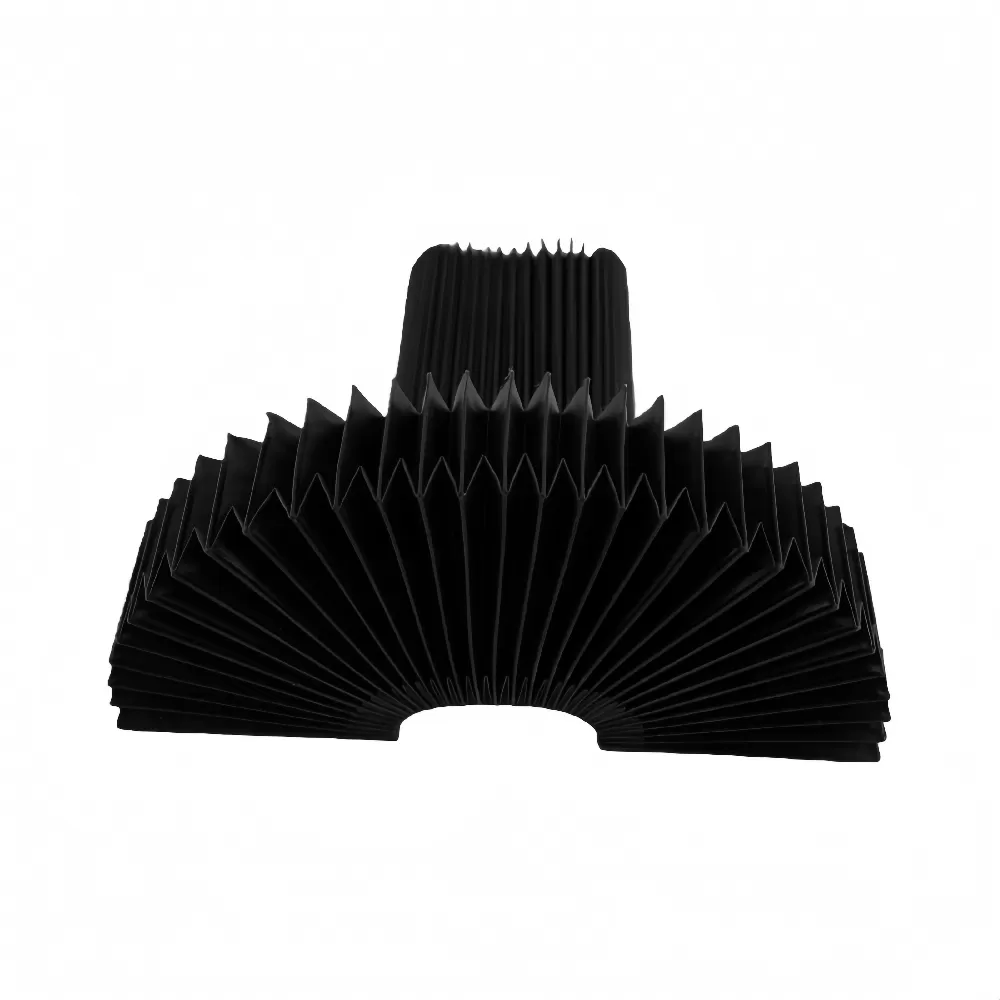
In heavy-duty CNC machining, industrial robotics, and precision automation, linear guideways and ball screw assemblies demand robust protection against chips, coolant fluids, fine dust, and impact. Among all protection systems, accordion way covers remain the most versatile solution for dynamic, multi-axis movements with limited retraction space. This guide – written from a field engineering perspective – focuses on measurable design parameters, material compatibility with real-world cutting environments, and the exact steps of a custom engineering workflow. No generalizations, only performance-driven facts.
Whether you are retrofitting a 5-axis machining center or specifying covers for a high-speed pick-and-place system, the following sections provide authoritative criteria based on mechanical loads, thermal conditions, and cycle demands. Throughout this document, we reference proven methodologies applied by QUNHUI in projects across automotive, aerospace, and general metalworking sectors.
1. Critical Design Parameters Governing Accordion Way Cover Performance
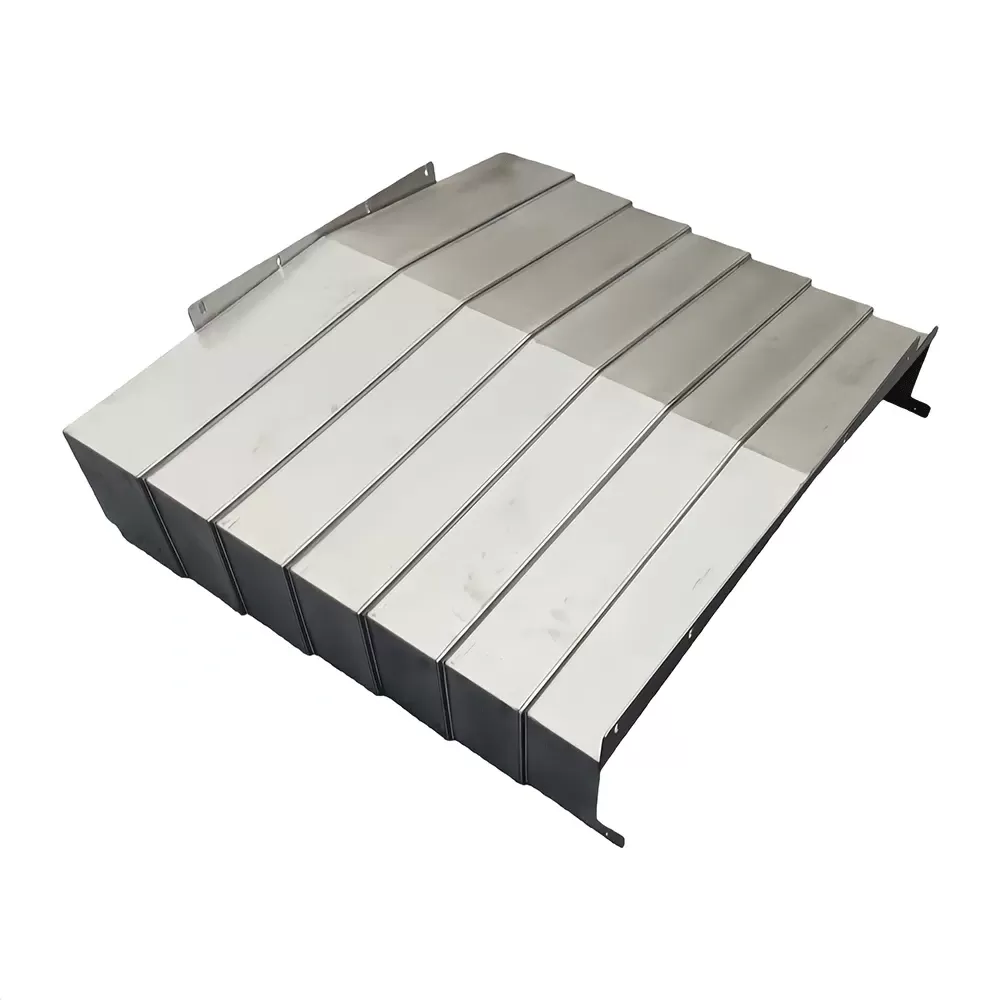
An accordion way cover functions as a flexible barrier that expands and compresses following axis travel. Its operational reliability directly correlates to five core engineering parameters. Below we define each metric with industry-standard reference ranges.
Maximum dynamic speed (m/min): Standard designs handle 30–45 m/min. High-velocity variants (up to 80 m/min) require reinforced fabric layers and low-friction hinge connectors. For applications exceeding 50 m/min, the cover’s inertial forces increase non-linearly – demanding lighter composite materials and pre-tensioned scissor linkages.
Compression-to-extension ratio: Typical values lie between 1:5 and 1:12. A ratio of 1:8 means a fully compressed length of 100 mm extends to 800 mm. Designers must calculate the number of folds and individual pleat height (usually 25–80 mm) to meet available cavity depth during retraction.
Pleat geometry (U-profile vs. V-profile): U-shaped folds provide larger internal volume, suitable for collecting coarse chips (e.g., cast iron). V-shaped folds promote self-cleaning when covers are vertically mounted, preventing chip accumulation. Hybrid designs combine both forms for extreme contamination loads.
Lateral stability and guide systems: For spans exceeding 600 mm or unsupported horizontal travels, internal aluminum or stainless steel support bands are embedded. These bands prevent sagging and maintain alignment across dozens of thousands of cycles.
Sealing effectiveness (IP rating equivalence): Industrial accordion way covers achieve protection comparable to IP54 (dust-protected) up to IP6K9K (high-pressure, high-temperature washdowns) when combined with double-lipped scraper seals at both ends.
Each of these parameters must be cross-referenced with the machine’s duty cycle, axis acceleration, and environmental media. A mismatch – e.g., installing high-speed rated covers on low-frequency, high-impact applications – often causes premature seam fatigue or frame deformation.
2. Matching Material Science to Operating Conditions
Selecting the correct elastomer or coated textile is not a one-size-fits-all decision. The table below outlines material behaviors under typical machining environments, enabling precise specification.
Polyurethane (TPU-coated polyester): Excellent abrasion resistance and tensile strength (up to 4000 N/50mm). Functional from -30°C to +90°C. Ideal for dry machining, aluminum chips, and moderate coolant splashes. TPU covers are standard for most CNC milling centers.
Chloroprene (Neoprene) with nylon reinforcement: Superior resistance to mineral oils, hydraulic fluids, and weathering. Temperature range -15°C to +100°C. Recommended for grinding applications where fine abrasive particles threaten zipper-like seam wear.
High-temperature fluorocarbon elastomer (FKM/Viton): Withstands continuous exposure to 200°C and peaks of 230°C. Essential for hot chip evacuation in titanium or superalloy machining, or near spindles with integrated cooling bypass.
Polyvinyl chloride (PVC) coated fabric: Economical but limited to light-duty operations (below 40 m/min) and non-oily environments. PVC hardens at low temperatures (below 0°C), leading to cracking.
Anti-static / ESD-safe versions: Surface resistivity ≤ 10^8 Ohms required in electronics assembly lines or hazardous dust environments. These covers incorporate conductive carbon-loaded polymers or embedded grounding strips.
Beyond fabric selection, the internal frame material (aluminum, spring steel, or galvanized sheet) dictates load distribution. For highly corrosive coolant (e.g., chlorine-based extreme pressure additives), QUNHUI specifies anodized aluminum profiles and stainless steel rivets to prevent galvanic corrosion. An incorrectly chosen material shortens cover life by 70% within six months of operation.
Material validation should always include a 200,000-cycle fatigue test under actual contamination spray. Reputable suppliers, including QUNHUI, provide test reports documenting elongation retention and seam integrity after such trials.
3. Custom Engineering Workflow: From Requirements to Production-Ready Covers
Off-the-shelf accordion way covers rarely satisfy the geometric constraints or environmental extremes of specialized machinery. A rigorous customization process involves five distinct stages, each with verifiable deliverables.
Stage 1 – Kinematic & spatial analysis: Engineers measure the machine’s travel envelope, mounting interfaces, and available retraction cavity. Key data points: maximum stroke length, minimum compression gap, side clearance, and presence of nearby sensors or lubrication ports. A 3D laser scan resolves any interference conflicts before cutting material.
Stage 2 – Load case definition: The client provides acceleration profiles (m/s²), dominant chip type (stringy, powdery, or granular), coolant flow rate (L/min), and peak ambient temperature. For example, high-pressure coolant systems (70 bar) require reinforced inner liners and sealed hinge seams to prevent fluid ingress.
Stage 3 – Material & pleat configuration: Using data from stage 1 and 2, a material matrix is created. For vertical axes with fine cast iron dust, V-profile pleats combined with anti-abrasive TPU and magnetic scrapers are selected. For horizontal lathe ways with heavy stringy chips, a double-layer design with external scraper plates and U-profile pleats is deployed.
Stage 4 – CAD modelling and simulation: Full parametric models simulate compressed and extended states. Finite element analysis (FEA) validates stress distribution on mounting flanges and pleat root radii. QUNHUI applies dynamic motion simulation to verify that the cover does not contact ball screw housings or cable tracks at any point along travel.
Stage 5 – Prototyping and iterative testing: Before full production, a prototype segment (minimum 10 pleats) is manufactured and mounted on an equivalent stroke test bench. Cycle counts, sealing effectiveness, and visual wear are documented. Adjustments to stitching patterns, edge binding, or scrapper hardness are made iteratively until the prototype passes a 250,000-cycle mark without leakage.
Only after these steps does series production commence, including laser-cut mounting flanges, pre-installed attachment brackets, and batch traceability labels. This methodical approach eliminates field failures and unscheduled downtime.
4. Installation Best Practices and Maintenance Schedules
Even the most robust accordion way covers will underperform if installed incorrectly or neglected. Below are field-proven recommendations from industrial maintenance protocols.
Alignment precision: Mounting flanges must be parallel to the axis of motion within 0.2 mm/m. Misalignment generates uneven pleat compression, causing early cracking on one side.
Avoid over-extension: Install mechanical stops or limit switches to prevent the cover from exceeding its designed maximum extension – over-extension tears the fabric from the end frame.
Periodic cleaning intervals: For dry chip environments, blow compressed air into pleat folds every 40 operating hours. For wet coolant applications, flush with low-pressure water and mild detergent weekly, then dry thoroughly to avoid mildew or material degradation.
Inspect scraper lips and seam seals: After 2,000 hours, examine the front scraper lip for grooving or hardening. Replace scrapers as soon as coolant bypass is observed, because fluid penetrating the folding fabric can reach guideways and wash out lubricant.
Retensioning internal support bands: Some heavy-duty covers allow manual retensioning of metal inserts. Check tension every 6 months; loose bands cause the cover to bulge outward and collide with adjacent machine structures.
Recording maintenance logs (hours of operation, type of chips observed, any seal damage) helps to predict remaining service life. Real-world data from machining cells shows that proactive cleaning extends cover longevity by 300% compared to completely neglected units.
5. Advanced Add-On Features for Harsh Environments
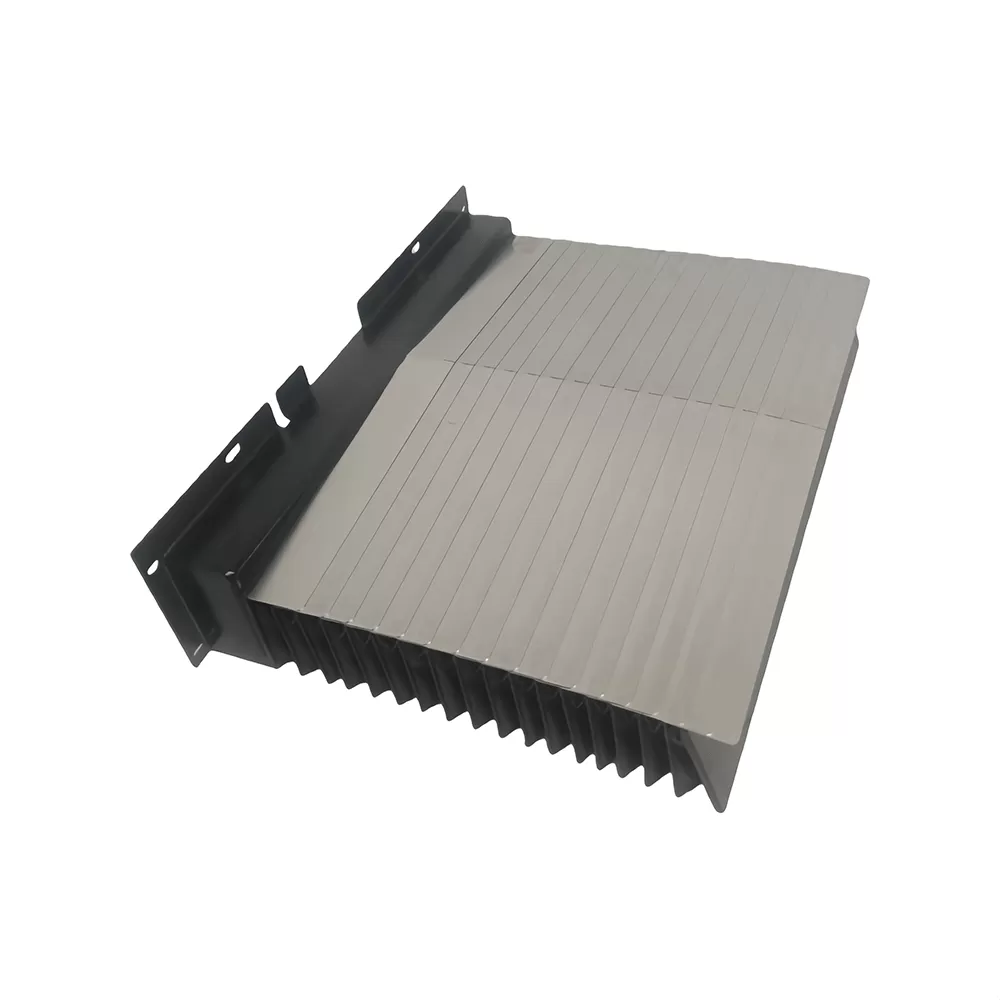
Modern automation demands more than basic chip protection. Custom-engineered accordion way covers can integrate several enhancements that solve specific productivity issues.
Integrated wiper-scraper system: Polyurethane or bronze scrapers mounted on the front frame actively remove chips before they contact the flexible fabric. For grinding swarf, a two-stage scraper (rubber then stainless steel) prevents fine particle ingress.
Viewing windows: Transparent TPU windows embedded in one or two pleats allow visual inspection of the guideway lubrication state without removing the cover. Windows are sealed with radio-frequency welding to maintain coolant resistance.
Limit switch mounting channels: Anodized aluminum profiles on the side of the cover allow magnetic or mechanical limit switch brackets to slide along the travel axis, reducing external cable tracks.
Air purge connections: For ceramic dust or carbon fiber environments, a compressed air port keeps the interior cavity pressurized (0.2–0.5 bar), actively repelling sub-micron particles from entering through seams.
Fire-retardant coatings: Covers used near spark-generating processes (e.g., laser cutting tables or welding robots) can be treated with flame-resistant coating meeting UL94 V-0 standards.
These options are specified during the customization stage (Stage 3 above). QUNHUI has supplied accordion way covers with integrated air purge and ESD grounding to automated lithium battery electrode slitting lines, where even one stray particle can cause a short circuit.
Selecting the right combination of add-ons requires balancing protection level against added weight and cost – but for continuous 24/7 operations, each feature quickly pays for itself via reduced maintenance downtime.
Frequently Asked Questions (FAQ) on Accordion Way Covers
Q1: What maximum velocity can modern accordion way covers withstand
without mechanical damage?
A1: Standard engineered covers perform
reliably up to 60 m/min. For ultra-high-speed linear motor axes (80–120 m/min),
special designs with carbon-fiber reinforced frames, reduced fold mass, and
integrated damping layers are required. Always request a speed-specific
validation report from your supplier.
Q2: How do I select the right material for a machining center that
uses both oil-based and water-miscible coolants?
A2: Water-glycol
coolants and neat cutting oils demand different chemical resistance. A
TPU-coated fabric with hydrolysis-resistant formulation works with both types.
Avoid PVC or standard polyamide fabrics – these will swell or delaminate within
months. QUNHUI offers a TPU blend certified for pH 6–9 and ester-based oils.
Q3: Can accordion way covers be retrofitted on older CNC lathes with
limited clearance between the carriage and way covers?
A3: Yes,
through a custom retrofitting process. Engineers first create a 3D scan of the
existing cavity, then design a “low-profile” cover with shallower pleat depth
(e.g., 20 mm compressed height) using high-tenacity fabric to maintain strength.
Side mounting brackets can be redesigned to attach to existing tapped holes or
magnetic strips.
Q4: What is the typical lead time for a fully customized set of
covers from engineering review to shipping?
A4: For a typical CNC
axis (stroke ≤ 3 m, standard materials), the process takes 10–15 working days: 3
days for kinematic analysis and material selection, 4 days for CAD and
simulation, 2 days for prototype test (accelerated), and 5 days for series
manufacturing. Complex multi-axis or extreme temperature designs may require
20–25 days.
Q5: How do I verify the claimed fatigue life of a cover before
purchasing?
A5: Request a test report based on ISO 1419 (belt
flexing test adapted for covers) or a supplier’s internal standard. A credible
document includes cycle count (minimum 500,000 cycles for moderate speed), final
elongation at break >80% of original, and photographic evidence of seam
condition after testing. Avoid suppliers who only provide theoretical
calculations without actual rig test data.
Q6: Are there specific design considerations for vertical axes
(Z-axis) compared to horizontal ones?
A6: Absolutely. Vertical
covers must support their own weight to avoid sagging. Use internal vertical
stiffeners (spring steel bands) and limit pleat height to ≤50 mm to prevent fold
collapse. Additionally, the bottom mounting flange needs drainage holes so
coolant doesn’t pool inside the cover folds.
Need a tailored solution for your CNC, automation line, or special-purpose machine? Every axis geometry and process condition is unique – but a correctly engineered accordion way cover directly improves uptime and part accuracy. Share your machine’s stroke length, operating environment, and contamination type with our engineering team. At QUNHUI, we provide full technical support, from initial material recommendations to prototype validation and batch production.
Send your inquiry now to receive a detailed design proposal and lead time estimate.
Contact QUNHUI for a no-obligation engineering review: include your machine’s axis travel, current failure mode (if any), and coolant type. Our specialists will respond with parameter-specific recommendations and a quotation within 48 hours.