
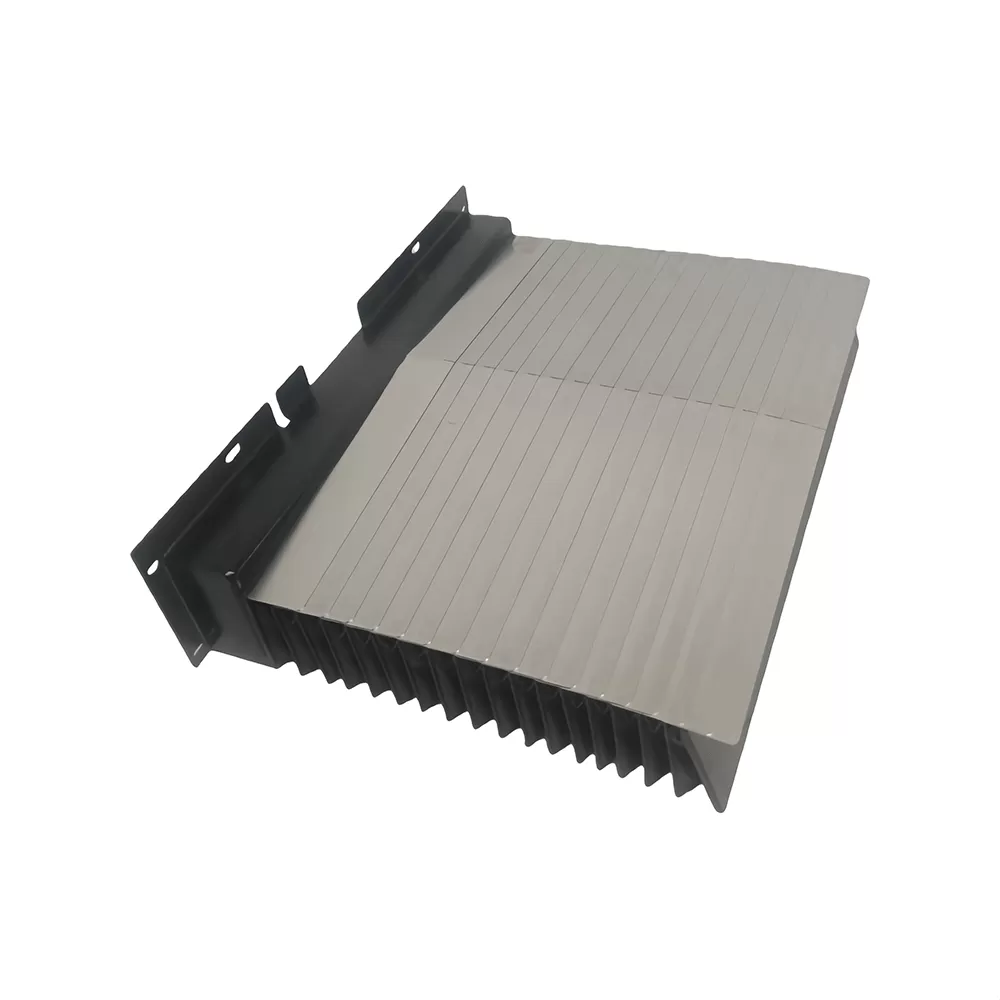
In automated production environments, contaminants such as metal chips, abrasive dust, and coolant emulsions directly threaten the service life of CNC machine tools. The accordion bellow cover (also known as way bellows or foldable protective cover) serves as the primary barrier between harsh machining byproducts and precision guideways, ball screws, and linear actuators. While often overlooked during machine specification, the design, material selection, and custom fit of these components determine long-term positioning accuracy and maintenance intervals. This article provides a detailed examination of accordion bellow cover technology from an engineering and operations perspective, focusing on pain points, material science, and integration strategies for custom CNC machinery and industrial robotics.
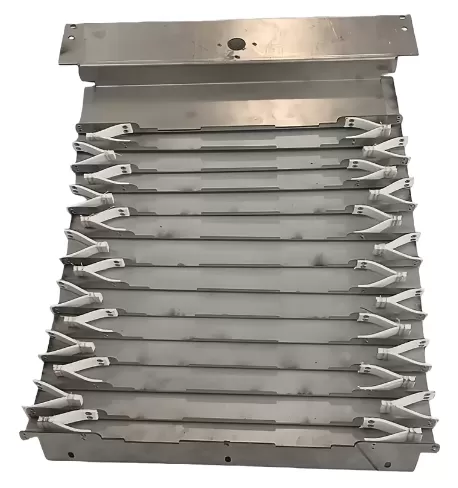
1. Core Mechanical Functions of Accordion Bellow Cover in Precision Machining
Beyond basic contamination shielding, a properly engineered accordion bellow cover performs multiple simultaneous functions that directly affect productivity:
Chip and swarf evacuation prevention: Interlocking folds prevent fine ferrous and non-ferrous particles from reaching bearing surfaces, eliminating “lapping” wear.
Fluid resistance: Sealed seams and appropriate coating materials resist oil-based coolants, water-glycol fluids, and chlorinated cutting oils without swelling or cracking.
Dynamic sealing under high acceleration: Modern high-speed machining centers often accelerate at 0.5 to 1.5 G; bellows must maintain contact with mounting surfaces without flutter.
Reduced friction on moving elements: Low-friction inner liners prevent abrasive contact with guide rails, preserving lubricant films.
Field data from automated workshops show that replacing rigid telescopic covers with a well-designed accordion bellow cover reduces particle ingress by over 90% in grinding applications, while also damping small vibrations from chip flow. For custom CNC routers and gantry mills, the inherent flexibility of accordion-style protection accommodates complex axis travels where metal covers would interfere.
2. Material Science & Structural Parameters for Industrial Environments
Selecting the correct material composite and geometric design for an accordion bellow cover requires matching physical properties to the specific machine duty cycle. Below are the key engineering parameters that define performance:
2.1 Fabric and Coating Systems
Polyurethane (TPU) coated polyester: Excellent abrasion resistance for high chip loads; operates from -30°C to +100°C; resists hydrolysis in humid conditions.
Neoprene-coated nylon: Cost-effective for dry machining and woodworking; moderate oil resistance but limited in continuous coolant exposure.
High-temperature fabric (PTFE/glass fiber): Applied near spindle areas (up to 220°C intermittent); also resists weld spatter in laser/plasma automation cells.
Antistatic variants: Required in explosive dust environments (e.g., carbon fiber or magnesium machining).
2.2 Fold Geometry and Stroke Dynamics
Each fold (or convolution) provides a predictable compression/extension ratio, typically between 5:1 and 8:1 depending on material stiffness. For long travel lengths (e.g., 4+ meters on a gantry rail), the cover’s self-supporting structure requires internal support bands or external aluminum profiles. Key design inputs include: maximum traverse speed, acceleration profile, and available installation space in both compressed and extended states. A mismatch here leads to fold collapse, premature fabric fatigue, or interference with limit switches.
QUNHUI’s engineering team applies finite element analysis (FEA) to predict stress concentration points on custom accordion bellow cover designs, especially for non-rectangular cross-sections or L-shaped covers used on twin-guideway machines. This data-driven approach reduces prototype iterations by 40–50% compared to trial-and-error methods.
3. Industry Pain Points: When Standard Covers Fail in Custom Automation
Standard off-the-shelf bellows often degrade rapidly when installed on customized CNC platforms or legacy machines. The most common failures observed in the field include:
Premature cracking at fold roots: Caused by high cyclic bending stress from mismatch between fold height and stroke geometry.
Coolant pooling inside bellows: Non-drainable designs allow fluid accumulation, leading to seam separation and biological growth (in water-miscible fluids).
Sealing lip detachment: When mounting flanges are not stiff enough to maintain compression under vibration, chips bypass the cover entirely.
Material hardening from UV/ozone: Machines placed near warehouse doors or welding stations experience accelerated polymer degradation.
Solving these issues requires custom engineering from the start. Instead of adapting a standard cover, the optimal workflow involves capturing the machine’s 3D motion envelope, identifying interference zones, and selecting material grades that match the chemical environment. For example, in a high-volume automotive transfer line with chlorinated coolants, QUNHUI specifies cross-linked polyurethane bellows with welded seams rather than stitched ones, extending service intervals from 3 months to over 18 months.
Beyond material selection, the accordion bellow cover must incorporate drain grommets at low points, reinforced mounting brackets, and optional scraper frames for heavy chip loads. These details are rarely available in generic products but form the basis for reliable long-term operation.
4. Application Deep Dive: CNC, Robotics, and Automated Guided Systems
The role of foldable protective covers extends across multiple automation platforms. Each use case imposes unique demands on the design:
4.1 High-Speed Machining Centers (HSM)
Spindle speeds above 15,000 rpm generate fine aerosolized coolant mist. An accordion bellow cover for HSM applications requires high-density fabric (minimum 850 g/m²) and double-lapped seams to prevent mist penetration. Additionally, the cover’s mass must be minimized to avoid added inertia on the axis; lightweight aluminum frame inserts offer the best stiffness-to-weight ratio.
4.2 Robotic 7th Axis (Linear Track Systems)
Robotic transfer systems often have exposed cable tracks and guideways beneath the robot base. A custom-shaped accordion bellow cover can shield the entire guideway while allowing the robot baseplate to move freely. The challenge lies in creating a cover with variable cross-section – wider at the robot mounting plate and narrower at the track ends. QUNHUI produces thermoformed end caps that seamlessly transition between different profiles, ensuring continuous chip shedding.
4.3 Laser / Waterjet Cutting Beds
Abrasive particles (garnet, metal dross) quickly destroy standard fabrics. Here, laminated covers with stainless steel mesh interlayer provide cut resistance while retaining folding ability. Slat-style water tables also require bellows with high chemical resistance to acidic byproducts; EPDM-coated fabric is often the preferred solution.
4.4 Retrofitting Older CNC Equipment
Many European and Japanese machine tools from the 1990s have non-standard way dimensions. A custom accordion bellow cover eliminates the need for costly guideway re-machining. Using laser scanning of the existing way covers’ mounting points, fabricators can create an exact-fit replacement that installs in under two hours – significantly reducing downtime compared to adapting telescopic steel covers.
5. Quality Verification and Service Life Prediction
For B2B buyers, establishing an expected service life for protective covers directly impacts maintenance budgeting. Reliable manufacturers perform standardised tests:
Dynamic folding endurance: Over 1 million cycles at rated stroke and speed, with no visible cracks or leaks.
Chemical immersion: 72-hour submersion in representative coolant (5% emulsion) at 50°C; checking for weight change, hardness variation, and seam strength.
Particle ingress test: Using ISO 12103-1 A2 fine dust under vibration, measuring mass of dust that penetrates the cover after 100,000 cycles.
Based on aggregated data from heavy milling operations (3-shift, ferrous chips, semi-synthetic coolant), a premium-grade accordion bellow cover typically achieves 24–36 months of service before fabric replacement is necessary. Light-duty applications (wood, composites, dry machining) often exceed 5 years. Periodic inspection – checking for seam separation, hardening of fold edges, or coolant staining – helps schedule proactive replacements before secondary damage occurs.
6. Integration and Maintenance Best Practices for Automation Managers
To maximize the return on investment from custom bellows, follow these engineering guidelines during installation and daily operation:
Ensure proper compression stops: The cover should not fully bottom out (metal to metal). Leave at least 10–15 mm gap in compressed state to avoid damaging fold roots.
Install chip deflectors upstream: A simple metal shield before the bellows reduces the volume of heavy chips hitting the fabric, especially on lathes with long stringy swarf.
Implement air purge for dusty environments: Low-pressure clean dry air injected between the folds prevents fine dust from accumulating and abrading the fabric from the inside.
Schedule quarterly fold cleaning: Use a soft brush and non-aggressive detergent to remove dried coolant residue that stiffens the fabric.
Furthermore, keep a spare cover set in inventory for critical CNC cells. While custom bellows are durable, unplanned fabric tears can lead to guideway scoring within hours. Spare parts reduce mean time to repair (MTTR) drastically compared to ordering a new custom unit after failure.
QUNHUI offers a complete documentation package for every custom accordion bellow cover, including 2D installation drawings, 3D step files, and recommended inspection checklists. This transparency supports the user’s internal preventive maintenance system (CMMS) and ensures consistent protection over the machine’s lifecycle.
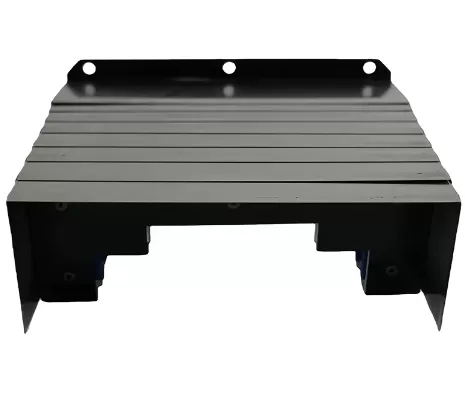
Conclusion: Precision Engineering for Long-Term Productivity
The accordion bellow cover is not a commodity item but a critical engineered component that preserves the geometric accuracy of CNC machine tools and automated systems. From material selection matching the coolant chemistry to fold geometry optimized for high acceleration, every parameter influences failure rates and maintenance costs. By moving beyond generic covers and adopting custom-engineered solutions from specialists like QUNHUI, manufacturers can reduce unplanned downtime, protect high-value guideways, and maintain consistent part quality over years of production.
For your next retrofit or new machine build, a tailored accordion bellow cover ensures that contamination never compromises your investment. Contact QUNHUI to discuss your specific axis configurations, environmental conditions, and performance targets. Our engineering team provides 3D design verification, material sample testing, and rapid prototyping to match your schedule.
Frequently Asked Questions (FAQ) – Accordion Bellow Cover for CNC & Automation
Q1: What is the maximum operating speed for a heavy-duty accordion bellow cover on a CNC milling machine?
A1: For standard polyurethane-coated fabric with internal support bands, continuous speeds up to 80 m/min are common. With optimized low-mass fabric and aluminum stiffeners, speeds up to 120 m/min are achievable. QUNHUI recommends testing at 110% of the intended rapid traverse to validate fold stability.
Q2: Can an accordion bellow cover withstand hot chips and welding sparks near a laser cutting table?
A2: Standard fabric covers will burn or melt. For thermal applications, choose a high-temperature resistant material – woven silica fabric with stainless steel wire reinforcement. This type withstands intermittent contact with sparks up to 500°C. However, direct exposure to molten metal should still be avoided; use additional deflector plates.
Q3: How do I measure my old or damaged cover to order a custom replacement when original drawings are lost?
A3: Provide three key measurements: (1) total compressed length (when axis is fully retracted), (2) total extended length (axis fully extended), and (3) the external width and height of the guideway housing. Also, take photos of the mounting flanges. Manufacturers like QUNHUI can generate a CAD drawing for approval before production, ensuring an exact match.
Q4: What sealing efficiency can I realistically expect against micro-fine graphite dust (EDM or dry milling)?
A4: With a correctly designed cover using double-sealed seams and edge wipers, you can achieve 98–99% particle exclusion for particles larger than 5 microns. For sub-micron dust, an external low-pressure air purge is strongly recommended to create positive pressure inside the bellows, preventing ingress completely.
Q5: Are there specific design features for an accordion bellow cover used in food-grade or pharmaceutical automation (washdown environments)?
A5: Yes. These require FDA-approved fabric (typically white TPU with no heavy metal stabilizers), smooth external surfaces with no dust traps, and seamless welding instead of stitching. Additionally, all mounting hardware must be 304 or 316 stainless steel. QUNHUI supplies hygienic-design bellows for such regulated industries.
Q6: Does the color of the cover fabric affect performance or longevity in an industrial setting?
A6: Color primarily affects heat absorption. Dark colors (black, dark blue) absorb more UV and thermal radiation, which may slightly reduce lifespan in outdoor or high-temperature areas. For most indoor CNC shops, color choice is aesthetic. However, reflective aluminum-impregnated fabric is available for high-radiant-heat environments.
Ready to optimize your machine protection? Send your axis layout, environmental specs, and required travel lengths to QUNHUI for a custom engineering proposal and fast-turn quotation. Our team responds within 24 hours with a preliminary design concept.
Request your inquiry now → [Inquiry form / Contact QUNHUI Engineering] (email: qunnhui3286@gmail.com | online portal available for CAD uploads)