
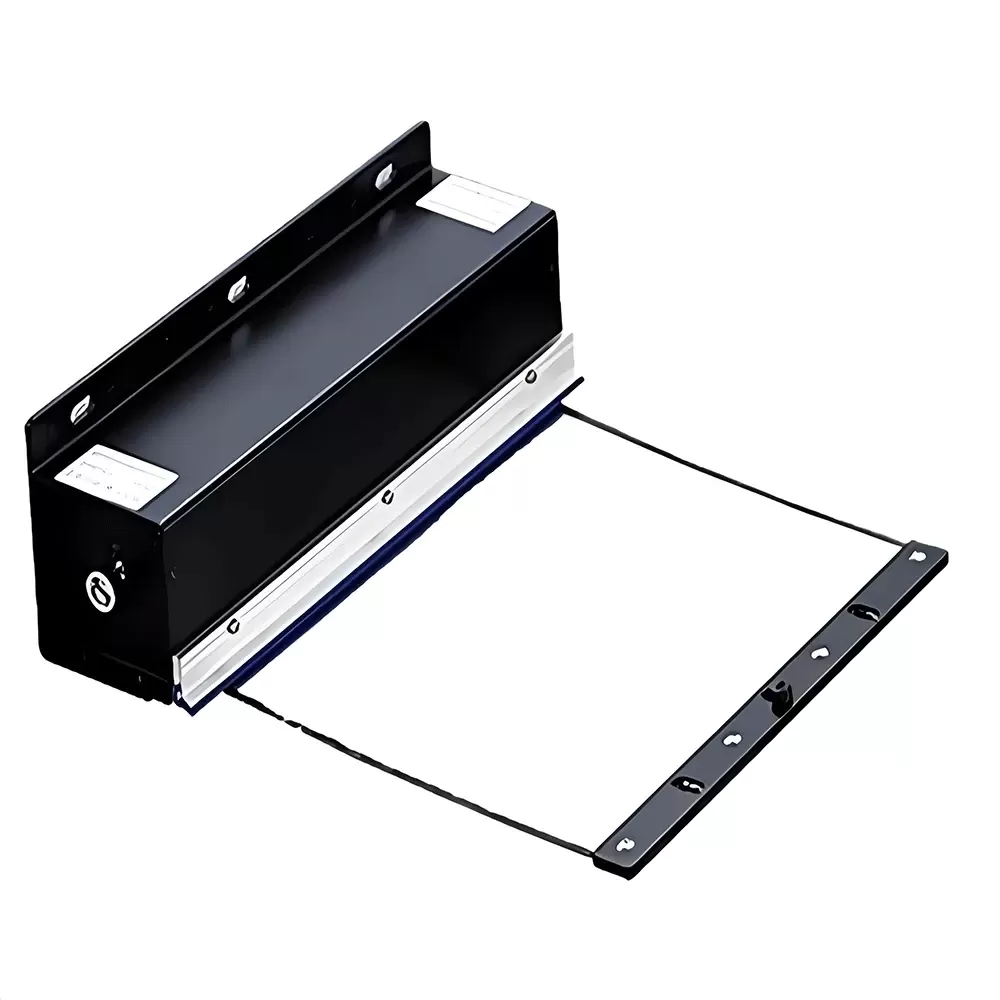
In modern industrial manufacturing, high-speed CNC machining centers and heavy-duty milling machines operate under demanding conditions. These machines generate substantial volumes of metallic chips, abrasive dust, and high-pressure chemical coolants during subtraction processes. Protecting the precise linear guideways and ball screws from this harsh environment is fundamental to maintaining machining accuracy and extending the operational lifespan of the equipment. A custom-engineered telescopic steel cover serves as the primary physical barrier, shielding these high-precision movement axes from structural damage and premature wear.
Designing and manufacturing these protective systems requires a thorough understanding of mechanical engineering, material science, and dynamic physics. QUNHUI specializes in fabricating durable, high-performance protective enclosures tailored to the specific operational envelopes of global machine tool builders. This analysis examines the structural anatomy, design parameters, environmental challenges, and selection criteria for industrial telescopic steel covers.
Structural Anatomy of a Telescopic Steel Cover
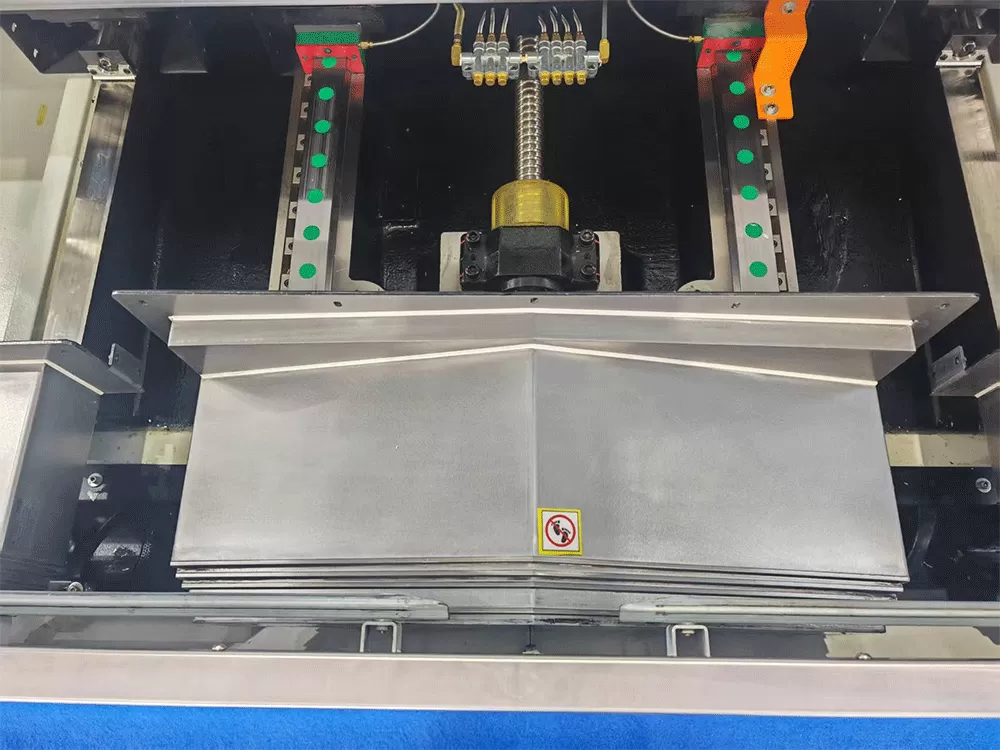
A high-quality telescopic steel cover is not merely a series of nested metal boxes; it is a highly coordinated mechanical system designed to expand and contract smoothly along a machine axis. Each component must be engineered with precise tolerances to ensure the integrity of the enclosure during high-speed travel.
Steel Sheet Selection and Thickness
The choice of raw material determines the structural rigidity and impact resistance of the cover. Standard enclosures utilize cold-rolled high-tensile carbon steel sheets, which offer excellent formability and structural strength. In environments where corrosive coolants or acidic byproduct gases are present, stainless steel alloys such as SUS304 or SUS316 are selected. The thickness of the sheet metal typically ranges from 1.5 mm to 3.0 mm, depending on the physical size of the machine tool and the likelihood of heavy swarf impact. For heavy-duty horizontal boring mills where operators must stand on the covers to set up workpieces, walk-on covers are manufactured using reinforced plates up to 5.0 mm thick with non-slip surfaces.
Wiper Systems and Lip Profiles
The wiper system is the primary line of defense against liquid and particulate ingress. Mounted on the leading edge of each individual telescopic segment, the wiper continuously cleans the surface of the succeeding box during compression. The sealing lip is typically made from highly wear-resistant synthetic polyurethane or fluoropolymer elastomers, which maintain their elastic properties when exposed to synthetic coolants and mineral oils. A spring-loaded stainless steel backing plate often supports the elastomer lip, ensuring constant, uniform pressure against the steel surface even after millions of linear cycles.
Guide Shoes, Rollers, and Support Mechanisms
To prevent metal-on-metal friction and reduce operational noise, the individual boxes of a telescopic steel cover are supported by specialized gliders or rollers. Brass or high-performance engineering plastics like polyoxymethylene (POM) are machined into custom-shaped guide shoes that slide smoothly along the machine’s guideway rails. For large-scale covers or high-speed axes, ball-bearing rollers are integrated to handle the substantial weight of the steel segments, minimizing sliding resistance and preventing stick-slip phenomena during low-speed machining operations.
Damping and Scissor Mechanisms
As CNC machine tools move at rapid traverse speeds, the sudden expansion and contraction of the protective cover can cause significant impact forces. Damping elements, such as polyurethane bumpers, are placed at the rear of each box to absorb kinetic energy during compression. For axes operating at velocities exceeding 30 meters per minute, a pantograph or scissor mechanism is integrated. This mechanical linkage synchronizes the movement of all telescopic boxes, distributing the acceleration forces evenly across the entire assembly and preventing individual box collisions.
Solving Common Operational Failures in Guideway Protection
Industrial machinery operates under diverse and punishing parameters. Understanding how a telescopic steel cover prevents common mechanical failures allows plant managers and machine designers to specify the correct protective configurations.
| Operational Challenge | Consequence on Guideways | QUNHUI Engineered Solution |
|---|---|---|
| Abrasive swarf accumulation | Scratches on linear rails, ball screw pitting | Sloped top profiles and high-durability brass scraper lips |
| Chemical coolant exposure | Corrosion of guideways, degradation of seals | Chemically cross-linked polyurethane wipers and stainless steel boxes |
| High-speed acceleration (1G+) | Box deformation, loud impact noise, joint failure | Integrated scissor linkages and polyurethane impact dampers |
| Heavy operator load | Structural denting, binding of telescopic joints | Internal structural reinforcing ribs and heavy-gauge walk-on plates |
Addressing these challenges requires careful calculation of the cover's geometry. For instance, dry machining of cast iron produces a fine, highly abrasive dust that can act like grinding paste if it mixes with guide rail lubricants. In this scenario, QUNHUI implements a double-lip wiper design. The first lip acts as a rough scraper to clear large particles, while the secondary elastomer lip seals against the fine particulate matter, keeping the internal guideway cavity completely clean.
Mechanical Design Principles: Velocity, Acceleration, and Dynamics
The movement profile of the machine tool axis dictates the mechanical limits of the protective enclosure. Standard telescopic covers are suitable for speeds up to 15 meters per minute. However, modern linear motor-driven machines frequently achieve speeds of 60 to 120 meters per minute, with accelerations surpassing 1G.
At these elevated performance levels, the mass of the telescopic steel cover becomes a significant factor in the machine's overall dynamic equation. If the cover is too heavy, it increases the load on the feed motors, reducing the machine’s overall dynamic responsiveness. To counter this, QUNHUI engineers utilize finite element analysis (FEA) to reduce weight without compromising structural integrity. By strategic placement of stiffening folds and utilizing high-strength, thin-gauge alloys, the total mass of the assembly can be reduced by up to 30%.
Furthermore, the kinematic behavior of the cover must be carefully controlled. When a machine axis reverses direction at high speed, the momentum of the steel boxes can cause a chain-reaction impact. The inclusion of heavy-duty pantographs ensures that all segments move simultaneously at proportional velocities. If a five-segment cover moves at a total velocity of 50 meters per minute, the relative speed between any two adjacent boxes is restricted to just 10 meters per minute. This reduces kinetic energy impacts, lowers acoustic emissions, and significantly increases the mean time between failures (MTBF) of the entire linear axis protection system.
Tailoring Protection for Diverse Machine Tool Configurations
Different machining processes generate unique waste streams and operational patterns, requiring specific telescopic cover adaptations.
High-Speed 5-Axis Milling Centers
These machines perform complex, multi-axis contours, producing high-velocity chip streams. The protective covers must be lightweight, compact, and capable of handling rapid multi-directional accelerations. Aluminum or hybrid steel-aluminum covers are frequently utilized here. The wiper seals must have high chemical resistance to synthetic ester-based coolants, which are highly aggressive toward standard nitrile rubbers.
Heavy-Duty Horizontal Boring and Milling Mills
These large-scale machines handle massive workpieces and generate high volumes of heavy, hot metal chips. The covers must span large widths and lengths, often exceeding several meters. Structural integrity is the primary design focus. QUNHUI designs these systems with internal steel structural supports, heavy-duty guide rollers, and walk-on capability, enabling maintenance personnel to safely traverse the machine bed without causing deflection in the protective covers.
Precision Grinding Machines
Grinding processes use vitrified wheels that produce extremely fine abrasive particulate mixed with coolants, forming a highly abrasive slurry. This slurry can easily bypass standard wiper seals through capillary action. To solve this, telescopic covers for grinding machines are built with highly overlapping boxes, pressurized air-purge systems that maintain a positive internal pressure, and specialized synthetic wipers designed to handle fine micro-abrasives without tearing.
Manufacturing Quality and Precision Standards at QUNHUI
The reliability of a telescopic steel cover depends heavily on the precision of its fabrication. At QUNHUI, we employ advanced sheet metal manufacturing technologies to ensure every cover meets strict dimensional tolerances. Our production process involves:
Precision Laser Cutting: Utilizing fiber laser systems to cut sheet metal blanks with tolerances within ±0.05 mm, ensuring perfect geometry for nesting boxes.
CNC Press Brake Bending: Multi-axis bending machines form the precise sloped profiles and mounting flanges necessary for smooth telescopic alignment.
Manual Straightening and Calibration: Skilled technicians manually inspect and calibrate each box to eliminate any micro-warping introduced during the welding or bending processes.
Dynamic Testbed Evaluation: Finished assemblies undergo rigorous cycling tests on simulated machine beds to verify alignment, wiper pressure, and scissor synchronization under realistic operating speeds.
By controlling every step of the fabrication process, we ensure that the finished product operates with minimum friction and maximum sealing efficiency, providing long-term reliability for demanding B2B manufacturing environments.
Specification Guide for Custom B2B Inquiries
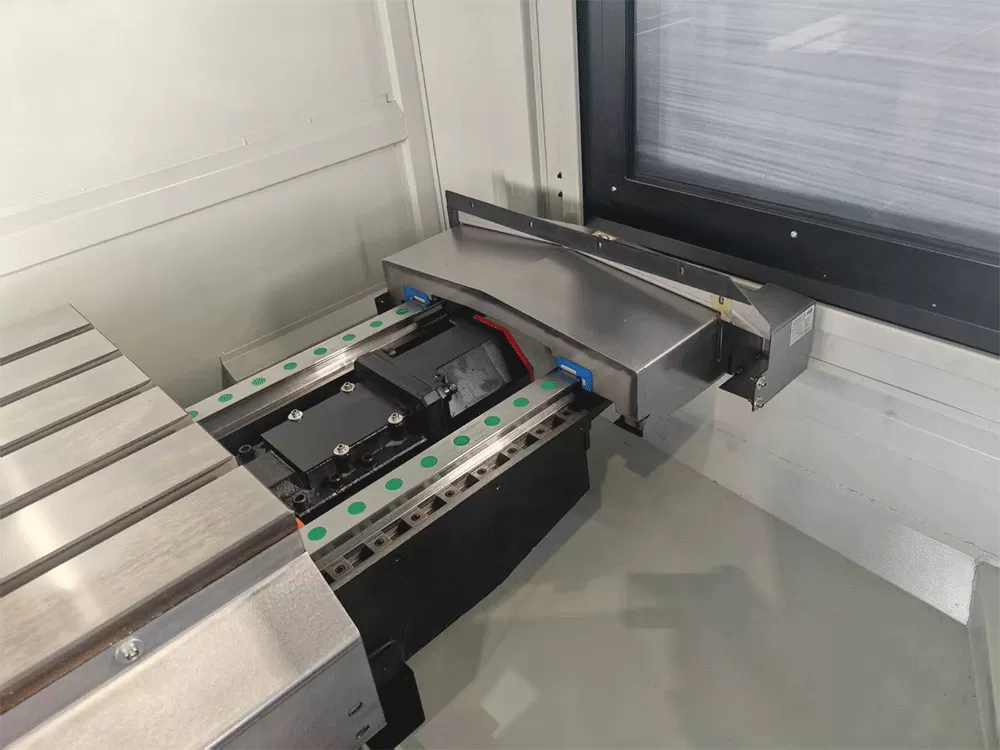
Because every machine tool has a unique structural footprint and movement profile, off-the-shelf protective enclosures are rarely sufficient. Acquiring a custom telescopic steel cover requires precise technical specifications to ensure correct fitment and function. When submitting an inquiry to QUNHUI, providing the following parameter data will streamline the engineering design process:
Maximum Extended Length (Lmax): The total length of the cover when the machine axis is fully extended.
Minimum Compressed Length (Lmin): The space available for the cover when the axis is fully retracted. This is critical as it determines the maximum allowable stack height of the nested boxes.
Stroke (S): The total travel distance of the machine axis (Lmax minus Lmin).
Width and Height Constraints: The physical clearance envelope inside the machine casting where the cover must fit.
Orientation of Travel: Specify whether the axis moves horizontally, vertically, or crosswise, as this influences the design of the support rollers and guide shoes.
Maximum Operational Velocity and Acceleration: High-speed applications require the inclusion of scissor mechanisms or damping systems.
Type of Debris and Coolant: Clarify if the machine will process steel, aluminum, cast iron, or composite materials, and whether water-soluble or neat oil coolants are used.
Our engineering team utilizes this data to generate detailed 3D CAD models and structural calculations, ensuring the proposed design integrates seamlessly with your machine tool's structural architecture.
Frequently Asked Questions
Q1: What is the average operational lifespan of a telescopic steel cover under normal operating conditions?
A1: The operational lifespan depends heavily on the working environment, maintenance cycle, and traverse speed. A well-maintained telescopic cover operating at standard speeds (under 20 m/min) can complete over 1 to 2 million full cycles before requiring wiper replacement. Regular cleaning of chips and timely lubrication of the guide rails are key factors in extending this lifespan.
Q2: Can standard telescopic covers be upgraded to handle higher velocities?
A2: Yes, standard covers can often be retrofitted or redesigned with integrated scissor mechanisms and advanced damping bumpers to accommodate increased machine speeds. However, the existing space envelope (Lmin) must be evaluated, as these dynamic components require additional internal space, which may slightly increase the compressed length of the cover.
Q3: How do you determine if a telescopic cover needs repair or complete replacement?
A3: Minor wear, such as worn elastomer wipers, damaged brass gliders, or minor surface scratches, can be repaired by replacing the individual wear components. However, if the steel boxes themselves suffer severe structural deformation, bending, or deep wear tracks due to a lack of lubrication, a complete replacement is recommended to prevent damage to the machine’s linear guideways.
Q4: Why is polyurethane preferred over standard rubber for telescopic cover wipers?
A4: Polyurethane exhibits superior mechanical properties, including high tensile strength, exceptional abrasion resistance, and excellent elasticity. More importantly, it offers high chemical resistance to modern synthetic and semi-synthetic coolants, which tend to swell, soften, or crack standard nitrile or natural rubber compounds over short periods of exposure.
Q5: How does QUNHUI ensure the watertightness of its telescopic steel covers?
A5: Sealing is achieved through a combination of precision sheet metal tolerances, optimized wiper lip geometry, and continuous spring-tension support. The wipers are designed to maintain constant, intimate contact with the steel surface of the adjacent box, effectively squeegeeing away high-pressure liquid coolants as the cover retracts and expands.
Request a Customized Engineering Proposal
Protecting your machine tool investment requires precise engineering and dependable manufacturing. The design team at QUNHUI possesses the practical experience and manufacturing capability to deliver telescopic steel covers tailored to your exact industrial specifications. Whether you are designing a new high-speed machining center or requiring replacement covers for an existing production line, we invite you to contact us. Please submit your axis dimensions, velocity profiles, and environmental parameters to our engineering division to receive a detailed technical proposal and quotation for your specific application.