
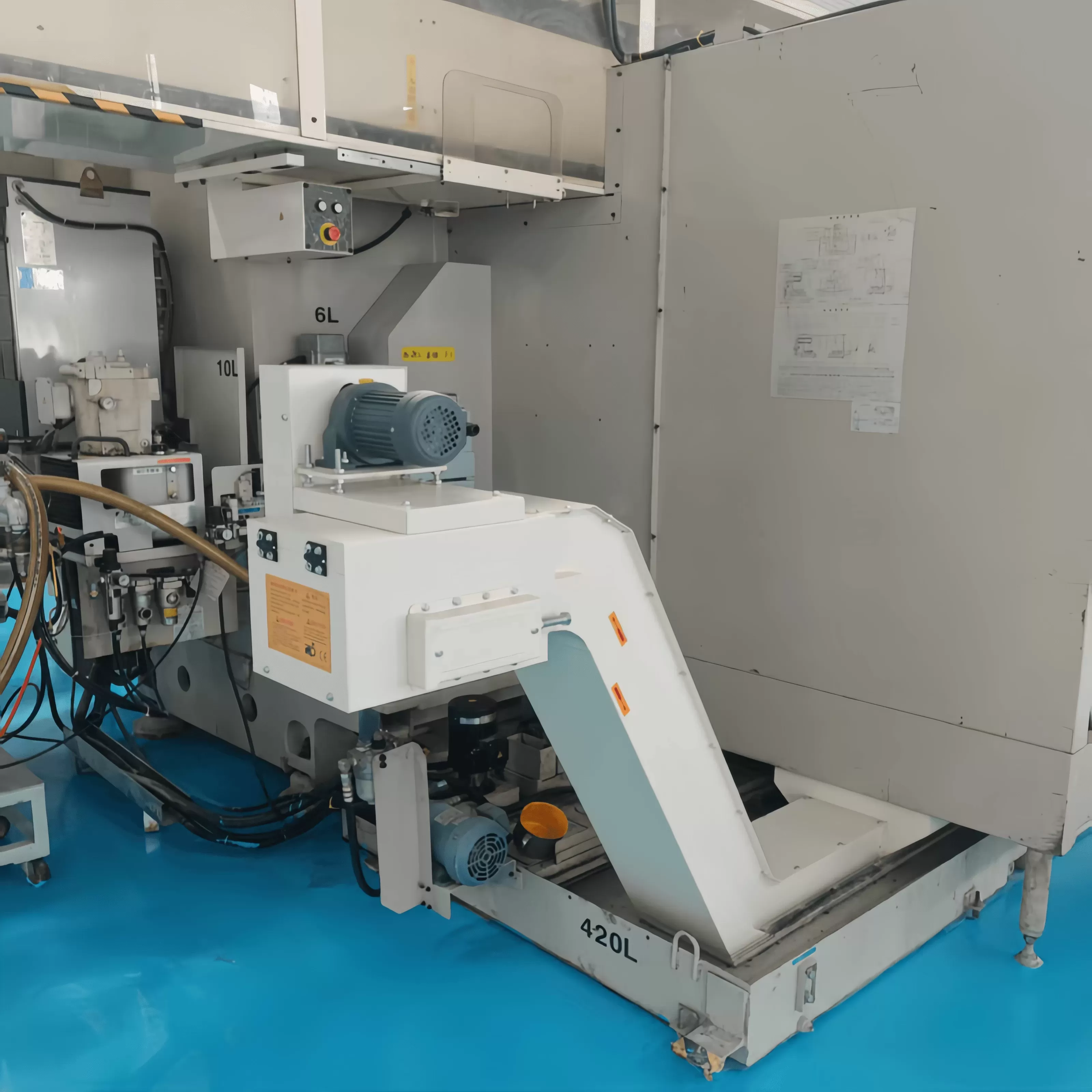
In high-precision machining, chip management directly governs machine uptime, coolant longevity, and dimensional accuracy. While tooling geometry and spindle power dominate setup discussions, an under-engineered cnc chip conveyor often becomes the single failure point leading to unscheduled downtime, pump impeller failure, and thermal growth inside the machining zone.
Hot chips accumulating in the machine bed transfer heat directly into the machine casting, causing thermal expansion and positional drift. Furthermore, re-cutting trapped swarf compromises surface finish and accelerates tool wear. Implementing an optimized chip evacuation strategy is an engineering necessity for maintaining Overall Equipment Effectiveness (OEE).
.webp?t=1785380477846 "cnc chip conveyor")
Mechanical Breakdown: The Five Core CNC Chip Conveyor Technologies
Selecting the correct chip handling architecture requires matching the conveyor mechanism to chip geometry, material magnetic properties, and coolant volume. Modern machine tools rely on five distinct mechanical conveyor designs.
1. Hinge-Belt (Chain Type) Conveyors
Hinge-belt systems are the industry workhorse for medium to heavy machining operations. Constructing a continuous loop of interlocking steel plates equipped with raised cleats, these systems physically carry material out of the enclosure.
Best Application: Long, stringy, or bushy chips generated during heavy steel turning, rough milling, and aluminum machining.
Engineering Consideration: Cleat height and pitch must be sized relative to chip volume to prevent material rollover. However, hinge-belt conveyors allow fine swarf (under 2 mm) to fall through plate gaps into the coolant tank, necessitating secondary filtration if used with cast iron or fine brass.
2. Scraper Conveyors
Instead of lifting material on a belt, scraper conveyors utilize heavy-duty chains fitted with cross-paddles that drag along the hardened bottom of a trough, pushing swarf up an incline to the discharge chute.
Best Application: Short, broken chips, cast iron granules, fine brass swarf, and small aluminum chips produced during high-speed milling.
Engineering Consideration: Scraper systems clear fine particles that sink to the bottom of the coolant tank, preventing sump sludge accumulation. They are ill-suited for long, stringy turnings, which tangle around the scraper bars and jam the drive mechanism.
3. Magnetic Conveyors
Magnetic conveyors utilize stationary high-intensity neodymium or ferrite magnet tracks positioned beneath a continuous, sealed stainless steel sheet. The drive mechanism moves the magnetic circuit internally, dragging ferrous particles along the top plate to the discharge point.
Best Application: Ferrous metals, cast iron, hardened steel chips, and fine grinding sludge.
Engineering Consideration: Because the drive mechanism is entirely enclosed beneath a solid stainless sheet, moving parts never come into contact with abrasive swarf or coolant. This eliminates mechanical jam risks. These systems are non-functional for non-ferrous materials such as aluminum, stainless steel (austenitic), or brass.
4. Auger (Screw) Conveyors
Auger systems employ a rotating helical screw flighting set inside a curved trough. They are compact and often integrated directly into the machine tool trough beneath the X/Y axes.
Best Application: Primary chip gathering inside tight machine enclosures, transferring material to a main collector.
Engineering Consideration: Augers handle small, uniform broken chips efficiently. Long, stringy chips will bind around the center shaft (if shafted) or jam the trough wall. For this reason, augers are rarely used as standalone solutions for heavy turning applications.
5. Drum-Type & High-Filtration Conveyors
Drum conveyors integrate chip transport with active fluid filtration. As coolant and chips flow into the system, the liquid passes through a rotating stainless steel mesh drum filter while the chips are trapped and cleared by an external scraper or hinge mechanism.
Best Application: High-volume aluminum machining, fine cast iron cutting, and setups utilizing high-pressure coolant (HPC) systems requiring fluid clarity down to 30–50 microns.
Engineering Consideration: Combines swarf removal and primary coolant filtering into a single footprint, eliminating the need for large external settling tanks.
Technical Decision Matrix: Matching Material to Conveyor Type
Specifying a cnc chip conveyor requires analyzing the material density, chip morphology, and coolant delivery method. The matrix below outlines optimal system configurations:
Steel / Stainless Steel Turnings (Long, Stringy): Hinge-Belt Conveyor with serrated cleats.
Cast Iron (Granular / Fine Dust): Scraper Conveyor or Magnetic Conveyor combined with settling tanks.
Aluminum (High-Speed Machining / Light Swarf): Scraper Conveyor with integrated Drum Filter or Dual-Stage Hinge/Scraper system.
Brass / Bronze (Short, Brittle): Scraper Conveyor with bottom-discharge scrapers.
Mixed Material Job Shops: Combination Hybrid Conveyors (e.g., Hinge-Belt mounted above a Scraper/Drum frame).
The Role of Chip Conveyors in Coolant Life and Thermal Management
In high-duty cycle production, a cnc chip conveyor is not merely a waste removal device; it functions as a primary fluid processing component.
1. Prevention of Coolant Degradation and Pump Wear
Fine swarf suspended in coolant acts as an abrasive slurry. When standard conveyors fail to capture micro-particles, these fines enter the coolant pump, eroding impellers, destroying high-pressure rotating unions, and clogging internal tool-coolant passages. Proper conveyor selection extends fluid life by preventing anaerobic bacterial growth, which flourishes in stagnant sludge beds at the bottom of un-scraped tanks.
2. Mitigation of Thermal Drift
During aggressive metal removal, chips absorb up to 80% of the kinetic heat generated at the shear zone. If these red-hot chips settle in the machine basin, that thermal energy dissipates into the machine bed and linear guides. Continuous chip evacuation via a dedicated conveyor stabilizes internal machine temperatures, preserving precision tolerances over extended production runs.
.webp?t=1785380477846 "刮板式排屑机 (2)")
Industrial Build Standards: What Separates Standard from Heavy-Duty Systems
When sourcing equipment, evaluating structural details prevents costly field failures. Heavy-duty units engineered by OEMs like QUNHUI incorporate specific structural enhancements:
Hardened Wear Track Plates: Manganese or hardened alloy steel liners along the incline turn points prevent premature trough wear from abrasive materials like cast iron or forged steel.
Overload Protection Systems: Mechanical torque limiters or current-sensing drive electronics instantly stop the conveyor motor upon detecting a jam, preventing chain stretch or gear drive destruction.
Variable Speed Drives (VSD): Adjusting conveyor speed based on real-time material removal rates optimizes coolant drain-back, preventing valuable cutting fluid from being dragged into the chip hopper.
Precision Chain Pitch Selection: Utilizing heavy-pitch roller chains reduces chain elongation and lowers maintenance interval frequency.
Frequently Asked Questions
What causes fine chips to bypass my hinge-belt conveyor and enter the coolant tank?
Hinge-belt conveyors feature mechanical tolerances between interlocking plates. Small chips (under 2–3 mm) fall through these gaps during operation. To resolve this, install a scraper bottom tank or upgrade to a drum-filter integrated conveyor system.
How does conveyor speed affect coolant consumption?
Running a conveyor too fast does not allow sufficient dwell time for coolant to drain off the chips as they move up the inclined discharge ramp. The fluid remains trapped on the chip surface and dumps into the scrap bin. Slowing the belt speed or adding a liquid-drain perforation section reduces coolant drag-out loss.
When should a shop choose a magnetic conveyor over a scraper conveyor?
Magnetic conveyors are superior when handling fine ferrous materials, cast iron swarf, or grinding sludge. Because magnetic systems have no exposed moving chains or scrapers inside the fluid, abrasive wear is virtually eliminated, yielding significantly lower maintenance requirements compared to mechanical scrapers.
Can a single cnc chip conveyor handle both long aluminum turnings and fine cast iron swarf?
Single-stage standard conveyors struggle with extreme material variation. Handling both long turnings and fine swarf typically requires a dual-stage hybrid conveyor: a upper hinge-belt removes the long turnings, while a lower scraper or drum mechanism evacuates the fine particles and filters the coolant.
What maintenance steps prevent chain jams on heavy-duty chip conveyors?
Key maintenance steps include regularly checking drive chain tension, inspecting mechanical torque limiters, clearing debris from the drive sprocket housing, and monitoring wear plates at the bottom transition curve of the discharge incline.
Upgrade Your Chip Evacuation Strategy with QUNHUI
Unplanned machine stops caused by chip packing and contaminated coolant drain your shop's profitability. At QUNHUI, we engineer high-durability, custom-configured cnc chip conveyor systems and integrated coolant filtration units tailored for complex machining environments, high-duty production lines, and demanding material types.
Whether you are retrofitting an existing vertical machining center, upgrading a horizontal lathe setup, or configuring an OEM machine build, our application engineers analyze your material specs, fluid flow requirements, and machine footprints to deliver a reliable system built for maximum uptime.
Contact the engineering team at QUNHUI today to request a custom conveyor quote or discuss your technical chip management requirements.